
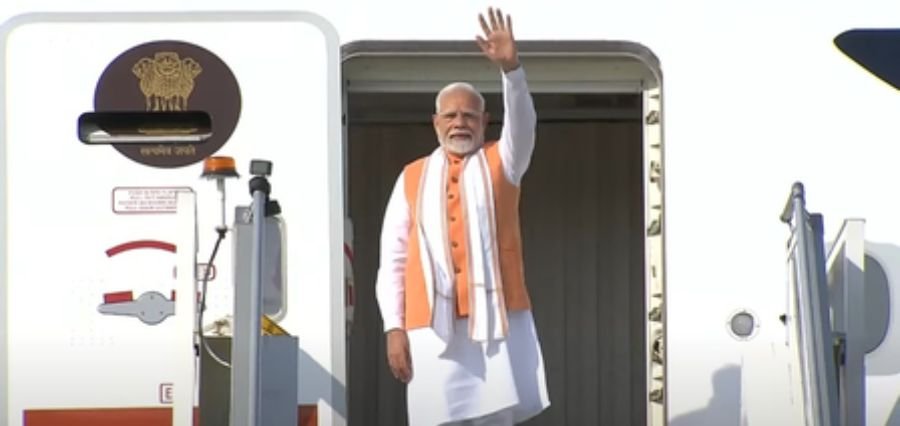
Prime Highlights
- PM Narendra Modi embarks on eight-day, five-nation tour of Africa, Latin America, and the Caribbean.
- Tour reinforces India’s BRICS pledge and strengthens diplomatic, trade, and cultural interaction in the Global South.
Key Facts
- Modi is the first Indian PM in decades to embark on official bilateral visits to Argentina and Brazil.
- He addresses the Parliaments of Ghana, Trinidad & Tobago, and Namibia—highlighting democratic solidarity.
Key Background
Prime Minister Narendra Modi’s rearmost five- nation politic charge represents a strategic move to consolidate India’s footmark within the Global South and strengthen multinational cooperation under the BRICS banner. From July 2 to July 9, the visit includes Ghana, Trinidad & Tobago, Argentina, Brazil, and Namibia — marking the longest foreign stint by Modi in nearly a decade.
In Ghana, Modi’s address to Parliament represented India’s popular values and solidarity with African nations. exchanges concentrated on cooperation in energy, healthcare, digital invention, and capacity structure. The outreach underscored India’s belief in Africa as a mate in progress, not just a philanthropist of aid.
Trinidad & Tobago was an emotional and artistic stint highlight in that it was also marking 180 times of Indian emigration to the Caribbean. Modi emphasized in his relations with the Indian diaspora and original leadership that India sought to strengthened literal relations while advancing business and cooperation on development in the Caribbean.
Argentina was high on the priority list. The visit of the Indian Prime Minister after 57 years was an indication of growing interest in Latin America. The talks were all about the key minerals, agriculture, space and alternative energy—areas that are essential to India’s growth and make it competitive globally.
Brazil hosted the historic BRICS Summit where Modi advocated a multipolar world order, economic dominance of emerging economies, and changing global order institutions. The visit included a state visit to Brasilia at a bilateral level along with meeting with President Lula da Silva on trade, green technology, and South-South cooperation.
Eventually, in Namibia, Modi used the chorus of participated social heritage and appreciation of each other. His speech to Parliament in Namibia reiterated India’s enduring interest in African brotherhood, inclusive growth, and collaborative advancement. The Namibia member concluded a stint that was as much an exercise in profitable imagination as people- to- people tactfulness — inescapably sticking India as a ground between mainlands and a midwife of multilateralism.