
Certain elements do more than just exist in the grand architecture of human progress. These foundational materials for future advancements push the boundaries of future human ambition. For many years, Aluminium has served as a lightweight material; it is embedded within the very fabric of our electrical infrastructures, has formed critical support structures in our urban environments, and provided vital propulsion to our aerospace industry. Aluminium moves the planet, but the greatest challenges facing us in this century are in how we use Aluminium.
As the global industrial complex pivots toward a greener horizon, the act of mining, purifying, manufacturing, and delivering this vital resource has become a high-stakes moral imperative. In this arena of large-scale industrial transformation, Maan Aluminium Limited has emerged not merely as a participant, but as a sovereign leader—redefining what it means to be one of the Best Metal and Mining Companies to Watch.
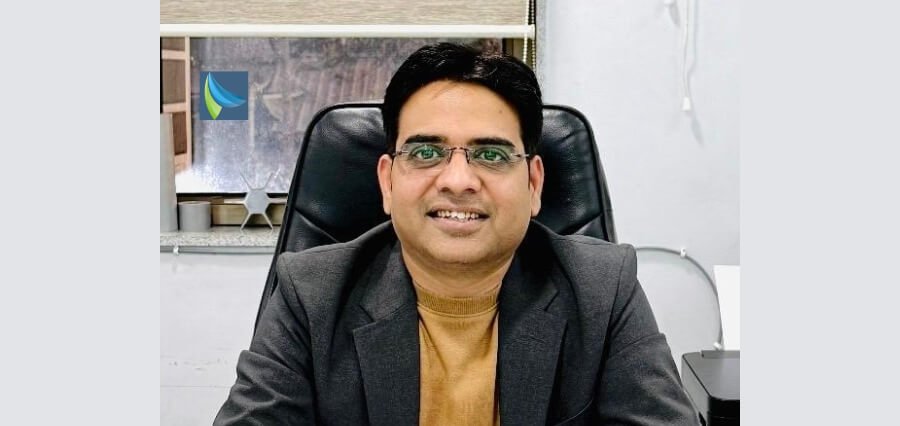
At the heart of this revolution is a philosophy that transcends traditional manufacturing. Maan Aluminium does not view the earth’s resources as a ledger to be drained, but as a legacy to be protected through radical innovation. They are the architects of a new industrial standard where a profound commitment to the planet balances the fire of the forge. “At Maan Aluminium, sustainability is not a peripheral initiative. It is deeply embedded in our long-term business strategy,” declares Naveen Gupta, Chief Operating Officer (COO) and Director. Under his visionary guidance, the company has transitioned from traditional operations to a future-forward mission.
“We Call It Our Decarbonization Roadmap”
By 2030, Maan Aluminium has committed to reducing its Scope-1 and Scope-2 greenhouse gas emissions by 40 percent, a target that is both ambitious and achievable given its current trajectory.
A combination of renewable energy integration, process electrification, and next-generation technologies is driving this transition. Nearly 60 percent of the company’s electricity consumption will be met through solar power installations and long-term renewable power purchase agreements (PPAs). In parallel, Naveen shares that they are piloting green hydrogen applications in high-temperature furnace operations, which hold significant promise in decarbonizing thermal processes traditionally dependent on fossil fuels.
Energy efficiency is another critical lever. Investments in waste heat recovery systems, advanced burners, and automation-led process optimization are already yielding tangible reductions in energy intensity. “Together, these initiatives position us firmly in alignment with India’s national net-zero ambitions while ensuring that sustainability supports, rather than constrains, our growth,” he adds.
A Responsible Opportunity: Circular Economy Integration
Moreover, he informs that Aluminium, by nature, is infinitely recyclable, and they see this as a responsibility as much as an opportunity. At Maan Aluminium, they have gone well beyond compliance-driven recycling to embed circular economy thinking across their value chain.
Manufacturing by-products such as tailings, dross, and process scrap are increasingly being repurposed into secondary applications, including construction materials and internal reuse streams. “We have implemented closed-loop water recovery systems, significantly reducing freshwater dependency while improving process stability.”
On the product side, they are innovating alloy compositions to reduce reliance on critical and scarce raw materials, without compromising performance, says Naveen. Lightweight, durable, and recyclable product designs ensure longer service life and easier recovery at end-of-life. Even packaging has been reimagined, optimized to be lighter, recyclable, and lower in downstream waste.
Digital monitoring tools further help the team identify inefficiencies in real time, ensuring minimal material loss and maximum resource productivity. Their goal is clear: to keep materials in circulation for as long as possible while continuously lowering environmental impact.
Community and a Social License to Operate
Naveen believes that a company’s license to operate is earned daily through trust, transparency, and shared value creation. At Maan Aluminium, they engage proactively with local communities long before operations begin and continue that dialogue throughout the project lifecycle.
“Beyond regulatory obligations, our focus is on equitable benefit sharing.” This includes local hiring, skill development programs, healthcare outreach, and education initiatives that create long-term community resilience. For indigenous and local communities, they adopt a participatory approach co-creating development programs that respect cultural identity while enabling economic inclusion.
“We view communities not as stakeholders on the periphery, but as partners in progress.” This mindset has helped us foster goodwill, mitigate social risks, and build operations that are both socially responsible and economically sustainable.
Achieving Excellence with Tech-Transformation
When it comes to automation and autonomy, Maan Aluminium has made significant progress toward semi-autonomous operations, particularly in high-risk and high-temperature zones. Automated extrusion lines, remote-controlled material handling systems, and centralized process control rooms have substantially reduced direct human exposure to hazardous environments.
Safety outcomes have improved measurably, while operational consistency and throughput have increased. Additionally, AI-enabled monitoring systems support predictive decision-making, enabling teams to intervene before deviations escalate into failures. While full autonomy remains a long-term goal, the company’s current automation roadmap is already delivering strong gains in productivity, quality, and workforce safety.
Digitally Optimum
Digitalization has fundamentally transformed how Maan Aluminium manages assets. Through Digital Twin models, it creates virtual replicas of critical equipment, allowing its team to simulate operating conditions, stress scenarios, and performance trends in real time.
IoT sensors capture continuous data on vibration, temperature, energy usage, and wear patterns. This data is analyzed using advanced analytics and AI algorithms to predict failures before they occur. The result is planned, condition-based maintenance rather than reactive shutdowns.
This approach has significantly reduced downtime, extended asset life, improved safety, and optimized spare parts inventory, delivering both operational and financial benefits.
Exploration of Innovation
With easily accessible deposits dwindling, Naveen believes that exploration today must be smarter, faster, and less intrusive. “We deploy drone-based aerial sensing, LiDAR mapping, and satellite imagery to survey challenging terrains with minimal environmental impact.”
Machine learning algorithms analyze geological datasets to identify mineralization patterns and prioritize drilling targets with higher accuracy. These tools reduce exploration costs, improve success rates, and ensure a sustainable pipeline for the next decade, all while lowering the environmental footprint of exploration activities.
Critical Market Focus
Furthermore, Naveen says that Aluminium remains at the core of their strategy, given its indispensable role in energy transition sectors such as EVs, renewable power, and lightweight mobility. In parallel, Maan Aluminium is strategically evaluating copper, nickel, and select rare earth elements as part of its long-term portfolio. Geopolitical risk is addressed through diversified sourcing, domestic recycling initiatives, and multi-country partnerships. “By improving material efficiency and recovery, we reduce exposure to volatile global supply chains while strengthening resilience.”
A Resilient Supply Chain
To de-risk its supply chain—both for importing essential consumables and exporting finished materials—in response to ongoing global trade volatility, Maan Aluminium has adopted a three-pronged approach. Naveen reveals, “First, we diversified import sources for critical consumables across multiple geographies. Second, we strengthened domestic supplier ecosystems and recycling-based inputs. Third, on the export side, we expanded regional market presence and adopted flexible, multimodal logistics strategies with long-term shipping partnerships.”
These measures ensure continuity, cost stability, and responsiveness in an increasingly uncertain global trade environment.
Strategic Vertical Integration
Also, to capture higher value and gain better control over product quality and market delivery, Naveen says their vertical integration strategy focuses on moving beyond commodity extrusion into advanced processing, alloy development, and precision fabrication. These downstream capabilities allow greater control over quality, customization, and delivery timelines.
They are also exploring opportunities in battery components and EV-focused aluminium solutions, aligning with future mobility and renewable infrastructure demand. This evolution positions Maan Aluminium as a solutions-driven partner, not just a material supplier.
Building a Workforce of 2030
According to Naveen, the workforce of the future must blend digital fluency with deep operational wisdom. “We attract young talent through university collaborations, digital skill programs, and exposure to automation, AI, and sustainability roles,’ he adds.
Equally, at Maan Aluminium, they recognize the irreplaceable value of their experienced workforce. Structured mentorship, knowledge documentation, and cross-training initiatives enable two-way learning where veterans upskill digitally, and younger employees gain operational insight. This creates a cohesive, future-ready organization.
Also, “In 2026, the majority of our capital expenditure will be directed toward technology, automation, and clean energy integration,” shares Naveen. While selective brownfield expansions will enhance existing capacities and greenfield projects remain on the horizon, digitalization and efficiency upgrades are their immediate priority to future-proof operations.
Preparing a Green Future Blueprint
Finally, Naveen believes that 2026 is going to be the year when Maan Aluminium will surely emerge as a legend. Because, as a fast-emerging leader in its niche, the company is striving with its full might to make low-carbon aluminium the default industry standard. By demonstrating that renewable-powered production, circular economy practices, and digital efficiency can coexist with profitability, “We aim to redefine how sustainable metals are perceived and produced.”
Maan Aluminium is one of the world’s leading producers of Aluminium, and as such, they have shown their dedication to a sustainable business model that benefits the environment, the local community, and provides economic benefits to their customers. By doing so, it is paving the path for future generations to use Aluminium in the same way, “As we do today and is giving future generations a blueprint on how to have a sustainable and responsible approach to the use and manufacture of Aluminium,” concludes Naveen.