
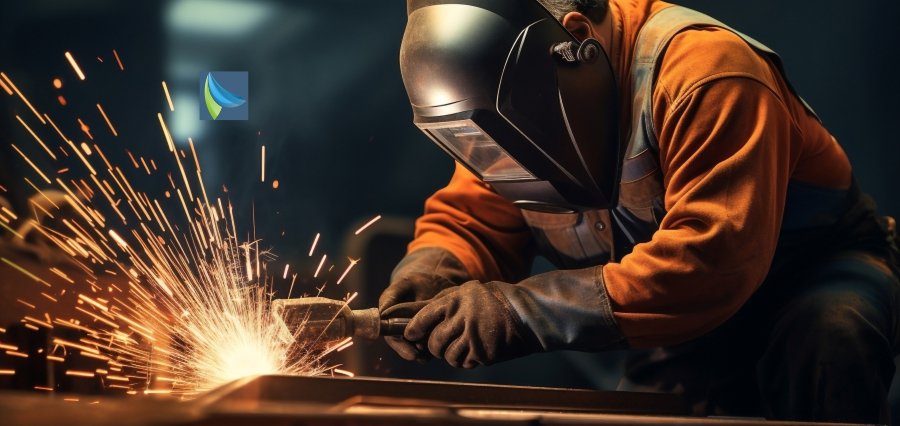
Forging the Future
The iron and steel industry of India is one of the most iconic industries of the country, which has been developed over the decades through vision, endurance, and strategic management. Since the early days of giant legacy companies that established the foundation of large-scale production, up to modern players that adopt the newest technologies, the Metallurgical Industry has continuously developed into one of the driving forces behind infrastructure, manufacturing, and economic development. What began as a capacity-building has now become a high-git ecosystem which is innovation-led, excellence-in-talent and competitive to the world.
Nowadays, scale is not the only topic that leaders in this sphere are concerned with, but efficiency, sustainability, and readiness for the future. Their flexibility to meet the transforming market needs, their investment in the state-of-the-art processes and environmental responsibility are an indication of a more profound change in attitude.
With India gearing up towards a high growth in steel production, the metallurgical industry remains at the center stage, creating a channel that balances industrial growth and national and global interests long-term.
The Giants Who Built the Foundation
The history of the transformation of India into a country of iron and steel cannot be complete without mentioning the legacy players. For over 100 years, Tata Steel has proven the norms of quality and size. The company grew under various leaderships to become a global player, yet retained its main activities in India since its inception in Jamshedpur.
Such companies did not just construct plants, they constructed a system of suppliers, engineers and communities that kept whole regions alive. Their leadership saw the need at a tender age that the metallurgical industry required not just raw capacity, but knowledge, systems, and accountability.
Technology and Innovation as Growth Engines
Adoption of state-of-the-art technology has been one of the most pronounced changes in the metallurgical industry in India. Since electric arc furnaces and continuous casting machines, modern steel plants are almost unrecognisable in terms of the machinery they have. Those leaders who made early investments in these technologies enjoyed a competitive advantage that has been paying dividends.
Companies such as Essar Steel introduced world-standard processing to Indian companies. The emphasis on the flat steel products and automotive grade steel boosted the domestic supply chain and decreased dependence of India on imports. This shift demonstrated the technical proficiency that was now ingrained in the metallurgical industry in India.
The Current State of the Industry
As of 2024–25, the steel industry is running at a remarkable scale in India, with over 140 million tonnes of crude steel being produced in the industry each year. The metallurgical industry is experiencing another wave of new capital inflow, too, and both state and business firms are reporting billions of dollars’ worth of greenfield and brownfield capacity expansions.
Although there is this momentum, the industry is experiencing actual headwinds of escalating input prices, volatile iron ore prices and rising Chinese steel imports, which have strained margins.
However, industry players have countered this by investing more in value-added products, operational efficiency and diversification of exports, and the Indian steel story has continued to be one of survival and progressive motion.
Sustainability and the Green Steel Revolution
Decarbonization is the next frontier for the leaders of the Indian steel industry. With the needs of world markets shifting to lower-emission materials, the metallurgical industry is responding with green steel projects. Tata Steel has already undertaken to cut its carbon footprint by conducting hydrogen steelmaking tests in its plants in Europe, and the lessons will be transferred to Indian operations. JSW has declared the plans in line with the net-zero goals, investing in renewable energy to operate plants.
Such moves are not just PR gimmicks; they are business strategies. Sustainability certifications are starting to be demanded by global consumers, particularly in the automotive and building industries. Those Indian leaders who act early in this direction will seize high-quality markets and influence world standards.
Shaping Tomorrow
The target of 300 million tonnes of yearly steel production in India is tremendous. It will need further leadership, investment, and collaboration between the public and the private sectors to achieve. Other areas that the Metallurgical Industry needs to pay attention to are the generation of skilled labour, the establishment of research facilities, and the enhancement of the domestic raw material supply chains.
The leaders who have already revolutionized iron and steel in India give a good blueprint. Indeed, their records indicate that, in the eyes, in industry and with due investment, the metallurgical industry can easily be not only a lucrative business, but also a well-being industry in the country.