
The current age is one of digital disruption, geopolitical unpredictability, and the increasing power of AI technologies, and the finance function has found itself caught between a rock and a hard place, with the push towards automation and the push towards judgment. Straddling that fine line is not a technical exercise; it’s a leadership one.
Some CFOs tally up the numbers and leave it at that. But there is also the CFO who questions whether the growth of the right numbers is the right thing to do in the first place. The second type of CFO is becoming rarer but invaluable.
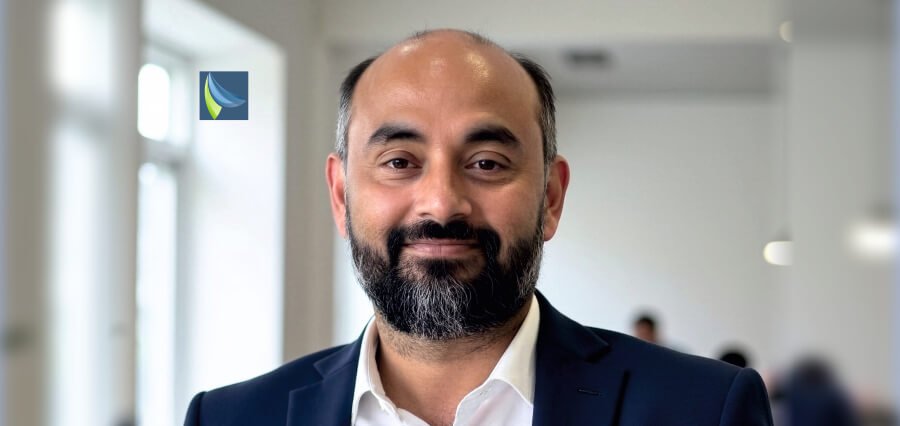
Vivek Singh has been doing so for years. He attends meetings to discuss not only what went down but what comes up next. He looks beyond the numbers to see a dynamic tool of organizational intent rather than mere history.
But the more significant and elusive element is the ability of the finance leader to derive meaning from the data and question what it is not showing. It involves making informed decisions in the presence of true uncertainty.
It is not a technical task. It is a leadership assignment that rests squarely on the shoulders of the CFO. He has been leading this effort for many years now, subtly reinventing the role of a finance leader in a fast-growing company. This is his philosophy, in his words and actions. Currently, he is the CFO at Takyon Networks Limited and is leading the organization generously.
From Compliance to Co-Pilot
The first thing we need to understand is that there are certain things Vivek does not see as part of the job.
“I no longer see my role as only protecting books or ensuring compliance, I have redefined it as a business partner to the CEO and leadership team,” he explains
That repositioning sounds straightforward, but it requires a genuine shift in mindset one that many finance leaders talk about and fewer actually make. The difference lies in the questions being asked. Instead of “Is this allowed?”, the question becomes “Does this create long-term value?” Instead of reviewing what happened, finance focuses on what should happen next.
In practice, this means working closely with business heads to understand strategy, customers, and operations, not from the outside in, but as an active participant in shaping them. Technology and automation handle the routine, freeing the team to analyze trends, identify risks, and surface opportunities that would otherwise remain buried in data.
The result, as he describes it, is finance as “an engine of progress guiding investments, managing risk smartly, and helping the company move forward with confidence.” The language is deliberate. Engines do not sit idle. They convert energy into movement.
The Plan A Mindset
One of the more distinctive ideas this CFO champions is what he calls the “Plan A mindset”, the belief that having a backup plan can quietly become a reason not to fully commit to the primary one.
“When goals are clear and measurable, there is less room for fallback thinking,” he says.
The mechanism for instilling this mindset is not motivational, it is structural. Every department is given its own P&L view and clearly defined KPIs. Leaders see their numbers regularly and begin to think less like cost-centre managers and more like business owners. Budgets, incentives, and performance reviews are all tied tightly to those growth targets. If an activity does not contribute to agreed priorities, it is challenged or stopped.
Crucially, this is not recklessness dressed up as conviction. The Plan A mindset is made resilient through rigorous upfront risk analysis, stress-testing assumptions, reviewing scenarios, and building sensible buffers, particularly around cash flow. The distinction is important: building resilience into Plan A is not the same as building a Plan B. One strengthens commitment; the other dilutes it.
What a 30% Revenue Drop Teaches You
No profile of financial leadership would be honest without confronting failure. This CFO does not avoid the subject.
A sharp 30% drop in revenue and nearly a 50% decline in margins over a short period tested the organization’s financial blueprint in ways no model could have fully predicted. The causes were largely external, including delayed orders, worsening geopolitical conditions, disrupted supply chains, and compressed pricing across the market. But the response was internal, deliberate, and instructive.
“While the impact was significant, it gave us very clear data points,” he reflects.
The first lesson was about exposure. Forecasts that assumed stable geopolitical conditions had been too optimistic. The planning process was strengthened to include more conservative downside scenarios and stress-tested margins under extreme conditions.
The second lesson was about cost structure. Rising input costs could not be fully passed through to customers, forcing a rethink of the operating model—renegotiating supplier contracts, shifting toward a more variable cost base, and diversifying sourcing to reduce dependency risk.
The third lesson was about concentration. Timing risk, it turned out, matters as much as volume risk. The 2026 blueprint now places greater emphasis on order pipeline visibility, customer diversification, and early warning systems built through tighter coordination between sales, operations, and finance.
Perhaps most significantly, the setback changed how the organization thinks about capital deployment. Investments are now phased more carefully, linked to confirmed demand milestones, and liquidity is protected more actively. Growth ambition remains intact but it is anchored in resilience rather than assumptions.
“Everything does happen for a reason,” he says, not as a cliché, but as a data-driven conclusion. The experience produced real-world evidence, not theory, for designing a stronger financial architecture.
Human Capital: An Asset That Appreciates
Ask this CFO about payroll, and you get something unexpected.
“If payroll were just a cost, life would be easy, isn’t it? I’d cut it, report a better margin, and retire early. Unfortunately (and fortunately), businesses don’t run on spreadsheets alone. They run on people,” he asserts
On the organization’s long-term strategic roadmap, people are treated with the same analytical rigor as capital and technology investments. Roles tied to innovation, AI adoption, customer value, and leadership are expected to appreciate over time—their impact grows as skills compound and experience deepens.
Investment in reskilling and leadership development is approached like a technology upgrade: with a planned lifecycle, clear use cases, and defined outcomes. Productivity gains, reduced external dependency, faster adoption of new tools, and stronger internal succession are the metrics that indicate whether the asset is appreciating or depreciating.
“When people grow, the business compounds,” he observes. It is a simple sentence that carries a significant operational implication: human capital development is a leadership accountability, not an HR initiative.
Radical Transparency as a Trust Shield
In an environment where ambitious growth projections can invite skepticism, this CFO has a counterintuitive approach: show more, not less.
“Trust is built through radical transparency, not optimistic storytelling,” he says.
High-growth forecasts are broken down into clear components customer acquisition, pricing, cost efficiency, capacity, and capital investment. What is within the organization’s control is distinguished openly from what depends on market conditions or external factors. Alongside headline numbers, stakeholders receive scenario ranges, sensitivity analysis, and early warning indicators.
The logic is straightforward: when stakeholders understand downside risks as clearly as upside potential, confidence improves even when projections are aggressive.
Internally, the same principle applies. When teams understand the actual cash position, margin pressures, and capital constraints, execution becomes more disciplined and more aligned with external commitments.
Consistency, over time, is what converts transparency into credibility. “We track what we said, explain variances honestly, and course correct in the open,” he explains. Stakeholders learn that even when results fluctuate, the numbers can be trusted. That credibility, in his experience, is the strongest defense against skepticism especially when growth looks almost too good to be true.
Keeping Judgment Human in an Automated World
As finance becomes increasingly automated, one of the quieter leadership challenges is ensuring that junior analysts do not lose the capacity for independent judgment in the process.
This CFO’s approach is deliberate: teach judgment first, tools second.
“When analysts join, I don’t start with systems or dashboards. I start with basics: does this number look logical? What’s actually driving it?” he explains. “Before trusting any report, they’re expected to challenge it.”
Automation handles outputs faster but analysts here do not simply send those outputs forward. They explain variances, question trends, and surface risks. If a system shows that margins improved, the expectation is to understand why, not merely relay the chart.
Junior analysts sit in monthly closes, variance reviews, and forecast discussions. They are asked uncomfortable questions: Would you sign off on this number? What would you tell the CFO if this turned out wrong? The intent is to push thinking beyond accuracy and into accountability something no algorithm can replicate.
The culture rewards analysts who raise flags early and admit uncertainty over those who simply deliver reports on time. “In finance, sound judgment beats perfect formatting every single time,” he says.
The Blueprint Worth Leaving Behind
Ask this CFO about legacies, and he is characteristically unsentimental.
“I may not care about leaving a blueprint for eternity, but I care deeply about leaving behind a finance culture where truth matters more than targets, judgment matters more than speed, and integrity matters more than image,” he says
What he does care about deeply is this: integrity and honesty are the soul of finance, and no evolution in technology or business models changes that.
Cash discipline is where hope begins, he argues—not in speeches or projections. Honesty beats optimism, every time. Spending should feel intentional, not reactive. Resilience is built before it is needed. And people, ultimately, outlive spreadsheets.
Vivek states, “You can replace systems, models, and tools but not judgment and character.”
If there is a blueprint worth preserving, it is a finance culture where truth matters more than targets, judgment matters more than speed, and integrity matters more than image. In the end, that may be the most strategic asset of all.