
Every business owner in India has, at some point, felt the same nagging worry: what happens when the team is stretched thin, the customer is waiting, and nobody’s around to answer? For years, the answer was simply to hire more people and hope they showed up on time. Lately, though, a different kind of solution has entered the picture, one built on algorithms rather than manpower.
The trouble is, most of these AI tools were never really built with the average shop owner or small business in mind. They come loaded with settings, prompts, and technical steps that assume a level of comfort with computers many entrepreneurs simply don’t have. So while AI adoption keeps climbing in boardrooms, a large chunk of India’s businesses is still watching from the sidelines, unsure where to even start.
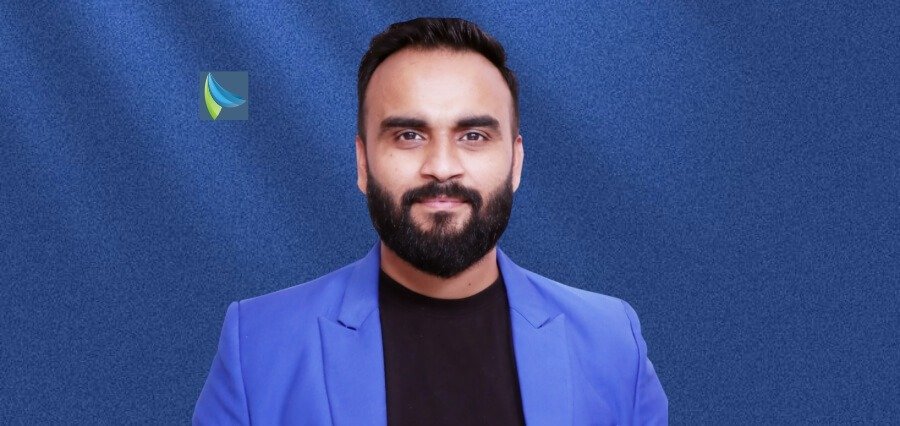
Sachin Arora has built his work around that exact problem. As the Founder of brAInam.ai, he approaches artificial intelligence from a practical, business-first perspective rather than a purely technical one. What he brings is the insight of someone who tried to solve his own business challenges with AI and found that the available tools were not built for people like him. His journey offers a look at how AI can be reshaped for the people it too often leaves behind.
Let’s explore how Sachin is redefining AI adoption by putting simplicity, accessibility, and real business needs at the heart of innovation!
From Business Frustration to Building brAInam.ai
Sachin Arora’s journey into artificial intelligence began not with a fascination for technology, but with a problem he experienced personally while running his travel business, Bee2Bees.
He shares, “My journey into AI began out of pure frustration, not fascination.”
With more than 5,000 associated travel agents booking Goa packages, he faced recurring operational challenges. Quotations went out late, agents sometimes sent incorrect itineraries, frequent offs affected productivity, and communication became difficult after 8 PM or on Sundays. These issues impacted customers and slowed business growth.
To solve these challenges, he decided to bring AI into his business. However, as a non-technical person, the process was far from easy. He struggled with WhatsApp API bots, experienced repeated suspensions, and worked with CRMs that did not provide the customization his business required. Even tools marketed as solutions for non-technical users still demanded technical understanding. Those that avoided coding often required users to write perfect prompts, another challenge for someone learning AI from the beginning.
Instead of stepping away from the challenge, he turned to AI itself for help. Through this process, he built his own dashboard, CRM, and automation canvas without writing a single line of code.
That moment changed his perspective. He realized that if he faced such difficulties while trying to adopt AI, millions of Indian business owners were likely facing similar barriers. This understanding became the foundation of brAInam.ai, a platform created to make AI genuinely usable for people like him.
The goal was not simply to introduce another AI tool but to remove the barriers preventing everyday businesses from benefiting from artificial intelligence.
Leading by Staying Close to Real Problems
Sachin defines his role not as a traditional leader, but as a “direction-setter.” For him, the first responsibility of a leader is staying close to the real problem. Because he personally experienced the challenges his users face, he ensures that every decision keeps users, not technology, at the centre.
This approach directly influences how brAInam.ai develops its products.
One of the biggest observations he made was that many so-called no-code AI tools still required users to understand prompting. While these platforms removed programming barriers, they introduced another learning curve.
Recognizing this challenge, brAInam.ai created a clear principle: AI should be no-code and no-prompt.
Users should not need to learn a completely new skill before they can benefit from artificial intelligence.
This philosophy led to the development of doot, the company’s fastest entry point for businesses adopting AI. A shop owner can upload a photo of their shop board and have a working AI agent live in approximately two minutes.
For Sachin, simplicity is one of the most difficult things to achieve.
He explains, “It’s easy to add features; it’s much harder to keep something genuinely simple. Protecting that simplicity is my daily responsibility.”
This focus on simplicity reflects his broader belief that technology should adapt to people rather than expecting people to adapt to technology.
He believes leadership is not about having all the answers. Instead, it is about staying honest, curious, and connected to the people a company is building for.
Building a Culture Around Purpose and Trust
In a rapidly changing field like artificial intelligence, keeping teams aligned requires more than processes and targets. Sachin believes it requires a shared understanding of purpose.
He describes his leadership style as “lead-by-example and honesty-first.”
Rather than leading through instructions alone, he believes in working alongside his team. He continues to learn, build, and experiment daily because a leader should never ask others to do something they are unwilling to do themselves.
A strong sense of mission also plays a key role in maintaining alignment. At brAInam.ai, everyone understands the purpose: putting AI into the hands of ordinary Indian businesses. When people understand why an organization exists, he believes they naturally make better decisions because they understand the larger purpose behind their work.
Honesty is another principle that guides his leadership. In an industry where change happens constantly, Sachin believes ego can become a limitation while curiosity creates progress. He focuses on being transparent about what is working, what is not working, and what still needs improvement. If a feature does not genuinely help users, he believes it is better to remove it rather than defend it.
For him, team alignment is not about control. It is about creating shared ownership of the mission and leading from the front.
Learning Through Challenges and Building with Empathy
Creating an AI-focused organization as a non-technical founder has been one of Sachin’s biggest challenges. Every early step required learning through experimentation, mistakes, and persistence.
He shares, “The biggest challenge was ironic: I was building an AI company as a non-technical founder.”
The experience shaped the way he approaches both leadership and product development. Since he personally understands what it feels like to be overwhelmed by technology, he leads with empathy.
One of the biggest lessons came from trying to make AI simple for others. Building powerful AI solutions is relatively easier than removing complexity. Removing code was only the first step; removing prompts was the bigger challenge because prompting remains one of the biggest barriers for many users.
However, simplicity alone was not enough. He also focused on building trust and safety into the experience. A quick AI setup has little value if the system produces incorrect information or impacts a brand negatively.
This led to features such as human escalation, memory, and a proper knowledge base being built into the platform by default rather than allowing AI agents to operate without context.
Another challenge for him has been changing perceptions around AI. Many Indian businesses either fear artificial intelligence or believe it is not meant for them. Convincing them to try AI is often more difficult than building the technology itself.
These experiences have shaped his belief that behind every user is a person looking for confidence, clarity, and support.
Staying Ahead Through Continuous Learning and Practical Experimentation
Artificial intelligence is evolving at a pace where what is considered advanced today can become outdated within months. For Sachin, staying relevant in this space requires continuous learning, experimentation, and practical application.
He believes that simply reading about AI is not enough. The only way to truly understand its potential is by using it, testing it, and building with it.
As he explains, “In AI, what you know today can become outdated in a few months, so standing still is not an option.”
Whenever a new AI tool or model emerges, he does not just observe it from a distance. He actively experiments with it to understand whether it can solve real business problems and create meaningful value for users.
Another important part of his learning journey has been teaching. Through AI training and sharing knowledge online, he continues to simplify complex concepts for students, professionals, and business owners.
Teaching, he believes, strengthens understanding because explaining something clearly requires deep knowledge of the subject. The questions and challenges raised by his audience often encourage him to explore AI even further.
At the same time, he remains focused on staying connected with real businesses and their everyday challenges. While technology changes rapidly, he believes strategies should always be built around actual needs rather than temporary trends.
For him, the true impact of AI lies not in following the latest hype but in making technology useful for people.
Achievements Measured Through Transformation
For Sachin, the most meaningful milestones in his journey are not defined only by numbers or business achievements. They are defined by moments that represent transformation.
One of the most personal milestones came when he built his first dashboard independently despite having no coding background.
Coming from humble beginnings, that experience became a turning point. He shares, “That single moment proved to me that AI could empower ordinary people, and it became the seed for brAInam.ai.”
Professionally, building Bee2Bees into a network of more than 5,000 travel agents demonstrated his ability to create something meaningful from scratch. However, the biggest transformation was within himself, from someone who once felt intimidated by technology to someone who now teaches others how to use it.
Becoming an AI trainer and helping everyday people understand artificial intelligence has become one of his proudest achievements.
For him, hearing someone say, “I finally understand AI now,” is more valuable than any revenue milestone.
His entire journey is built around one belief: “If someone like me, who started with nothing, can learn and build with AI, then truly anyone can.”
Leading Sustainably: Finding Balance Through Focus
Building an AI-driven company comes with constant demands, but Sachin admits that maintaining work-life balance is something he learned through experience rather than getting right from the beginning.
Earlier in his journey, he pushed himself too hard, working long hours, night shifts, and with little time to rest until health challenges forced him to pause and rethink his priorities. That experience fundamentally changed his perspective on leadership. He realized that while businesses can be rebuilt, health cannot, and that lesson continues to shape the way he leads today.
Instead of measuring success by the number of hours worked, he now focuses on working with purpose. He believes being constantly busy is not the same as being productive, and AI itself helps him maintain that balance by automating repetitive work so he can focus on what truly matters.
Outside work, he makes time for family, exercise, and moments of quiet reflection. Stepping away from the screen, he believes, often creates the space for his best ideas to emerge.
Reflecting on what sustainable leadership means to him, he says, “For me, well-being isn’t a reward you earn after success. It’s the foundation that makes sustainable success possible.”
Creating an AI-Powered Future for India
Sachin believes artificial intelligence will become one of the biggest factors shaping India’s future. However, he believes the real transformation will not come simply from having access to AI; it will come from how many people can actually understand and use it.
Today, large organizations are rapidly adopting AI, while many small and medium businesses still believe that artificial intelligence is not meant for them.
He believes this creates a significant gap. If AI adoption remains limited to a small percentage of businesses, many others risk being left behind. For him, AI training is the bridge that can close this divide.
Through brAInam.ai, he is working to make AI accessible without code, without prompts, and without unnecessary barriers. The platform allows users to begin with free credits because it understands that many businesses hesitate to adopt AI due to concerns about subscription costs or dependence on developers.
Removing that fear, he believes, allows people to take the first step. Alongside product development, he continues to focus on AI education by explaining concepts in simple, everyday language.
His vision aligns with the spirit of Atmanirbhar Bharat, that India should not only consume AI developed elsewhere but should empower its people to confidently use and eventually build AI solutions.
Making AI as Easy as Sending a Message
Looking ahead, Sachin’s vision for brAInam.ai remains clear: artificial intelligence should become simple enough for anyone to use.
His long-term goal is “to make AI as easy to use as sending a WhatsApp message” so that every Indian business, from a small kirana shop to a growing enterprise, can benefit from AI without requiring technical skills.
This vision is reflected in doot, the AI agent platform created to help businesses build their own AI assistants quickly. Businesses can create AI agents and share them wherever their customers already interact, through WhatsApp, Instagram, websites, or advertisements. When they want to improve their AI assistant further, they can train it using simple language without needing a developer.
He does not want AI to remain limited to big companies or tech experts. He wants it in the hands of shopkeepers, small traders, first-time founders, and everyday Indian businesses that form the foundation of the economy.
Beyond building technology, he plans to continue his role as an educator by simplifying AI through training, free content, and eventually reaching classrooms across the country.
His ultimate dream is to see India move from being only a user of AI to becoming a creator of AI.
Advice for Future AI Professionals and Entrepreneurs
Having entered the AI industry without a technical background, Sachin believes that curiosity, experimentation, and persistence matter more than traditional qualifications.
His advice to aspiring AI professionals is simple: do not believe that technology is only for experts.
He says, “You don’t need to be a technical genius to build a career in AI. I’m living proof.”
According to him, people should not only read about artificial intelligence but also actively use it. Real understanding comes from experimenting, making mistakes, and learning through practical experience.
He believes the people who succeed in AI will not necessarily be those who know the most, but those who try the most.
He also encourages people not to wait until they feel completely ready. Because AI is evolving quickly, waiting for the perfect opportunity can mean missing valuable learning experiences. Starting small, remaining consistent, and improving every day are the habits that create long-term growth.
At the same time, he believes people should not chase AI only because of hype or financial opportunities. The focus should always remain on solving genuine problems for real people.
When businesses create meaningful value, growth naturally follows.
In this new era, he believes curiosity can become more powerful than qualifications.
A Mission Built on Giving People the Key to Opportunity
Behind brAInam.ai is a personal story that explains why accessibility remains at the centre of Sachin’s mission.
He did not begin with advantages. His earliest earnings came from selling newspapers on the street, followed later by working as a bus conductor. He experienced repeated rejections during interviews and even faced a moment when he could not afford transportation to attend one.
A friend named Tara helped him reach that opportunity by providing the money for travel. He got the job that day, and Tara is his wife today.
However, challenges continued. Businesses failed, and health issues eventually forced him to shut down everything he had built. Once again, Sachin had to start from the beginning.
He shares this not for sympathy, but because it explains the purpose behind brAInam.ai.
When a business owner says AI is “not for people like us,” he understands that feeling personally, the feeling of standing outside a door that others seem to have a key to.
His mission is to hand over that key.
Because if someone who started with limited resources and no technical knowledge can learn, build, and succeed with AI, then no Indian should feel excluded from the future of technology.
Building a Future Where AI Belongs to Everyone
Sachin Arora’s journey reflects a different way of looking at artificial intelligence, not as a technology reserved for experts, but as a tool that can empower everyday people.
From solving challenges in his own business to building brAInam.ai for millions of others facing similar barriers, his work has always been guided by one purpose: making AI accessible.
Through leadership built on honesty, continuous learning, and empathy, Sachin continues to bridge the gap between advanced technology and ordinary businesses.
As AI reshapes industries, his vision remains focused on inclusion, ensuring that entrepreneurs, small businesses, and individuals across India have the confidence and ability to participate in the future of technology.
For Sachin Arora, the future of AI is not only about innovation.
It is about opportunity.
And his belief remains clear:
“If someone who started with nothing and knew no technology at all can build with AI today, then no Indian should ever be told they’ve been left behind.”
Read Also :