
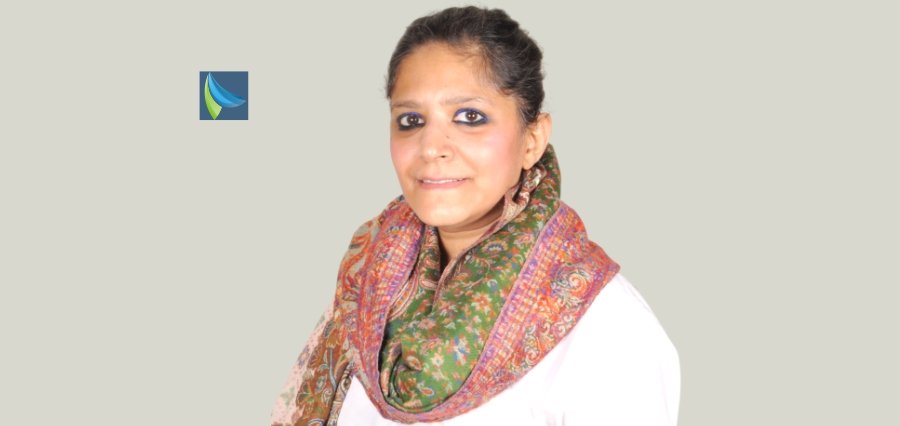
A philosopher who became a legal scholar and then went on to become an institution builder has spent two decades transforming professional exclusions into intellectual achievement – and there is more coming her way. She cannot be classified into any one particular profession and has always avoided trying to force herself into such a classification. She is indeed a philosopher, legal scholar, prolific writer with ten books under her belt, and a public intellectual; she is increasingly taking up a fourth profession for herself that of institution building with an aim to go global. This person is Dr. Tamanna Khosla, Founder of TZONE, and her works span from the theories of feminism and international laws to spirituality. An acclaimed personality among the Most Inspiring Global Women Leaders of 2026 and a Business Leader of the Year by CEO Affairs Magazine, she is a story that did not begin with accolades. She began her story with an exit – an exit which, according to her, would have brought an end to her academic career.
From Classroom Exit to Ten Published Books
Dr. Khosla’s academic path did not move in a straight line. As a child, she was drawn to the sciences and the questions that sit just beyond their edges: the nature of the universe, the possibility of life beyond Earth, the mechanics of disease and discovery. By her senior secondary years, that curiosity had migrated toward political science and the humanities. She studied political science at Lady Shri Ram College, where an early interest in feminism and international relations took hold, and carried that focus into her master’s degree at Jawaharlal Nehru University, where questions of politics, oppression, and gender came into sharper focus. Her M.Phil and PhD widened the frame further, pulling law and philosophy into a body of work that had already begun to resist easy classification.
A doctorate should have led to a stable academic life. It led instead to a teaching position at Delhi University that did not last. She attributes her removal from the role to academic animosity and says a clique within the system subsequently blocked her from securing another academic post. Many careers would have stalled there. Hers did not. She wrote ten books, completed a law degree, and rebuilt herself outside the institutions that had shut her out as a public intellectual, a legal scholar, and a feminist voice with a growing international footprint.
Faith as the Constant Behind Every Decision
Ask Dr. Khosla what steers her toward the right outcome when the way forward isn’t clear, and the answer has little to do with strategy frameworks or data models. It is faith. She credits belief in a higher power, paired with a broader spiritual practice, as the one constant that has never failed her at a moment of decision. This is not incidental to her work; it runs through her writing, her advocacy, and, by her account, the instincts she trusts most when the stakes are highest.
“Belief in a higher power and in spiritualism is the one constant that has never let me down when a decision needed to be made,” she explains.
Her spiritual life, she has said elsewhere, functions less as a retreat from her intellectual work and more as its foundation. She finds clarity through meditation and reflection and treats that clarity as inseparable from the analytical rigour she brings to her research. It is an unusual pairing in professional and academic circles: mysticism alongside legal scholarship, but for her, the two have never been in tension.
Goodness, Faith, and the Quiet Art of Reading People
Three things, in Dr. Khosla’s own account, have shaped her trajectory more than any strategic decision: a belief in goodness, a trust in God, and an ability to read people accurately without ever letting them know she’s doing it. The last of these is the least visible and, arguably, the most consequential.
“I can read people accurately. I just never let them know I’m doing it,” she states.
It does not announce itself in a meeting or a negotiation. Instead, it quietly informs how she navigates relationships, alliances, and the occasional adversary- a skill honed, one suspects, through the very institutional battles that pushed her out of a conventional academic career in the first place.
The Ability to Anticipate What Comes Next
Dr. Khosla describes herself as someone capable of identifying a solution before most people have finished articulating the problem. It is a striking claim, delivered without qualification, and she traces it to a specific discipline rather than raw instinct: a commitment to learning from anyone, anywhere. Situations, people from any country or generation, even non-human organisms all of it, in her framing- feeds into how she diagnoses and approaches a challenge. It is a philosophy of problem-solving built on radical openness to input, regardless of its source or credential.
That same openness underlies her broader intellectual project, which draws as comfortably on legal theory as it does on natural science, and treats disciplinary boundaries as more of a convenience than a constraint.
A Research Institute Built Only for Outliers
Dr. Khosla’s current project is an interdisciplinary research and knowledge institution, conceived on a deliberately narrow hiring philosophy and a deliberately expansive mandate.
“I want only nerds and geniuses, drawn from anywhere in the world,” she declares.
That hiring philosophy sets the tone for the institution’s scope, and she has designed it to match that ambition — spanning contemporary global issues and, by her own description, extraterrestrial questions alike, with the aim of generating new philosophy and legal frameworks. The throughline connecting these seemingly disparate pursuits is oppression, examined across race, class, gender, and geography.
As described in a recent feature on her venture, the organization is conceived as a research and academic institution that integrates social sciences, natural sciences, life sciences, technology, law, philosophy, and spirituality under a single roof — not merely to conduct research, but to generate usable solutions for some of humanity’s most persistent challenges, while advocating for the welfare of both people and animals. Its stated focus areas range from women’s empowerment and gender studies to legal research and policy development, animal welfare advocacy, and technology-driven social transformation. Unlike ventures built primarily around financial growth, this one is structured to balance sustainability with a humanitarian mandate that touches inequality, exploitation, poverty, environmental strain, legal accessibility, and public health.
She frames the underlying philosophy plainly: science, technology, law, and spirituality should function together rather than remain isolated from one another. That integration, rather than any single discipline, forms the intellectual spine of the institution she is building.
Making Law More Accessible, Simple, and Affordable
Among the many domains her institution touches, law occupies a particularly important place in Dr. Khosla’s thinking. She believes legal systems should be comprehensible to ordinary people, not confined to experts and institutions that often exclude the very populations most in need of protection. Legal empowerment, in her framing, is a tool for social justice, one that only works if it is genuinely accessible. Her organization’s legal research initiatives are designed to simplify complex legal concepts, promote legal literacy, support gender justice, advocate for animal welfare law, and explore legal frameworks suited to the challenges of future societies. The broader objective, as she puts it, is to ensure legal systems function as instruments of empowerment rather than as barriers to justice.
Building the Financial Runway for a New Institution
Dr. Khosla’s five-year vision is centered, deliberately, on funding. Her goal, in her words, is to garner enough resources to hire the right people- the kind of people she wants building this institution alongside her. Money, she insists, should never be the reason someone capable of doing meaningful work has to go without what they need. It is a vision built around removing a single obstacle rather than expanding on every front simultaneously: secure the resources first, and let the people she recruits do their work unburdened by financial precarity.
“Luck may create opportunities, but only hard work transforms those opportunities into lasting achievements,” she states.
That belief in disciplined, sustained effort – rather than a reliance on fortunate circumstance- runs through her account of how she rebuilt her career after academia turned her away, and it now shapes how she talks about the institution she hopes to fund into existence.
Decades of Resistance, Faced Alone
The obstacles Dr. Khosla describes are not abstract or hypothetical. She says she faced severe oppression from her own family and from segments of Indian society and academia, sustained over decades. She frames this as a fight she waged as a woman, largely without support from the people around her, the only consistent help she names is spiritual. Rather than let that isolation define her, she channelled it into a body of scholarly and creative output that now spans ten books, and a body of legal and philosophical work built almost entirely outside institutional patronage.
Her account of that period is unflinching. Where many public figures soften the record of professional exclusion, she names it directly: the removed teaching post, the blocked opportunities, the absence of allies and treats it not as a grievance to be aired but as a foundation to be built on.
Redefining Leadership on Her Own Terms
For Dr. Khosla, leadership has little to do with title, popularity, or institutional authority. It is, in her formulation, about the courage to develop independent ideas and pursue them with conviction, even when that pursuit is a lonely one. She has been candid that true leaders often walk an isolated path precisely because they are willing to challenge conventional thinking and construct new possibilities where none previously existed.
“Leadership begins when you stop following the crowd and start creating a path that others can learn from,” she says.
That conviction extends into how she thinks about the people she hopes to gather around her new institution. She has spoken about wanting to create more leaders rather than accumulate followers, encouraging the researchers and thinkers she works with to question assumptions and develop their own perspectives, rather than simply executing hers. It is a philosophy of empowerment that mirrors the institution’s broader mission: expanding who gets to participate in producing knowledge, not merely who gets to consume it.
Emulation Without Imitation, Respect Without Exception
Dr. Khosla’s counsel to anyone pursuing a prominent position in research, law, or public intellectual life arrives in two parts. First: do not envy people who are smarter than you. Learn from them, but do not copy them, their work belongs to them. Second, while money has its place, it should not become the primary motivation when the underlying goal is building something rooted in freedom and egalitarianism. In her view, nerds and geniuses deserve both respect and the freedom to pursue ideas without unnecessary constraint, a principle she hopes her organization will continue to uphold as it grows.
For women specifically weighing similarly ambitious paths, her message is direct and unhedged:
“Every woman has the power to shape the future when she chooses courage, knowledge, and purpose over limitation,” she asserts.
It is advice drawn less from theory than from lived experience from a career that was interrupted, rebuilt, and ultimately redirected toward an institution designed, in part, to spare other capable people the isolation she says she faced.
Recognition Beyond the Institution
Years of independent scholarship have not gone unnoticed. Dr. Khosla has been named among the Most Inspiring Global Women Leaders of 2026, recognized as a Business Leader of the Year by CEO Affairs Magazine, and profiled by The Silicon Magazine for the interdisciplinary knowledge ecosystem she is building. Her academic distinctions include the UGC JRF and SRF awards, the Buddha, Confucius and Gandhi Award for Excellence in Social and Political Theorizing, and the Top Global Recognition Award 2026. She has also expressed ambitions to eventually contribute to international institutions such as the International Court of Justice and the United Nations – a natural extension of a career already oriented toward global governance questions, human rights, and legal reform.
Despite the accolades, her own framing of success remains resolutely mission-first. The awards, in her telling, are a byproduct of the work rather than its purpose, evidence that a body of scholarship built outside traditional institutional support can still command international attention.
A Vision for What Comes Next
Dr. Tamanna Khosla’s story resists the conventional arc of institutional success: a promising academic path, a supportive mentor, a steady climb through established structures. Hers took a different route: an early exit from the institution that trained her, a decade of independent scholarship produced largely without institutional backing, and now an attempt to build the kind of institution she once needed and could not find. Her current project – an interdisciplinary research organization spanning law, philosophy, science, and spirituality is less a departure from that earlier struggle than its logical culmination.
What she is building, in effect, is a corrective: an institution designed for outliers, funded well enough that talent is never turned away for lack of resources, and organized around the conviction that oppression, whether rooted in gender, class, race, or geography is a problem that no single discipline can solve alone. Whether that vision fully materializes will depend, by her own account, on funding, on the people she is able to recruit, and on the same persistence that carried her from a blocked academic career to ten published books. Given the trajectory so far, few who have followed her work would bet against her.