
Every now and then, some leaders recognize that the competition between nations is not about the size of territory or volume of trade anymore. The true competition among countries is based on who can control the layers beneath the entire thing: the chips within machines, the gases used to clean the chips, the information that fuels artificial intelligence and the governance which ensures that it remains trustworthy. Such leaders seldom court media attention. They construct slowly, across various jurisdictions, and they judge themselves according to the legacy they leave behind them. Those who often construct this way have usually acquired their lessons in life early on about building from scratch in a foreign land.
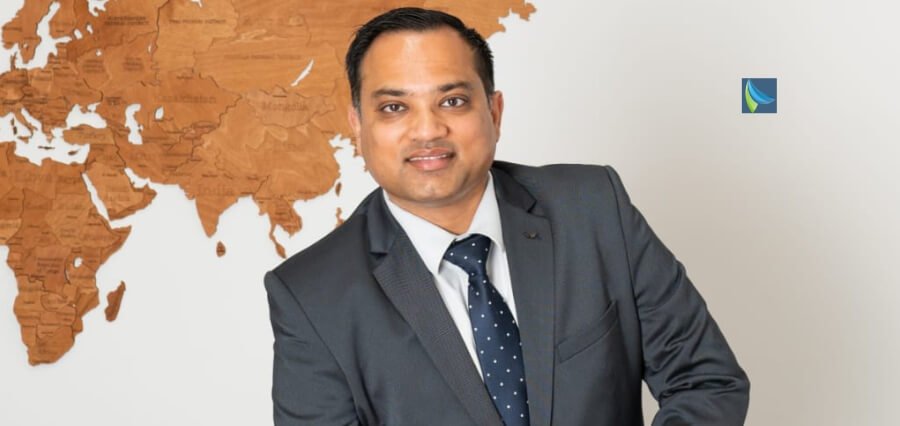
Such a leader is Nipun Bhargava, Board Member of Zenerative Minds, he is a global entrepreneur, strategist, investor, board advisor and institution builder with a diverse portfolio ranging from advanced microelectronics, sovereign artificial intelligence, autonomous defence platforms to secure hardware. Nipun started his journey in 2009 as an international student in Australia.
The Newcomer’s Advantage
Nipun describes his early years in Australia as the experience that shaped him more than almost anything else in his career. He landed in a new economy with its own regulations and its own way of doing business, and the network and the playbooks he had relied on did not travel with him. He had to listen first, adapt quickly and earn trust from zero.
He carried a high aim and a clear vision from the outset. He also drew a conviction from those years that he has repeated publicly, including on LinkedIn: expatriation is more than a relocation, and it can serve as a prelude to global entrepreneurship. His own trajectory is the evidence he cites.
Two lessons from that period still guide his decisions. The first is to think from first principles, but with empathy. An unfamiliar market teaches a newcomer to separate the truths that hold everywhere, such as unit economics, customer value and operational discipline, from the habits that are purely local. Nipun treats both as essential. Leadership, in his view, needs hard logic and a genuine feel for how people work, buy and expect to be treated in a given place.
The second lesson concerns adaptability. He sees it as a strategic advantage, and he states the principle without hedging: “Rigid plans rarely survive their first contact with a new market, and curiosity and speed of learning are worth far more than loyalty to a model that was built somewhere else.”
Protech Education Group
Nipun Bhargava, Director of Protech Education Group is owner and shareholder of multiple vocational colleges and consulting firms across Australia. He has thrived as a prominent leader in vocational education industry. He is known for his ability to successfully manage compliance frameworks for educational institutions, ensuring they meet regulatory requirements and deliver quality learning experiences.
Protech Education Group is a trusted partner in driving growth, compliance, and innovation across education sector. With a reputation built on integrity, expertise, and results, Protech Education Group has become a name synonymous with excellence in education services, with some esteemed colleges like Nortwest Pty Ltd, Britts College Pty Ltd, Datum College Pty Ltd, Laneway Education Pty Ltd, Bentley College Pty Ltd, Pakenham Institute Pty Ltd and many more vocational educational institutions.
Founded in 2011, the company was born out of a vision to provide high-quality education and guidance, tailored solutions, and strategic insights that enable the students to succeed in competitive and regulated environments. Today, Protech Education Group stands as a benchmark in the education space, contributing to the success of over 15,000 students successfully completed their education and are shaping their future through their forward-thinking developed approach.
Every successful enterprise has a story of inspiration behind it, and Protech Education Group is no exception. The company was founded with a clear and ambitious mission: “The core purpose of an esteemed education system is to foster individual growth and societal advancement by providing equitable access to knowledge and skills that enable personal fulfillment, active citizenship, and economic prosperity. Such a system aims to nurture students’ intellectual, social, and emotional development, empowering them to thrive in a changing world and contribute positively to their communities and the broader economy“. At its heart lies a dedication to helping learners navigate complex challenges, align with industry standards, and achieve sustainable growth.
The vision was never just about building a business; it was about creating a platform where expertise could transform industries and empower the students to thrive. Guided by the values of personal growth, cultural understanding, economic empowerment and social contribution Protech Education Group has remained steadfast in its commitment to excellence since its inception.
As Director and a determined founding member of these educational institutions, the group comprising of 11 vocational colleges, collectively now has over 10,000 international students from 73 nationalities across 56 locations within Melbourne, Sydney, Adelaide and Brisbane and in excess of 700+ employees. Under his leadership, the group has thrived excellence in delivering a wide range of programs, from wide range of construction based and automotive courses to community services, health, hospitality, and business management.
From its humble beginnings in Melbourne in 2011, Protech Education Group has charted a remarkable growth trajectory. What began as a small firm with a handful of projects has evolved into a recognized consultancy and group of institutions, expanding its reach across various locations globally and serving a diverse client base.
Behind the success of Protech Education Group is its strong leadership. Under the guidance of Nipun Bhargava, Director of Protech Consultancy Pty Ltd, the company has built a reputation for professionalism, quality, and trust.
His leadership philosophy emphasizes integrity, continuous improvement, and client-centricity. With extensive experience in Education Sector, he has steered the companies under the group toward consistent growth and recognition.
The team at Protech Education Group reflects the same values, comprising highly skilled professionals who are passionate about delivering results. The firm ensuring that its people remain at the forefront of industry knowledge and practice.
With his strong educational background being MBA and Masters in Electronics Engineering from RMIT University, his entrepreneurial ventures span beyond Australia, with businesses across India, and the UAE. His global perspective and passion for education have solidified his reputation as a prominent figure in the vocational education sector.
Through his extensive experience and knowledge in the education sector, Nipun is also on the advisory and governance panel of over 38 Registered Training Organisations across Australia.
Structure as a Leadership Tool
Leading operating companies, investments, boards and institutions at once invites chaos, and Nipun answers it with structure. He admits that without clear systems, a leader in his position ends up firefighting. Four habits keep him steady.
He organises his time by type of thinking, not by whatever lands in his inbox. Hands-on sessions with portfolio ventures stay separate from board governance, capital deployment and long-term institutional planning, so he never carries one mindset into another room.
He also recruits, mentors and trusts capable leaders and executive officers, then lets them lead. He holds a firm view on the point, and he says it plainly: “I believe if a business needs my daily involvement in day-to-day operations, the governance model has failed.” He keeps his own attention on strategy, resources and accountability.
His third habit is to make the portfolio work as a system. Lessons from advanced microelectronics, artificial intelligence and sovereign defence supply chains sharpen his investment thesis, his risk modelling and his approach to risk at board level.
The fourth is a single filter for every new venture, investment or board seat. He asks whether it strengthens long-term capability, builds lasting institutional value or advances core technological and societal priorities. When an opportunity pays well in the short term but pulls him off that course, he declines it.
Firm on Principle, Flexible on Execution
Across countries, industries and regulatory regimes, Nipun applies a simple formula: he holds principles firm and keeps execution flexible. Four commitments define how he builds.
Compliance and integrity come first. In defence technology, artificial intelligence, semiconductors and sovereign data, he treats regulation as the foundation of the business and not as a box to tick. Setting legal, security and ethical standards early, he argues, spares a company serious trouble when it enters regulated markets.
Execution, in his view, must be local. A home-market playbook pasted into a new region rarely works, so he prefers to hire and back leader’s native to each market, people who instinctively understand local procurement, labour rules and commercial habits.
He also insists that a growing company must become an institution. That means turning what the founder carries in their head into clear, repeatable and audited processes. Once teams in different countries share standardised frameworks, they can move quickly and consistently.
Finally, he keeps the mission constant while tactics change. Strong international teams, he finds, hold together through shared metrics, mutual trust and agreement on the outcome they pursue.
Where Technology Converges
Nipun believes the world is living through a genuine convergence. Artificial intelligence, sovereign cloud, autonomous defence platforms and advanced microelectronics once formed separate industries. Today, together, they underpin both economic resilience and national security.
His investment approach rests on three commitments. His teams focus on foundations, not fashions. Instead of chasing consumer trends, they back the layers that make long-term progress possible: semiconductor supply chains, secure hardware, sovereign air-gapped AI engines and advanced identity protection. Infrastructure is harder to build, he acknowledges, but it creates durable value and real barriers to competition.
They also keep humans in the loop, and he states the principle without qualification: “In defence, autonomous systems and critical infrastructure, technology should help people decide faster and better, never take away their ethical accountability.” His organisations require clear, verifiable human oversight at the points where critical decisions are made.
Finally, they design for sovereignty and privacy from the start. As technology becomes central to geopolitical stability, he sees platforms that respect data sovereignty, local compliance and strong security as both the right thing to build and a commercial advantage.
Lessons Forged Under Pressure
Nipun speaks candidly about the obstacles he has met. Three stand out.
The first was sovereign regulation. Taking deep-tech and defence platforms across borders means navigating shifting rules. His teams stopped treating compliance as an afterthought, built it into the product engineering pipeline and engaged regulators at the research and development stage.
The second was supply chain volatility. Shortages of specialised hardware and advanced microelectronics exposed how fragile just-in-time supply chains can be. His teams moved to diversified, more resilient sourcing and invested directly in sovereign chip design and assembly partnerships.
The third challenge was the team itself. People who excel at taking a company from zero to one often struggle as it matures into a formal institution. His organisations built structured transition frameworks that preserve the creative energy of the early builders while bringing in seasoned domain experts for later-stage execution.
Two lessons endured. Waiting for certainty leads to paralysis, so he makes decisive calls with around 70 per cent of the information and adjusts as he goes. In a crisis, he finds that a calm, analytical posture steadies the whole organisation.
A Disciplined Way of Deciding
Decisions at the meeting point of capital, frontier technology and strict governance leave little room for improvisation, and Nipun relies on three tests.
He studies the downside as closely as the upside, judging every opportunity by how bad the worst case could be. If that case could threaten the institution’s balance sheet or reputation, his teams restructure the deal before any capital goes in.
He looks ahead on regulation. Because rules in deep tech and defence change quickly, his teams assess each initiative against where legal and geopolitical standards will likely stand in three to five years, not where they stand today.
He also works to separate real value from hype. Excitement around a new technology comes and goes, so he asks whether an initiative builds real intellectual property, strong competitive barriers and healthy unit economics.
What Success Means
Financial results and successful exits matter to Nipun, but they rank below three other achievements. The first is building institutions that last: taking early-stage ventures and turning them into professionally governed organisations that run without their founders, keep innovating and keep creating value. The second is developing sovereign strategic capability. His work across sovereign AI, computer vision, identity defence and microelectronics directly strengthens national infrastructure and security. The third is mentoring, and he takes particular pride in the people he has supported who have gone on to build their own companies, lead major institutions or serve in public roles.
These achievements changed how he sees his role. He has moved from individual execution to what he calls orchestrating capability, and he defines the new measure of achievement in his own words: “Real success is not measured by what I produce personally; it is measured by how resilient the governance, the leaders and the ecosystems I leave behind turn out to be.”
Intentional Integration
Nipun has abandoned the idea of work-life balance. With commitments across regions and time zones, he finds the concept does not hold up. He practises intentional integration instead, with firm personal boundaries.
He schedules family time, health and recovery with the same priority as a board meeting or a capital raise. Leading at this tempo demands physical and mental stamina, and he knows those things do not look after themselves. He aims to be fully present in whichever mode he occupies. When he works, he concentrates on strategy and governance. When he steps away, he steps away from low-priority operational noise. Clear asynchronous communication across his offices means nobody has to stay available around the clock.
He also protects his physical and mental clarity, because the quality of his decisions depends on it. A consistent physical routine and time for quiet reflection, in his view, are preconditions for performing well over the long run.
Counsel for the Next Generation
Asked what he would tell founders and emerging leaders, Nipun offers four pieces of advice.
First, solve hard problems. He urges entrepreneurs to avoid low-barrier, short-lived trends and to build products, technologies or services that address deep structural problems, backed by proprietary technology, real operational complexity and genuine customer need.
Second, get governance right early. Corporate structure, legal hygiene and the cap table are not details to fix later. Clean governance, transparent reporting and integrity win the trust of institutional partners, investors and regulators as a company grows.
Third, build tolerance for friction. Entrepreneurship is a marathon of setbacks, market shifts and hard choices. He considers the ability to absorb bad news, stay composed, examine the facts and work out a solution the most important quality a leader can have.
Fourth, surround yourself with people better than you. He encourages leaders to build teams whose members surpass them in their own fields. Leadership, he says, means setting a clear direction, building trust and letting excellent people do their best work.
The Road Ahead
Nipun’s next phase centres on long-term capability, strategic independence and lasting institutional impact. He has identified five areas of focus.
Semiconductors and their surrounding ecosystem come first, because almost everything else depends on them. Chips sit beneath artificial intelligence, defence systems, communications, healthcare equipment and energy. He wants to help scale secure, resilient semiconductor capability, from design and assembly partnerships to the supply chains that feed them, so that more countries no longer depend on a handful of locations for something so critical.
Within that effort, he pays close attention to semiconductor gases, one of the least visible parts of the chain. Chip fabrication depends on ultra-high-purity bulk gases such as ammonia, nitrogen, argon, hydrogen and helium, along with specialty process gases for etching, deposition and cleaning. Purity is measured in parts per billion, and a small contamination or supply interruption can halt a fab or ruin a batch of wafers. Production of some of these gases is concentrated among a few producers and regions, and recent disruptions showed how quickly that concentration becomes a bottleneck. He intends to work on secure, locally anchored gas supply, purity and quality assurance, and distribution, so that new fabs and emerging semiconductor hubs rest on a dependable foundation.
His second goal is scaling sovereign technology infrastructure. He plans to expand global platforms in sovereign AI, hardware security and autonomous systems, so that public-sector and enterprise partners gain real security and economic resilience.
The third goal is the one he cares about most: empowering countries around the world, not only a few large markets. He wants to connect capital, technology transfer and commercial scale across emerging technology hubs, so that a nation in Asia, Africa, the Middle East, Latin America or Europe can build its own capability instead of depending on someone else’s. In practice, that means partnering with local leaders, transferring knowledge and not just products, and building institutions in each place that can stand on their own. He puts the conviction in a single sentence: “Capability should not belong only to the countries that got there first.”
Fourth, he plans to widen his impact beyond commercial returns, with more investment in healthcare infrastructure, advanced education platforms and community development.
Fifth, and with growing emphasis, he intends to develop the next generation of leaders. He expects to spend more of his time on institution building, governance and mentorship, so that the lessons, capital networks and governance models built over decades keep supporting high-impact leaders for generations to come.
Looking ahead, Nipun is committed to making a greater impact on the community and society by creating a positive impact in the education sector by helping in filling the real workforce gaps faster with a belief that Australia’s economy thrives when workers are productive from day one.
Nipun believes in “An education business is one of the few businesses where if you succeed, the whole country succeeds with you.”
He also aspires to contribute more through welfare and philanthropy, in meaningful ways.
A Border Crossed, a Door Opened
Nipun’s story circles back to where it began, with a student arriving in a new country in 2009. The conviction that took root then still anchors his ambitions: expatriation, properly understood, is the opening chapter of a global enterprise and not the end of a homeland. What he intends to build next follows directly from that belief. He wants to take what he learned from crossing borders and help others cross them with confidence.
The story of Protech Education Group is one of vision, resilience, and excellence. From its inception to its present-day stature as a leading education group comprising various vocational education institutions, the company has consistently demonstrated its ability to adapt, innovate, and lead. With a strong foundation, the educational institutions are not just colleges – they are the catalysts for transformation, growth, and success.