
Innovation Beyond Automation
The manufacturing industry is transforming, but this transformation is not happening incrementally anymore. Indeed, the advanced industrial technologies have become the core of the strategic thinking in factories, mines, refineries and warehouses throughout the world. While executives used to argue about their need for modernization, now they argue about their speed.
What Falls Under the Label
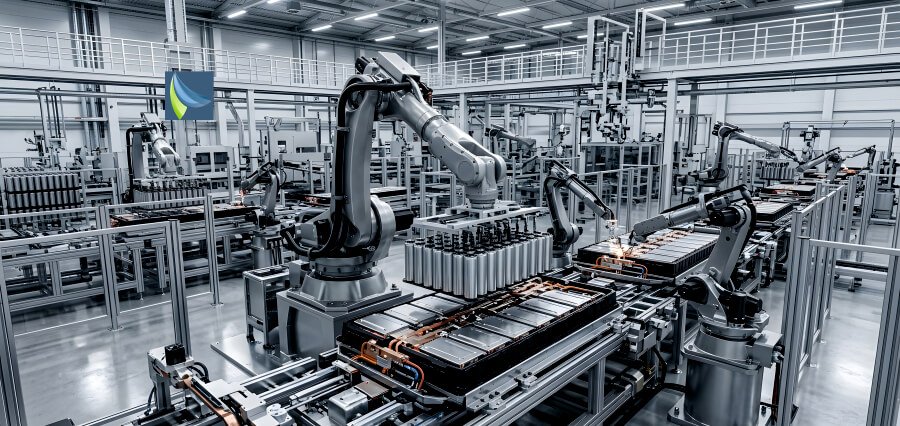
The advanced industrial technologies comprise a wide range of technologies. Robots perform tasks related to welding, assembly, and packing. Sensors provide data from the machinery in order to transfer it to cloud computing platforms. The digital twins enable the simulation of the production process in software before building it with metal. 3D printing helps to create intricate pieces, and artificial intelligence analyzes data looking for patterns that go unnoticed by humans. Each technology is useful on its own, but the most value emerges through their integration into a whole system.
Speed, Quality and Resilience
Organizations utilize advanced industrial technologies to simultaneously address the issues of speed, quality, and resilience. The inspection system automatically detects any defect that could have been missed due to human error. The predictive maintenance system warns about motor malfunctioning before the equipment breaks down and hence saves a lot of money in maintenance cost. The flexible production cell easily switches from one product to another and is able to meet fluctuations in demand.
A Real-World Example
Siemens demonstrates what can be accomplished with this approach. Its Electronics Works in Amberg, Germany, built in 1989, produces Simatic industrial controllers. As Siemens claims, machines and computers perform about three-quarters of all value chain operations, whereas humans operate the processes and deal with deviations. In Siemens’ estimation, the product quality is more than 99.9 percent. This plant is a demonstration of Advanced Industrial Technologies in action, since its engineers work on continuous improvement by using digital twins and data analytics.
Cleaner Operations
Efficiency is also a part of the climate change initiative. Through efficient energy management systems that measure usage of individual machines, and turn off machines that are not in use, process control reduces waste of material. Emission reporting is now enforced on manufacturers both by regulators and investors, which gives such efficiency practices both monetary and public value.
The Human Factor
The effect of the automation on the workforce requires an honest approach. Some repetitive tasks will become obsolete due to automation, but the unions are right in demanding explanations from the management. It generates employment for robot mechanics, data analysts and software developers. Corporations that invest in re-skilling their employees ensure their competitiveness. The people who know how to control machines have the upper hand.
Barriers to Progress
Challenges still exist. Large upfront costs discourage smaller manufacturers, and old machinery often refuses to interact with new software. Connected machines make bigger targets for cyber criminals, which means the security team has to safeguard factory networks as thoroughly as they would office networks. Executives who begin with specific pilot projects, analyze results, and then expand usually manage to sidestep costly mistakes. Companies implementing Advanced Industrial Technologies without a strategy frequently end up with fancy equipment and poor performance.
The Road Ahead
As sensors become more affordable and software becomes more intelligent, these technologies will reach mid-size factories and developing countries. The governments are promoting the move through inducements in digital manufacturing, and consumers require speed and customization in their products. The revolutionization of industry is no longer a prediction for the future. Those that make a move now will shape the decade to come.