
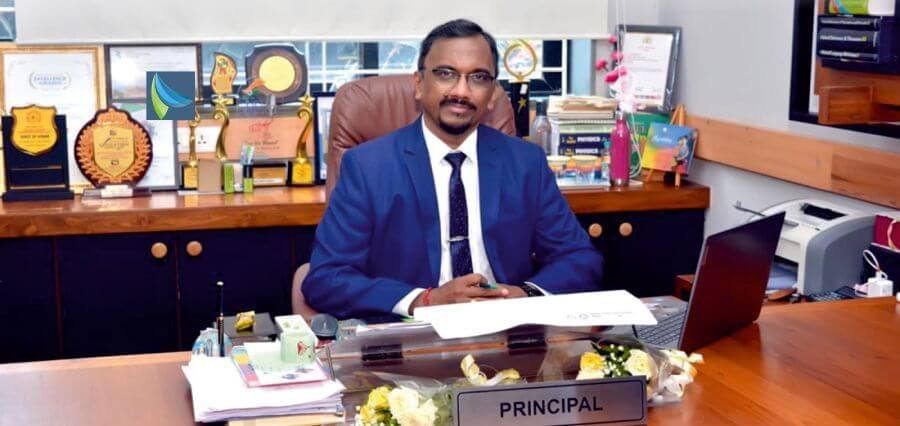
Some industries have the burden of influencing the future more than the education industry does. Decisions taken in the classroom and even by the principal are not likely to remain confined within the classroom; rather, they will spill over into families, communities and finally into the type of society that is developed by the nation. Dr. Rajiv Shrivastava realized this very early, and it has been his guiding philosophy throughout his professional life.
It all started with a simple yet profound realization on the part of Rajiv that good quality education can help change lives and make a good society. Being a young teacher, he began realizing that each child has immense potential which only requires some proper direction to blossom. The defining experience that made him realize this came when he saw children from diverse backgrounds gain confidence and become successful academically and responsible citizens through proper mentorship.
“That experience reinforced my commitment to education and inspired me to take on leadership roles where I could positively influence not only students but also teachers and institutions,” he asserts.
That single realization pushed him beyond the classroom and into leadership, where his influence could extend to entire institutions rather than one room at a time.
A Turning Point Beyond One School
Ask Rajiv to name the true turning point in his career, and he doesn’t point to a single award or milestone tied to personal achievement. Instead, he describes the moment he was entrusted with a dual responsibility – serving simultaneously as Principal and CBSE City Coordinator. The role stretched his impact well beyond the walls of a single school, allowing him to facilitate collaboration among institutions, support the effective rollout of CBSE initiatives, and champion best practices across the wider teaching community.
“Seeing schools work together for the benefit of students has been one of the most rewarding achievements of my professional journey,” he explains.
For him, that collaborative model – schools learning from each other rather than competing in isolation- remains one of the most meaningful outcomes of his career.
From Administrator to Empathetic Leader
Shrivastava is candid about how his leadership style has changed over time. What began as a largely administrative approach has evolved into something more collaborative, empathetic, and transformational. Today, he prioritizes empowering teachers, encouraging innovation in the classroom, and building a culture where continuous learning isn’t optional it’s expected.
He’s equally clear about what makes education different from every other sector he could have chosen.
“Education directly influences the future of society, making every decision meaningful and impactful,” he says.
Leading in this space, he explains, demands patience and compassion in equal measure, with academic rigour a balancing act between shaping young minds and safeguarding their emotional well-being.
Tested by Disruption
No challenge tested Shrivastava’s leadership quite like the disruption brought on by the pandemic and the sudden shift to blended learning. Maintaining uninterrupted quality education through that period demanded resilience, adaptability, and constant communication with teachers, students, and worried parents alike. The experience reshaped how he operates to this day, strengthening his belief in technology-enabled education, close teamwork, and proactive planning while reinforcing something he considers just as essential: emotional support delivered alongside academic guidance.
Innovation that Reaches the Learner
Among the changes Shrivastava has championed, integrating technology with learner-centered pedagogy stands out as the most consequential. Under his guidance, his institution introduced digital classrooms, competency-based learning practices, ongoing teacher capacity-building programs, and assessment analytics designed to personalize each student’s learning path. Together, these initiatives have measurably improved student engagement, lifted academic performance, and helped build a more inclusive learning environment for all.
Recognition as a Reminder, not a Reward
While Dr. Rajiv Shrivastava has received numerous prestigious honours throughout his career, he views every recognition as a responsibility rather than a destination. His contributions to education have earned him the Best Educator Award in Dubai, the Principal of the Year Award in Bangkok, the Best Innovator Principal Award presented by the Hon’ble Governor and Education Minister of Maharashtra, the Best Principal Award for National Education Policy (NEP) presented by the Hon’ble Education Minister of Gujarat, and the Best Practices in Education Award by FM Radio 94.3.
When asked what recognition in the education space means to him personally, Shrivastava resists framing it as a personal victory. “Recognition is not merely an achievement; it is a reminder of the responsibility entrusted to me,” he explains.
Each acknowledgement, he says, renews his commitment to serving with integrity, mentoring fellow educators, and pursuing innovative practices capable of creating lasting, positive change across the education landscape.
Advice Rooted in Service
For those stepping into education leadership today, Shrivastava’s guidance is direct and unambiguous: leadership isn’t about authority; it’s about service. He urges emerging leaders to listen more than they speak, empower their teams, embrace continuous learning, and keep students’ best interests at the center of every decision they make. Trust, empathy, and consistency, he insists, form the true foundation of effective educational leadership qualities no title alone can substitute for.
Building Toward the Next Decade
Looking years ahead, Shrivastava envisions his institution evolving into a model of academic excellence, innovation, and holistic development – a future-ready learning ecosystem where students build critical thinking, creativity, and leadership alongside strong values and academic achievement. In his continuing role as CBSE City Coordinator, he also hopes to deepen collaboration among schools, encourage wider adoption of best practices, and contribute meaningfully to an education system that is equitable, inclusive, and globally competitive.
For Rajiv Shrivastava, the mission has never been about a single school or a single title. It has always been about the larger, longer work of building an education system where every child’s potential has room to grow.