
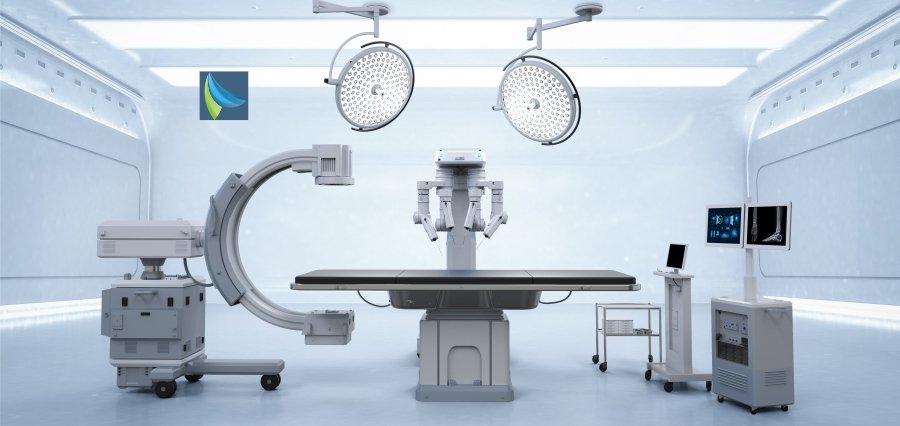
Tomorrow’s Operating Room
The future of surgery is no longer something that can only be imagined in the distant future – it is happening right now in the world’s most technologically advanced operating rooms. With the help of technology, precision, and human expertise, surgery is entering a new era where operations are safer, more intelligent, and minimally invasive to a degree never achieved before. The things that used to be only in the realm of science fiction are rapidly becoming the norm, and the surgical room is turning into an intelligent, highly coordinated system aimed at achieving accuracy, efficiency, and patient-centered outcomes.
A New Era of Precision
Precision is what essentially defines the operating room of the future. The use of high-definition imaging, digital navigation, and robotic assistance not only extends but also enormously enhances the doctors’ powers of observation and command. The use of real-time anatomical mapping grants the ability of operating with precision to the scale of a millimeter, thus the margin for mistakes is very much minimized and difficult tasks become more easily manageable and predictable.
Moreover, robotic devices are not just human power enhancers any more, they are human power elevators. Precisely controlled movement, 3-dimensional viewing, and the deftness of the operation all being under the robot’s control enable the robotic-assisted surgery to be performed with minimally small incisions, least possible trauma, and speedy rehabilitation. The technological breakthroughs in question have the potential of setting the redefinition of surgical possibilities.
Technology at the Core
The future of the surgical room is made possible by a suite of technologies that are not just there to serve but to communicate and work in harmony. The role of Artificial Intelligence is that of data miner and analyser during surgery who is also responsible for alerting the surgeon to almost imperceptible changes, forecasting problems, and suggesting the best possible course of action. While augmented reality displays essential data right to the surgeon’s natural sight, the revealed visuals being the hidden parts, locating the instrument, and enhancing results.
This digitally interconnected set-up does not substitute the surgeon’s know-how but rather provides him with a better support role. The technology becomes the surgeon’s partner, facilitating him with exactness-driven and precision-guided aid.
Robotics Transforming the Surgical Landscape
The robotic equipment used for surgical purposes has come a long way and is now very different from the ones that were first introduced. The new generation platforms with their flexible arms, minute instruments, and the simplicity of the control allows the doctor to reach any part of a body that might have been impossible or very difficult before. What used to be the case with the need of forming large cuts in order to make operations on the body can now be done through small openings that might be even smaller than the finger.
The next generation of less invasive instruments may be seen in single-port robotic surgery, natural orifice methods, and micro-robotics. The technologies in question make it possible for even lesser scars to be left behind, the duration of the recovery period to be shortened, and the level of pain experienced to be lessened, thereby fundamentally transforming the surgical experience and making it as comfortable as it can be for patients everywhere.
Immersive Visualization and Simulated Preparation
The operating room of the future is immersive. With the help of VR and 3D modeling, surgeons can practice on a digital duplicate of the patient’s anatomy. They can try out different strategies, predict difficulties, and even perfect their technique without any time pressure in the actual operating room.
Afterward, AR equips the surgeon with one more layer of control. The surgeon’s eye will be guided by virtual route assistance, color-coded organs, and up-to-the-minute imaging. This degree of visualization was difficult to imagine 10 years ago, but now it is getting to be quite common.
On top of that, AI is just assisting surgeons, not taking over their jobs—it enables higher standards of care by giving a level of detailed analysis that would be difficult for a human to accomplish.
The Future Has Already Arrived
What was previously envisioned is today being realized. The smartest ORs are being built in hospitals worldwide by adding on board the latest tech such as robots, AI, AR, and advanced imaging. Besides achieving surgical accuracy, the overall patient outcome is also redefined by this machinery.
The future of surgery has come and gone—it is smart, almost automatic, very engaging, and deeply caring of the patient.
Tomorrow’s operating room goes beyond its basic function of a place where doctors do their work. It is the very center of a new surgical epoch—one where technology and humanity work hand in hand to rescue lives with unmatched precision, empathy, and creativity.
Read Also : The Evolution and Future of Minimally Invasive Surgery