
From Concept to Care
The MIS is probably one of the most significant medical innovations of the last centuries. What used to be a scary and rare operation is now almost standard procedure in any medical field, be it chest, bone, reproductive system or cancer-related diseases.
Installing less invasive surgical interventions is not only a technical issue but it is also a fundamental shift in the medical doctrine of the healing process: six is now the measure of the healing process and it stands for the accuracy, safety, and reverence of the biological self-healing factors of the body. Being more than just a surgical alternative, MIS is today an idea of future surgical care where medicine, innovation, and patient-centered design meet.
The Early Vision: Rethinking Surgical Intervention
The advent of minimally invasive surgical techniques is deeply rooted in the 20th century, when the first efforts to explore the human body without gruesome cutting were made. The very first laparoscopy and endoscopy were quite crude and had limitations due to underdeveloped optical tools and advanced instruments. However, the core idea was the radical one-the same surgical outcomes with less damage to the patient brought about.
By the close of the 1980s and into the early 1990s, the enhancements in fiber optics, video imaging, and the engineering of instruments had laid the foundation for the initial contemporary MIS operations. Doctors could now remove the gallbladder and do an appendectomy as well as gynecological operations through tiny incisions thus eliminating pain and hospitalizing for a short period and speeding up recovery. The concept that was only a trial at that time had quickly become a turning-point one
A Technological Revolution in the Operating Room
The rapid evolution of MIS is almost entirely attributable to technology. With each decade, new discoveries have challenged the limits and created new possibilities.
High-definition imaging very much helped surgeons in achieving great clarity in their work. The use of miniature instruments made it possible to perform the most skillful tasks in the hardest and most cramped parts of the human body. It was the introduction of energy devices that raised the cutting and sealing of the tissue to the utmost levels of accuracy.
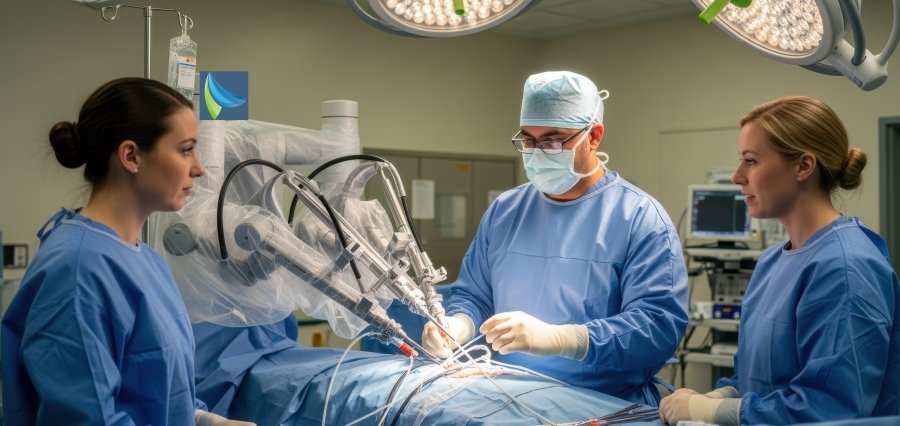
Robotics brought the surgeons to the next level of perfection. Thanks to better dexterity, elimination of tremor, and improved 3D visualization, robotic-assisted surgery is considered a major breakthrough in MIS. Now, operations that were once deemed too challenging, for example, prostatectomies, cardiac valve repair, or complex cancer surgeries, can be carried out with minimal harm to the healthy tissue.
Artificial intelligence integration in surgical interventions heralds a new era with the features like on-the-spot guidance, prediction of the events, and decision support. Together, these technological reforms are crafting a surgical environment where the precision and safety take the unprecedented levels.
The change of belief: the size of the incision is no longer the factor that determines the surgery, instead, it is the precision of the intervention.
The Expanding Scope Across Specialties
The story of the development of MIS (Minimally Invasive Surgery) is essentially the story of its expansion to numerous medical areas besides the initial ones. Its influence has extended to regions other than those of the abdominopelvic surgeries that it was derived from.
To illustrate, the surgeon on the thorax is no more forced to insert his entire hand inside the chest cavity thanks to video-assisted operations which are now widely used in the field. The orthopedic that is replaced by the new technology relies now on the arthroscopy method to achieve the most accurate joint repair. The interventional cardiology doesnt need to cut the chest to save the patient. It can perform the tasks in question through vessels. In order to get to the deepest parts of the brain and cause the least damage, neurosurgeons are currently utilizing endoscopy.
From Concept to Care: A Vision Realized
The Instagram of minimally invasive surgery—a voyage from a crazy idea to a commonly accepted standard—is what medicine can accomplish when humanity and technology combine. Progress, whose main features are curiosity, courage and compassion, is the essence of its story.
At present, MIS is nothing less than a triumph of technology over the power of nature. While it is truly the least damaging surgical technique, it is the one that most respects the patient’s welfare, and it is the one that, by harnessing the power of science, takes the art of surgery to the highest levels that were once considered impossible.
The story of the evolution of minimally invasive surgery is the story of tomorrow’s medicine, which will be all about care that is precise, personalized, and deeply patient-centered.