
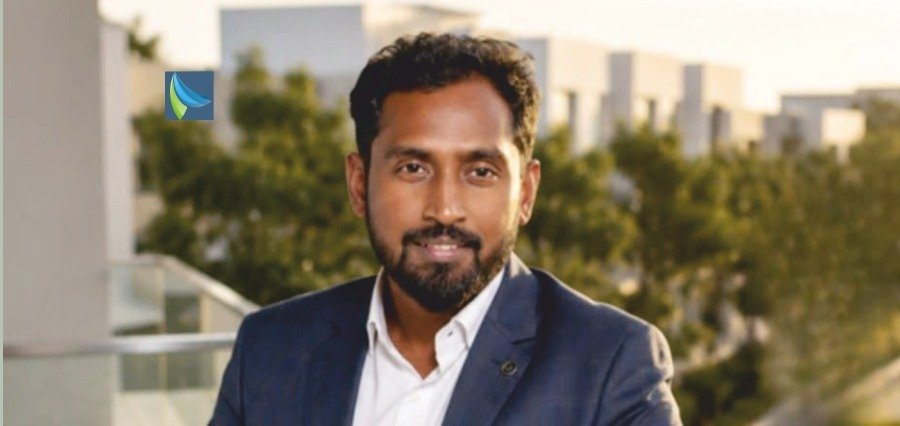
Each year, the real estate and infrastructure industries create their fair share of headlines with their record launches, sky-high ambitions, and impressive numbers that form the basis of many conversations in board rooms. But beyond the clamour of growth there is a much stronger force at work, one that will decide which organizations survive. That is the power of leadership based not on size but on integrity and discipline.
One such individual is Dr. Ohm Prakash Gunasekaran, who is the CEO of Sri Baby Properties & Zenvistas Realty, and who is noteworthy for one simple reason: while most individuals consider trust a marketing tactic, he considers it an investment in business. This is evident in his career journey, which has seen him progress from selling on the sales floor to working in real estate, cement, and business expansion, in a way that is not characterized by charisma but rather discipline and ownership. Looking back at more than fifteen years in professional life, this man has the unique ability to speak about leadership unapologetically.
Indeed, his career path is unique in that it defies a linear progression. Many CEOs of real estate firms have come from backgrounds in construction, finance, or family businesses. He has come from a background in sales, a profession that requires perseverance, discourages complacency, and finds no easy route around consumer psychology. His background, he suggests, continues to influence the way he makes business decisions even now: not from an executive position, looking down upon consumers, but from their point of view, looking up at him.
From Performer to Builder of People
Every leader has a defining moment, and for Dr. Gunasekaran, it arrived not as a single dramatic event but as a quiet, internal shift. Sales, he explains, taught him hunger, discipline, and resilience, the raw instincts required to deliver results under pressure. But leadership demanded something entirely different. It required him to stop being the person who delivers and start being the person who builds others capable of delivering.
That realization reshaped the question he asked himself every day. Where he once asked, “How can I achieve this?” he began asking, “How can I build a team that can achieve this consistently without depending on me?” It is a distinction that separates managers from leaders, and it forms the philosophical bedrock of everything he has built since.
“Leadership is not about having all the answers. It is about building people who can find the answers and take ownership,” he asserts.
This belief now anchors his approach as CEO, where he operates on three non-negotiable principles: complete trust in his people, absolute clarity of purpose, and firm accountability for outcomes. His biggest professional growth, he notes, did not come from personal accomplishment but from watching others accomplish more because he stepped back and let them.
Industry-Agnostic, Principle-Driven
Few executives can claim fluency across real estate, cement, and business growth functions yet Dr. Gunasekaran has moved between these sectors without losing his footing. His secret, he says, lies in recognising that industries change but the fundamentals of business do not. People, customers, processes, numbers, and execution remain constant, regardless of the product being sold or the market being served.
Rather than entering a new industry assuming mastery, he immerses himself in its mechanics from the ground up understanding how customers think, how revenue is generated, where costs accumulate, and where the real opportunities lie dormant. His sales background sharpened his understanding of customer psychology; his operational roles taught him to construct systems; and his leadership positions trained him to connect strategy with execution, and profit-and-loss statements with people. The result is a leadership style defined by adaptability without compromise a willingness to learn quickly while holding firmly to core principles.
This cross-industry fluency, he believes, is not a matter of exceptional intelligence but of disciplined humility. A leader stepping into an unfamiliar sector who assumes prior expertise transfers automatically is, in his view, setting up an organisation for avoidable failure. Instead, he approaches every new business the way a first-time customer would asking basic questions before attempting sophisticated strategy. It is a habit that has repeatedly allowed him to identify inefficiencies that longtime insiders had stopped noticing.
Balancing Growth with Trust
Nowhere is this balance more visible than in his approach to the real estate and infrastructure sector, an industry notorious for prioritising short-term sales over long-term credibility. For Dr. Gunasekaran, growth and trust are not competing priorities but interconnected outcomes. A sale, he notes, can be secured through aggressive promises, but a brand is built only through consistent delivery on those promises.
His decision-making rests on three pillars: transparency, quality, and long-term value. Organisations, he insists, must promise only what they can deliver and then exceed it. Quality and timely delivery must never be sacrificed for short-term margins, since a project’s reputation outlives its revenue by decades. Every decision, he adds, must create value not merely for the business but for the customer entrusting the company with one of the most significant investments of their life.
“Grow fast but grow responsibly. Build projects, but more importantly, build confidence,” he says.
Underlying this philosophy is a conviction that reputation functions as an invisible asset on the balance sheet one that, when protected, makes profitability sustainable rather than accidental.
Leading Through Uncertainty
Every executive faces defining challenges, but for Dr. Gunasekaran, the most demanding phases of his career were not marked by the size of the targets he chased, but by the weight of uncertain outcomes paired with undeniable responsibility. Transitioning across industries, assuming larger profit-and-loss responsibilities, and stepping into new leadership roles repeatedly pushed him outside his comfort zone, often without the comfort of a perfect answer.
What carried him through, he explains, was resilience paired with a disciplined focus on the next right action rather than being overwhelmed by the entirety of the problem. Leadership, in his experience, is tested most severely when circumstances deviate from the plan and the difference between panic and composure often determines the outcome.
“Indecision often costs more than making the wrong decision. Learn, adapt, and move forward,” he affirms.
This belief, he says, has stayed with him throughout his career, transforming every difficult phase into a lesson and every lesson into sharper leadership instinct.
Building a Culture of Ownership
Ask Dr. Gunasekaran how he builds high-performing teams, and the answer circles back to a familiar theme: trust, paired inseparably with clarity and accountability. People perform at their best, he believes, when they understand what is expected of them, why it matters, and that they possess the freedom to make decisions. He rejects the idea of “half-trust” if he extends responsibility to someone, he extends the space to execute alongside it.
His operating model is deliberately simple: give people a clear goal, the right resources, decision-making authority, and then hold them accountable for the outcome. He would rather lead a team that takes ownership, learns from its mistakes, and improves, than one paralysed by the fear of acting without prior approval. Yet empowerment, in his framework, is never mistaken for an absence of discipline – clear targets, structured processes, management information systems, and measurable outcomes remain firmly in place.
“Trust them. Give them ownership. Set the standard. Measure the outcome. And let them grow,” he explains.
For him, the CEO’s role is not to make every decision but to build people confident enough to make the right decisions independently, a philosophy that has visibly shaped the organisational cultures he has led.
Staying Ahead Without Losing the Fundamentals
The real estate sector’s rapid evolution driven by rising customer expectations and advancing technology could easily tempt leaders into chasing every emerging trend. Dr. Gunasekaran takes a more measured stance, choosing to adopt only what creates genuine value while building strong execution systems around it.
Today’s customers, he observes, expect transparency, superior quality, faster communication, technology-enabled experiences, and above all, confidence that promised deliverables will arrive on schedule. His response is structured around three pillars: technology, standardisation, and accountability. Technology enables faster, data-driven decisions through automation, CRM and ERP systems, and real-time project monitoring, but he is careful to note that technology alone cannot resolve execution failures. Strong standard operating procedures across sales, design, procurement, construction, finance, and customer service remain essential, as does ensuring every commitment carries a clear owner, timeline, and measurable outcome. Quality, he maintains firmly, is non-negotiable cost optimisation must never come at its expense, nor should speed ever be pursued at the cost of workmanship.
Ultimately, his philosophy on staying competitive is refreshingly unglamorous: use technology to move faster, use systems to stay consistent, and use accountability to deliver what has been promised. In an industry often measured by who launches a project first, he insists the real competitive advantage lies elsewhere in building better, delivering on time, and earning a customer’s trust for the next purchase, not just the current one.
Recognition as Responsibility, Not Reward
Over the years, Dr. Gunasekaran has accumulated numerous awards and recognitions, yet one holds personal weight: being named Most Admired CEO of the Year for Real Estate & Infrastructure. Its significance, he clarifies, lies not in the trophy itself but in what it represents a moment to pause and reflect on a journey that began in sales and evolved into leading organisations at the highest level.
He is careful to frame recognition as a collective outcome rather than an individual achievement, crediting the teams who trusted him, the mentors who guided him, the colleagues who challenged him, and the customers who gave his organisations the opportunity to deliver. Every award, in his view, functions less as a trophy and more as a responsibility to raise the bar further a mindset that keeps ambition tethered to humility.
The Lesson Learned Too Late and Passed Forward
Asked what he wishes he had understood earlier in his career, Dr. Gunasekaran does not hesitate: the mistaken belief that being a strong leader meant being involved in everything, solving every problem, and possessing every answer. Experience taught him that leadership is measured instead by how effectively one builds people, delegates ownership, and creates systems capable of performing independently of the leader’s presence.
This realisation reframed his entire approach to management. His role, he came to understand, was never to be the best performer in the room, but to make the whole room perform better. It is advice he now extends to the aspiring entrepreneurs and future CEOs who look to leaders like him for guidance urging them to build the capability to sustain success rather than chase it, to keep their word, know their numbers, and build people rather than merely a business. Titles, he cautions, should never be confused with leadership itself; respect must be earned before it is expected.
A Vision That Outlasts the Milestone
Looking ahead, Dr. Gunasekaran views his current recognition not as a destination but as confirmation that greater responsibility lies ahead. His long-term vision centres on contributing to a more organised, technology-driven, and customer-centric real estate industry one where success is measured not solely by revenue and scale, but by quality, transparency, and the trust earned with every customer.
His priorities for the coming years are threefold: scaling operations without compromising governance or culture, building people and future leaders who can eventually construct businesses of their own, and creating customer-led real estate that recognises buyers as individuals investing their aspirations and savings, not merely their capital. Beyond metrics and milestones, his deeper ambition is to leave behind an organisation and leadership culture capable of growing even beyond his personal involvement.
“The next chapter is about building bigger, building better, and building something that lasts,” he states.
It is a fitting closing note for a leader whose career has been defined less by individual triumphs and more by the systems, people, and trust he has left in his wake proof that in real estate, as in leadership, what endures matters more than what is announced.