
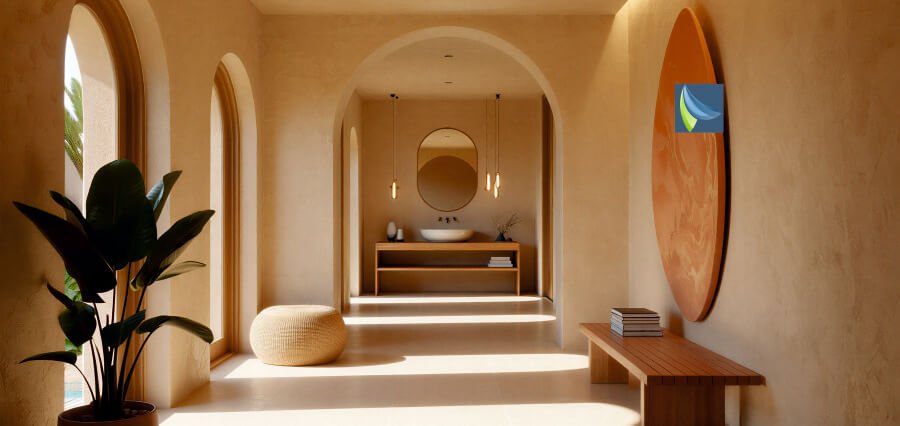
Creating Meaningful Spaces
The spaces people spend time in quietly shape how they feel, think, and connect with others. The shape of a space can influence experiences in the lives of people in a way that can be both subtle and important, whether in a home, workplace, educational environment or public place. This is where modern interior architecture plays a significant role. It goes beyond decoration and focuses on creating environments that support comfort, purpose and human wellbeing.
Understanding Modern Interior Architecture
There is a common misconception that interior design and interior architecture are the same thing. They are related, but they are not identical. Where interior design often focuses on the visual qualities of a space, interior architecture is concerned with its fundamental structure, how it is organised, how it functions, and how it responds to the needs of the people within it.
Modern interior architecture takes this further by asking deeper questions about meaning. What should this space make people feel? How should it support the activities that happen here? What does it communicate about the values of those who built it or those who use it? These are not questions about furniture or colour palettes. They are questions about purpose, and the answers to them shape everything else.
The Human Experience at the Centre
Good architecture has always placed human experience at its core and in today’s world, designers are better equipped with tools and knowledge to achieve a greater level of precision. Research into how people respond to light, space, proportion, sound, and material has given modern interior architecture a richer foundation for decision making.
This knowledge is put to work in spaces designed not just to impress on first encounter but to sustain wellbeing over time. A working environment, created with intelligent design to minimise unwanted stress. A healthcare setting that feels calming rather than clinical. A home that supports both privacy and connection depending on what a moment requires. These outcomes do not happen by chance. They are the result of design that takes the human experience seriously as its primary brief.
The Relationship Between Space and Purpose
Every space has a purpose, and the best environments are those where the design and the purpose are in genuine alignment. When they are, something clicks. People move through the space naturally. They feel comfortable doing what they came to do. The environment supports them rather than working against them.
Modern interior architecture achieves this alignment through careful listening and considered response. It begins with understanding what a space needs to do, who will use it, and what their experience should feel like. From that understanding, decisions about layout, structure, light, and material all follow. The result is spaces where the design serves the purpose so well that the design itself becomes almost invisible, felt rather than noticed.
Light, Material, and the Sense of Place
Two of the most powerful tools in any interior architect’s work are light and material. Natural light changes throughout the day and across seasons, and the way a space responds to that change affects everything from mood to productivity. Artificial light, when designed with care, can extend and enhance what natural light provides or create entirely different qualities of atmosphere when needed.
Materials carry meaning too. The weight of stone, the warmth of timber, the coolness of polished concrete are not just textural choices. They express something of a space and create a physical relationship between the environment and the people within it. In modern interior architecture, these elements are intentionally employed not just for their aesthetic appeal, but for the impact they create within the interior.
Sustainability as a Design Value
The way spaces are built and the materials used to build them carry environmental consequences that responsible design cannot ignore. Today, sustainability is more than just a design requirement; it is a vital design consideration that is impacting the design decisions from project conception.
Spaces designed with sustainability in mind tend to age better, perform better, and feel better over time. They are built with honesty about materials and processes, and that honesty often produces an authenticity that purely decorative approaches struggle to achieve.
Looking Ahead
The spaces people live and work in quietly shape their daily routines, their moods, and the overall quality of their lives. Modern interior architecture, when approached with care and a genuine understanding of human needs, takes ordinary rooms and turns them into places that actually support how people feel and function day to day. The best work in this field manages to hold beauty and practicality together, adjusting as lifestyles shift, so that the spaces it creates go on serving the people who use them long after the design itself is finished.