
Rhythm and Expression
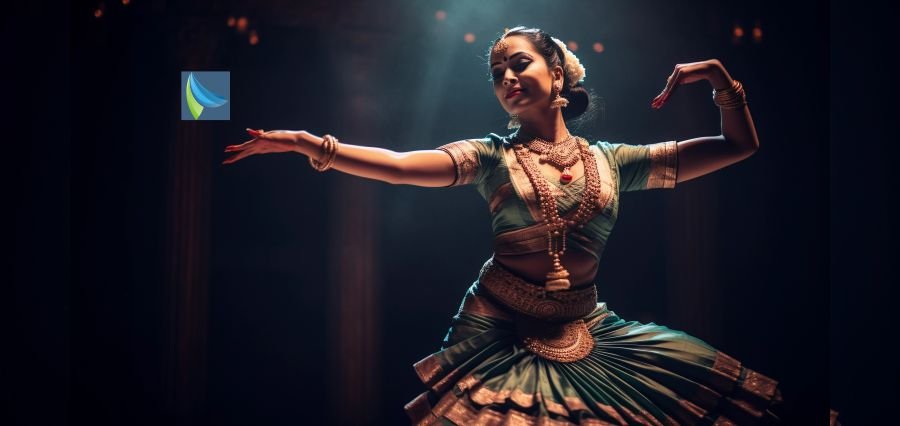
Some art forms remain meaningful and powerful despite the passage of time. They carry the knowledge, feeling and expression of generations, and they continue to speak with quiet clarity long after the world around them has changed. Bharatanatyam is one such form. Born from ancient temple traditions and shaped over centuries into one of the most refined classical dance forms in the world; its visual and expressive language remains as vital today as it has ever been. Bharatanatyam heritage aesthetics are not merely a record of what came before. They are a living resource that contemporary art keeps returning to with fresh eyes and genuine purpose.
A Language Shaped Over Centuries
To understand why this art form still speaks so strongly to the present, it helps to first understand what it actually contains. Bharatanatyam is built upon a precise and deeply considered visual language. Every hand gesture, every movement of the eyes, every position of the body holds a specific meaning. The relationship between rhythm, expression and movement is not something that happened by chance. It developed over centuries through the work of artists, scholars, and teachers who approached the form as both a spiritual discipline and a serious artistic practice.
The principles that govern this form reach well beyond technique. They deal with proportion, line, symmetry, and the way inner states are made visible through outward form. These principles apply just as naturally to painting, sculpture, photography, and visual design as they do to performance. Bharatanatyam heritage aesthetics offer a complete visual philosophy, and artists working across many different disciplines are finding genuine value in what that philosophy contains.
Bharatanatyam Aesthetics in Contemporary Art
Contemporary art is often described as restless. It reaches into many traditions and many histories in search of new ways to express what it feels like to be alive in the present moment. The growing interest in classical Indian art forms is part of this broader search, and it is producing work of real depth and originality.
Artists working in visual media have found in bharatanatyam heritage aesthetics a richness that purely contemporary visual languages do not always offer. The mudras, or hand gestures, translate naturally into sculptural and graphic forms. The expressive range of the face as developed within this tradition gives artists a model for exploring human emotion that is both carefully structured and deeply felt. The geometric precision of the body positions offers a way of thinking about composition that carries cultural meaning alongside its visual strength.
Identity, Memory, and Artistic Expression
For many artists of Indian origin working across the world, engaging with classical heritage is also something deeply personal. In contexts where identity can feel pulled in several directions at once, returning to a form as rooted and complete as this one offers something that contemporary reference points rarely can.
Bharatanatyam heritage aesthetics carry memory within them, the memory of communities, of devotion, of stories passed through the body across generations. When contemporary artists draw upon this memory, they are not simply borrowing a visual style. They are connecting their work to a living tradition that has its own internal logic, its own values, and its own understanding of what art is genuinely for.
The Conversation Between Tradition and New Expression
One of the more interesting things taking place in art today is the genuine exchange between inherited traditions and newer forms of expression. This conversation is not about choosing one over the other. It is about understanding what each brings to the other and about what becomes possible when that exchange is taken seriously.
Bharatanatyam heritage aesthetics bring a great deal to this conversation. Their emotional depth provides a model for work that connects directly with an audience without losing sophistication. Their rootedness in a specific cultural and spiritual context gives any work that draws from them a sense of grounding and purpose that feels increasingly rare.
Keeping the Aesthetic Alive Through New Work
Traditions survive not by being preserved unchanged but by being genuinely engaged with by each new generation. When contemporary artists take bharatanatyam heritage aesthetics seriously, exploring them with real curiosity rather than merely lifting surface elements, they contribute to the continued life of something that deserves to keep growing.
Conclusion
The continuing relevance of bharatanatyam heritage aesthetics in contemporary art goes well beyond cultural preservation or nostalgia. It reflects a recognition that certain visual and expressive languages are rich enough to keep offering something new across centuries and across very different contexts. Contemporary art that engages honestly with this tradition finds in it not a limitation but an opening, a way of seeing and expressing that deepens the work and connects it to a human inheritance very much worth carrying forward.