
Creative excellence often comes from those who are able to balance structure with imagination and discipline with expression. In a world where most professionals choose a single path, there are a few individuals who successfully build careers that reflect both logic and artistry. Their journeys highlight how creativity can take many forms, from designing physical spaces to expressing emotions through performance.
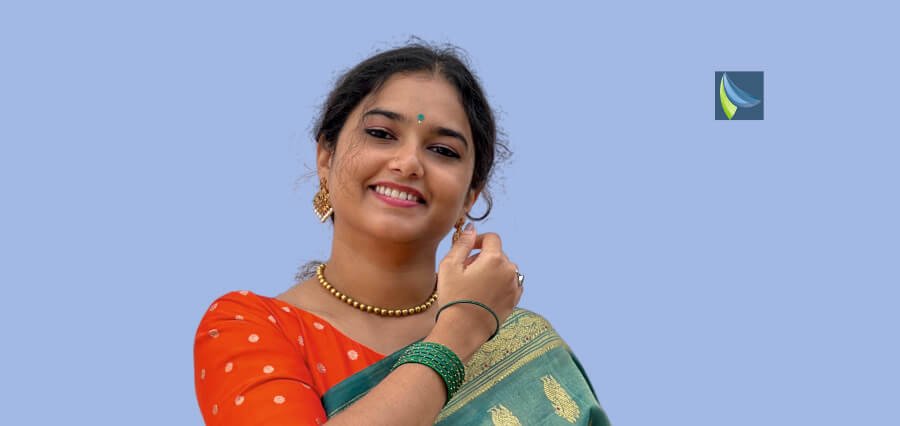
Anwitha Ashok, Architect and Founder of Studio Dhaatu, brings together two distinct disciplines with rare conviction. Her professional architectural practice runs parallel to a well-established journey in Bharatanatyam, built through years of demanding training and consistent stage work. With a deep understanding of form, rhythm, and storytelling, she continues to shape spaces and art with the same sense of precision, cultural grounding, and creative purpose.
Where Structure Meets Rhythm
Anwitha embodies a rare synthesis of discipline and creativity, excelling as a professional Architect and an accomplished Bharatanatyam dancer. Her life is a testament to the belief that “the structures we inhabit and the movements we perform are governed by the same fundamental principles of geometry, rhythm, and soul.”
Her story is one that resonates with many: a simple life enriched by the strong foundations of family and personal pride. She embodies the values instilled in her by her parents and her family, carving a path that is as unassuming as it is impactful.
For her, Architecture and Bharatanatyam are not separate silos but two sides of the same coin. “Architecture is frozen music where space is organised through lines and proportions.” Similarly, Bharatanatyam is “spatial poetry,” where the dancer carves the air with precise geometric positions, the Araimandi (half-sit) creating a firm base, and the Hasta Mudras (hand gestures) defining intricate details in the void. This connection between space and movement shapes her perspective. In architecture, she recognises rhythm in design and balance in proportion. In dance, she sees structure, alignment, and spatial awareness as essential elements of expression.
A Childhood Rooted in Art, Science, and Curiosity
An environment, naturally leaning towards arts and science, was where Anwitha grew up. From an early age, a strong urge was felt by her to go beyond the ordinary and explore paths that allowed freedom of thought and creativity. While the stereotypical choices of engineering and medical studies were prevalent around her, architecture was chosen by her for higher studies, a conscious deviation driven by her desire to create, interpret, and innovate.
She has established a notable track record in the field of architecture, successfully bringing several projects to fruition. Her portfolio showcases a diverse range of work, reflecting both her technical expertise and a unique design philosophy.
Academic Foundation: A Journey Through Architectural Excellence
Anwitha has completed her Bachelor’s degree in Architecture (B.Arch.) from the prestigious Dayanand Sagar School of Architecture (DSCA), located in Bengaluru, Karnataka. Dayanand Sagar School of Architecture is part of the larger Dayananda Sagar Institutions (DSI) network and is recognised for its comprehensive curriculum and focus on practical application and innovative design. The institution prepares students for the challenges of modern architecture through a blend of theoretical knowledge and hands-on studio work, providing students with a comprehensive foundation in the field.
As a graduate of this 5-year, full-time undergraduate program, she joins a lineage of professionals trained at one of India’s premier centres for architectural excellence.
During her tenure at DSCA, Anwitha underwent a rigorous curriculum affiliated with Visvesvaraya Technological University (VTU) and recognised by the Council of Architecture (COA).
Her education was characterized by:
• Design-Oriented Learning: A focus on design innovation, research, and the skilful manipulation of architectural forms.
• Sustainability & Inclusivity: Training emphasised creating contextually responsive and sustainable built environments for the benefit of society.
• Hands-on Experience: Practical exposure through design studios, model-making workshops, and interaction with industry experts.
• Case study of various structures: Walking through the ideas and principles of several renowned architects created a foundation for what should constitute a built structure.
As she transitions from a student to a professional architect, she is equipped to address real-world problems, continuing the tradition of excellence fostered at the Dayananda Sagar School of Architecture through innovative and ethical design solutions.
During her academic journey, she began to understand that designing a space goes far beyond treating it as a blank canvas. She believes that “a well-designed space reflects the functionality it serves, the people who inhabit it, and the context in which it exists.” For her, architecture became a dialogue between form, function, and environment.
The places she grew up in had a profound influence on how she perceives and designs spaces. She was taught to respect her surroundings, understand the importance of community spaces, and value cost-effective building techniques that use naturally available materials. According to her, these methods not only respond sensitively to the local climate but also promote sustainability and a sense of belonging. To deepen this understanding, she attended seminars and workshops on sustainable design and climate-responsive architecture.
Studio Dhaatu: Where Built Form Meets Nature and Human Experience
Anwitha, the founder of Studio Dhaatu, is known for seamlessly integrating architecture, nature, and human experience. In the contemporary architectural landscape, where the separation between built environments and the natural world often feels stark, she represents a new philosophy that seeks a harmonious reintegration. Through her work at Studio Dhaatu, she champions a seamless blend of spatial flow and environmental integration, creating designs that connect built spaces with their natural surroundings.
It was during her studies for a Bachelor’s degree in Architecture that the core tenets of her design philosophy began to take shape—an approach rooted not just in constructing buildings, but in crafting environments that resonate with both their physical surroundings and the human spirit.
This philosophy is the bedrock of Studio Dhaatu. The firm’s mission is clear and intentional: to create “spatial flows that integrate seamlessly with the natural environment.”
At Studio Dhaatu, architecture is viewed less as an imposition upon the landscape and more as a conversation with it. The studio’s approach is distinctly organic, prioritising “fluid arrangements of spaces” that do more than merely occupy a site; they are designed to “complement their surroundings.” This commitment goes beyond aesthetic alignment; it aims to “establish a meaningful connection with the people inhabiting them.”
For Anwitha and her team, a building is not a static object but a living experience. The interaction between sunlight, shadow, material textures, and the flow of movement within the space is meticulously choreographed. Every project undertaken by Studio Dhaatu is approached as “an exploration of harmony between built form, nature, and human experience.”
Through thoughtful design and a deep respect for the intrinsic qualities of each site, Studio Dhaatu is making a significant mark on the architectural world, demonstrating how modern living can exist in a balanced, beautiful, and deeply connected relationship with the natural world.
The Beginning of a Storyteller
Anwitha’s love for storytelling began in childhood, nurtured through bedtime stories narrated by her grandmother and mother. The mythology and folklore of their land sparked her imagination and left a lasting impression on her. Being introduced to classical music and dance at a young age helped sustain this interest. As she grew older and began to understand the lyrics and narratives embedded in these art forms, she was amazed by how even the smallest idea could be expanded into a powerful, unified theme.
Bharatanatyam gave her the creative freedom to imagine characters as living beings and communicate emotions, desires, and stories purely through movement. This depth of expression compelled her to study the art form more seriously.
Her introduction to Bharatanatyam at the age of seven played a crucial role in shaping her mindset. As she delved deeper into the art form, she became fascinated by the limitless creativity involved in interpreting the stories of their land. Through movement, rhythm, and expression, she discovered the power of artistic freedom—the ability to narrate, reinterpret, and bring meaning to tradition while making it personal. She explains that this understanding strengthened her resolve to pursue a profession where she wouldn’t be confined by rigid boundaries, and where each day would offer an opportunity to create something new.
Milestones of Mastery: Vidwath and Arangetram
Her completion of both Vidwath and Arangetram marks a significant milestone in her journey as a Bharatanatyam artist. These achievements represent the transition from a dedicated student to a proficient solo performer and stand as a moment of pride within the classical dance community.
“In Indian classical dance, Vidwath and Arangetram signify distinct but complementary levels of mastery.” The Vidwath examination is one of the highest levels of achievement in the traditional study of Bharatanatyam, administered by authoritative cultural boards, often the Karnataka Secondary Education Examination Board (KSEEB) or similar state-level bodies in India. Completing this rigorous seven-year graded examination process signifies a profound depth of knowledge in both the practical execution of complex choreographies (adavus) and the theoretical understanding of the art form’s history, music, and philosophy. It is a testament to years of unwavering dedication, discipline, and passion under the guidance of esteemed gurus.
“Arangetram” (The Debut): Literally translating to “ascending the stage” in Tamil, the Arangetram is a dancer’s first full-length solo public performance. It typically follows 10–12 years of rigorous training and is performed only when the guru deems the student ready to carry a 2-to-3-hour recital independently.
Anwitha’s journey culminated in a stellar Arangetram (meaning “ascending the stage”), a debut solo performance that traditionally marks a dancer’s transition from student to a performing artist capable of presenting the art form independently. Held in a packed auditorium, Anwitha mesmerised the audience with a demanding repertoire, typically including traditional pieces such as the Pushpanjali (flower offering), Alarippu (invocation), the technically intricate Varnam, and expressive Padams and Thillanas.
Her performance was lauded for its grace, precision, and heartfelt bhava (expression), showcasing the mastery she has developed over countless hours of practice. Her achievement not only highlights her exceptional talent but also ensures the continuation and preservation of the rich cultural heritage of Bharatanatyam. A good dancer engages the soul of the audience, and she accomplished it with elegance and artistry. Her debut performance stands out as an unforgettable experience that will resonate with attendees for years to come.
A Future of Performance, Teaching, and Contribution
With the successful completion of her Vidwath and Arangetram, she has laid a strong foundation for a promising career in Bharatanatyam. These achievements are not just endpoints but significant stepping stones.
She is all set to embark on the next chapter of her artistic journey, whether as a performer, a teacher, or both, carrying forward the legacy of this ancient and revered dance form. She now stands ready to explore advanced performance opportunities, delve deeper into choreographic work, and potentially pass on her knowledge to the next generation of dancers.
Her accomplishments serve as an inspiration to aspiring classical artists, highlighting the beauty and discipline inherent in this rich cultural tradition. Her achievement highlights not only talent but also the continuation and preservation of Bharatanatyam’s cultural heritage.
Guidance of Gurus and a Growing Stage Presence
Anwitha journey has been shaped under the guidance of respected gurus. She began learning the ancient and revered form of Bharatanatyam from Guru Vidwan Keshav Kumar, Natanam Bala Natya Kendra, and continues to pursue her practice under the guidance of Guru Vidushi Smt. Suma Rajesh, Spoorthy School of Dance, Bengaluru.
Her performances reflect her growing presence as an artist. Under the guidance of Guru Vidushi Smt. Suma Rajesh, she has presented a solo recital at the Natanotsava festival 2021 organised by the Rotary Club, Bengaluru, along with solo recitals at Hosur Natyanjali on account of Mahashivratri organised by Pranav Cultural Welfare Academy and on account of Navaratri organised by Sri Kalyana Kamakshi Amma Temple.
As a part of Spoorthy School of Dance, she has been associated with various group performances and dance ballet productions such as “Sri Krishna Leelamrutam”, “Mysuru Vaibhava”, “Vaidyo Narayano Harihi”, “Shivaarpanam” and musical dance productions including “Khaga- Mriga Kathaanaka”, “Srinivasa Kalyana”, “Krishnaarpanam” and “Girija Kalyana”. She has performed at Nrithya Varsha Dance Festival at Raajangana, Udupi, and at the Dance Festival organised by Pariniti Kala Kendra, Sagara, along with the Department of Kannada and Culture.
Her performances also include appearances at the 84th Sree Ramanavami Global Music Festival- 2022 and the 85th Sree Ramanavami Global Music Festival- 2023, organised by Sree Ramaseva Mandali at Old Fort High School Grounds, Chamarajapete, Bengaluru. She has performed at Pattabhirama Temple, Jayanagar, Bengaluru on account of Krishnotsava and was part of the 3-day Pallakki Utsava held by Bengaluru Ganesha Utsava- 2022. She has also performed at Sai Nrityotsava- 147, organised by Sai Arts International on the occasion of Azadi Ka Amrit Mahotsav, and in Mysuru Natyanjali-2024, organised by Bhushan’s Academy of Performing Arts, Mysuru, on account of Mahashivaratri.
Further strengthening her artistic journey, she has performed at Sri Kshetra Horanadu Annapurneshwari Temple and performed Nritya Seve in Rajangana, Sri Krishna Math, Udupi. She has also been part of Rasa Sanje 2025, an Annual Dance Festival organised by Venkatesha Natya Mandira, performed at Veene Sheshanna Bhavana, organised by Gaana Bharathi, Mysuru, and performed in Naatyanjali organised by various temples on the occasion of Shivaratri Festival including Thillai Nataraja Temple- Chidambaram, Mayiladuthurai, Thiruthiraipoondi, Nagapattinam, Thirunallar, Thiruvidaimaruthar, and Vazhuvoor.
Recognition by Doordarshan: A National Honour
In recognition of her exceptional performance and demonstrated expertise, Anwitha has been conferred the esteemed title of “Graded Artist” (typically starting at ‘B’ grade for young professionals) by Doordarshan, India’s national public broadcaster. This status is a coveted honor within the Indian classical arts community, signifying that she has met the stringent standards required for professional broadcast and performance on the network.
This national accreditation allows artists to perform on Doordarshan’s various channels, including regional Kendras and national platforms like DD Bharati. For young dancers, this recognition serves as a gateway to further government-sponsored opportunities and empanelment with other cultural bodies.
As a newly recognised Graded Artist, Anwitha joins the ranks of accomplished performers featured by Doordarshan. This recognition not only validates her hard work but also provides a prominent platform for her to showcase her artistic prowess to a national audience, further elevating her career in the arts.
Architecture and Bharatanatyam: Two Expressions of the Same Discipline
Anwitha’s journey serves as an inspiration for multi-disciplinary artists. By bridging the gap between the static world of bricks and mortar and the fluid world of rhythm and expression, she demonstrates that true art knows no boundaries.
Through her work, she continues to build structures that breathe and perform dances that stand the test of time. Her achievement is a proud moment for her Gurus, family, friends & relatives.
Her story is proof that creativity is not limited to one profession, and excellence does not require choosing between passion and practicality. Instead, her path reflects a rare balance, where technical skill meets artistic intuition, and where structure meets emotion.
FOLLOW AR. ANWITHA ASHOK ON SOCIAL MEDIA:
INSTAGRAM- https://www.instagram.com/studiodhaatu/
FOR ANY QUERY, PLEASE CONTACT ANWITHA ASHOK- +91-99026 95892
Read Also : Crystal Screening Services Pvt. Ltd.: The Evolution of Background Verification in India