
Background verification has become crucial for maintaining the trustworthiness of organizations, and even small mistakes by an organization can drastically change someone’s career or reputation. Additionally, as corporations continue to grow globally and are utilizing digital recruitment processes more quickly than ever before, there has been a growing need for dependable background verification providers to deliver the level of candidate insight required to create confidence and long-term credibility in hiring decisions.
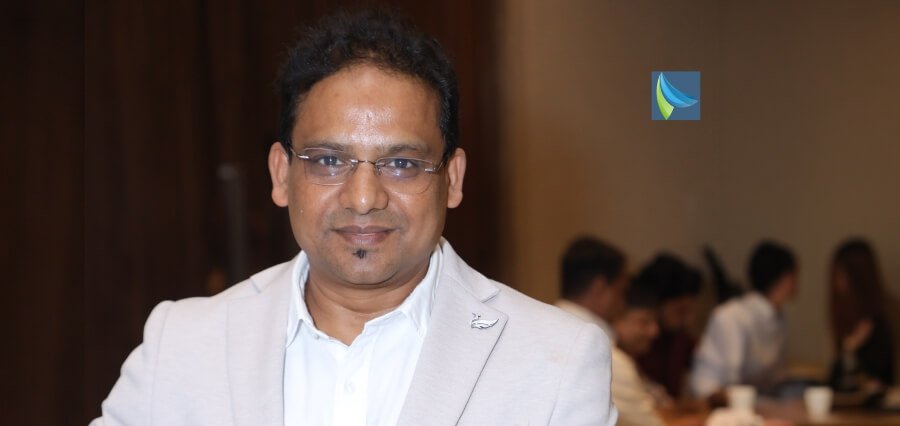
The organizations recognized on the ‘List of the Most Trusted Background Verification Companies in India’ have transformed how background checks are done from being only transactional in nature to a more strategic approach to background checks. For example, under the leadership of Sanjeev Kumar, CEO and Director, the culture of Crystal Screening Services Pvt. Ltd. is based on accuracy, transparency, and accountability; this is how they are changing what the industry has come to expect from a company in the background verification industry. Additionally, they have moved from being a simple service provider to becoming a partner to build safer, more credible workplaces.
Building Trust, One Verification at a Time
In an industry where a single data point can determine the fate of a career or the integrity of an organization, Crystal Screening Services Pvt. Ltd. has carved out a reputation that few in the background verification space can match. Founded and led by Sanjeev Kumar , the company has grown from a compliance-focused verification firm into a full-spectrum risk intelligence partner trusted by organizations across BFSI, ITES, manufacturing, and other high-stakes industries.
At the heart of crystal screening’s philosophy lies a single, non-negotiable conviction: trust is not proclaimed, it is earned. As he puts it, “Trust in our industry means one simple yet profound thing: the confidence that the information we deliver reflects the closest possible version of truth.” This framework, built on accuracy, transparency, consistency, and accountability, has shaped every process, every hire, and every client relationship the company has built over the years.
From Compliance Function to Strategic Partner
Crystal Screening Services Pvt. Ltd. did not always occupy the strategic advisory role it holds today. Like much of the background verification industry, the company began its journey operating primarily as a compliance-driven function validating credentials, fulfilling regulatory requirements, and delivering reports. What changed was a deliberate shift in leadership philosophy.
Under Sanjeev’s direction, the organization consciously repositioned verification as a risk intelligence function rather than a post-offer formality. The shift moved the team away from transactional delivery and toward something far more consequential, from “checking documents to validating authenticity and intent, from reporting discrepancies to interpreting risk indicators, and from transactional delivery to strategic partnership.” A mismatch in employment tenure, for instance, is no longer treated as a routine red flag. The team examines what it might signal: undisclosed employment, policy violations, or bigger reputational risk.
This evolution demanded more than operational adjustments. It required a cultural transformation, one where employees began viewing their roles not as processors of documents, but as custodians of trust. Every analyst, every field executive, and every quality reviewer now operates with the understanding that their work directly influences hiring decisions, protects organizational integrity, and contributes to safer workplaces.
The Architecture of Quality
Crystal Screening’s quality assurance framework functions as a continuous system, not a one-time checkpoint. The company operates a multi-layered verification model that begins with document validation, runs through database cross-referencing and source authentication, and concludes with client-specific quality audits before any report reaches the client. As Sanjeev Kumar notes, “Our QC approach is not a checkpoint; it is a continuous system.”
The company’s reporting structure uses a colour-coded classification system: Green for verified, Red for discrepancy, and Orange for pending, which allows clients to interpret findings quickly and make confident decisions without ambiguity. Transparency in methodology, turnaround timelines, and decision logic forms a central part of how the company communicates with its clients.
One defining moment that illustrates this commitment involved a senior leadership role at a large multinational. As the verification progressed, the team identified subtle inconsistencies in employment tenure and document formatting inconsistencies that a less diligent process might have overlooked.
He decided to pause the report submission and expand the scope of the investigation. “It is easy to follow processes when everything is straightforward, but real leadership is tested when you must choose between convenience and correctness,” he reflects. The deeper review confirmed deliberate misrepresentation: inflated tenure, undisclosed parallel employment, and altered documents. The client, initially concerned about the delay, recognised that the thoroughness of the investigation had shielded the organization from significant risk. The episode strengthened the relationship and became a defining reference point for how Crystal Screening handles pressure.
People, Culture, and the Human Element
Crystal Screening’s internal culture reflects the same values it projects externally. The organization invests heavily in continuous training, not just process-oriented instruction, but analytical skill development, case-based learning, and ethical decision-making. Employees receive exposure to real-world scenarios that bridge the gap between routine verification tasks and their societal consequences. Sanjeev Kumar is direct about this intent: “When employees understand the impact of their work, helping organizations make safe hiring decisions, they are more engaged and motivated.”
Accountability sits at the core of this culture, but it operates without fear. When errors occur, the organization directs its energy toward root cause identification and process improvement rather than blame. The goal, as he frames it, is a culture that is “supportive, not punitive, focused on learning, not blame.” This approach encourages teams to escalate concerns, question inconsistencies, and take ownership of their findings, behaviours that translate directly into higher accuracy and more reliable outcomes.
The firm also brings a rare degree of attention to candidate experience, the often-overlooked dimension of background verification. The company ensures that candidates receive clear communication about the process, that their personal data is handled with strict confidentiality, and that any discrepancy triggers a fair, evidence-based investigation before any conclusion is drawn. “We do not jump to conclusions. Any discrepancy is evaluated carefully, and candidates are allowed to provide clarification.” Sanjeev Kumar affirms. This commitment to candidate dignity reinforces the company’s standing as a responsible organization, not merely an efficient one.
A Credibility Ecosystem Built Across Stakeholders
What distinguishes Crystal Screening from its competitors is not any single service or tool but the deliberate cultivation of what Sanjeev Kumar calls a credibility ecosystem. “Great leaders don’t just build companies; they build ecosystems of trust,” he asserts. At the firm, that ecosystem extends across every stakeholder the company engages with: clients who rely on its findings for strategic hiring decisions, employees who carry forward its values in every case they handle, global verification partners held to standardised quality benchmarks, and candidates who trust the company to treat them fairly.
Client relationships are built on proactive communication, evidence-based reporting, and a collaborative approach to understanding each organization’s unique risk profile. The company does not subscribe to a one-size-fits-all model. Verification workflows are customised to client-specific compliance requirements, QC parameters are aligned with individual expectations, and reporting formats are adapted to support operational usability.
This philosophy has driven strong client retention across sectors, long-term partnerships with enterprise organizations, and organic growth through referrals, outcomes he attributes directly to consistency over time, not isolated moments of excellence.
Looking Ahead
As the workforce landscape shifts, driven by remote hiring, gig economy expansion, and global mobility, the company is positioning itself to meet the next wave of verification complexity. The company’s roadmap includes deeper AI integration for real-time data validation, expanded global verification capabilities, and stronger compliance frameworks designed to keep pace with evolving data privacy regulations across jurisdictions.
The organization Sanjeev Kumar has built is one where resilience is systemic, not reactive. Post-case analysis, continuous fraud pattern monitoring, and proactive regulatory preparedness ensure that challenges become improvement cycles rather than recurring vulnerabilities. “Resilience is not just about surviving high-stakes environments. It is about thriving in them,” he reflects
As the company operates with the conviction that background verification is not ultimately about finding discrepancies, it is about uncovering the truth and protecting the organizations and individuals who depend on that truth. “In the end, background verification is not just about checking facts; it is about protecting trust in every hiring decision, “he says. Every report the company delivers carries the weight of that responsibility, and every decision it makes is measured against it.