
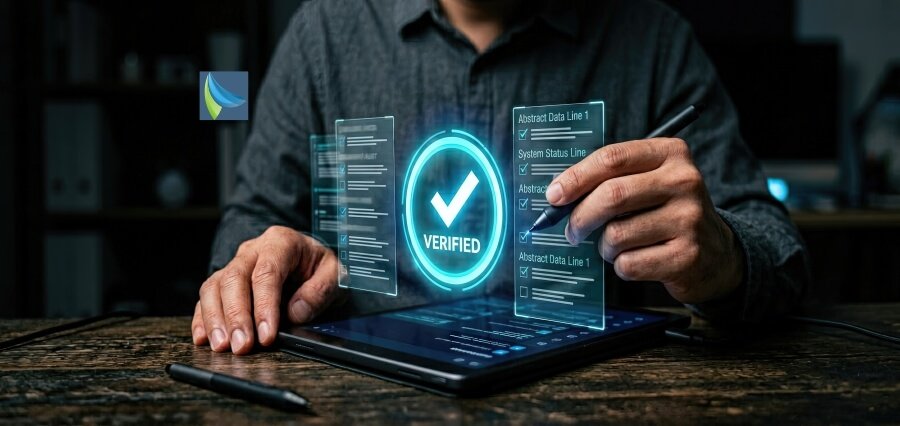
Transforming trust in recruitment
In the current era of digitization and globalized recruiting, companies are faced with the daunting task of trusting the employees they recruit. With firms becoming increasingly globalized and working remotely being the order of the day, digital authentication technologies have become integral to creating a competent and reliable workforce. There is nothing to take lightly in this matter since a mere recruitment scam could mean huge losses for a company.
The Trust Deficit in Modern Hiring
The contemporary workforce marketplace suffers from credential falsification. Research have always pointed out the existence of a percentage of candidates who falsify information about their education, experience, or professional credentials.
The old verification process- phoning the previous employer, verifying references on paper, checking documents manually- is inefficient, inconsistent, and susceptible to manipulation. HR departments under pressure during intensive hiring processes cannot afford to perform such meticulous checks.
This is how digital verification systems come into play, shifting the balance of power from an ineffective and outdated process to a proactive science.
What Advanced Digital Verification Looks Like
Digital platforms used for verifying candidates today offer much more than just verifying their identity and job titles. Some of the ways in which digital verification systems have evolved include:
- Identification verification, which includes biometric verification, checking for government IDs, and a liveness check to ensure that the person requesting the service is indeed who he claims to be.
- Credential verification – which includes the process of verifying educational and professional qualifications with the concerned credentialing authorities.
- Employment verification – which includes automated interaction with previous employers’ HR and payroll systems.
- Biographic criminal record screening against databases globally, often within hours rather than days.
- Continuous monitoring, whereby the credentials and compliance levels of employees are monitored continuously, and not just at the time of recruitment.
The most effective digital verification solutions available now use artificial intelligence, blockchain technology, and API integration, which ensures that the outcomes are faster, more precise, and less susceptible to manipulation than any process done manually.
Why Credibility Is a Business Imperative
A credible workforce is not just about compliance; it’s an asset. Those who can prove the reliability of their talent pools gain the confidence of customers, regulators, stockholders, and partners. For industries such as healthcare, banking, airline operations, and education, the risks associated with hiring unverified people can be disastrous — medical malpractice, fraudulent schemes, accidents, or penalties imposed by regulators.
Even outside regulated environments, companies in all industries now understand that workforce credibility influences productivity and company culture. The confidence in the work environment increases when workers realize that their colleagues have been carefully screened. Trust in the business relationship also improves when customers recognize that the vendor’s staff members have been properly checked. Digital verification solutions are, therefore, part of the trust fabric of organizations.
The ROI of Getting Verification Right
Making investments in high-end verification technology is profitable. Companies that invest in digital verification systems claim shorter time-to-hire, fewer bad hire instances, and better compliance status. Automated systems remove the expense of labour required to perform a manual background check while increasing efficiency significantly. While it used to take two or three weeks, the process can now be completed within 24 to 48 hours without compromising on quality.
In addition, the information provided by such digital verification platforms generates an audit trail for organizations, which may prove valuable when faced with legal issues. The modern workplace is widespread with litigation and compliance challenges.
Building the Workforce of Tomorrow
New research must have a new standard for trust. The effect of AI on jobs and gig economy apps, which have disrupted the traditional employer-employee dynamic, the need to verify credentials effectively, quickly, and reliably will be increasingly important. In progressive organizations, digital credentialing technology has already been incorporated into HR systems, with verification seen as a fundamental element.
Developing a trustworthy workforce is not a one-off task; it is an ongoing process. If the necessary technology infrastructure is in place, companies can hire confidently, retain purposefully, and run their operations with the level of integrity stakeholders expect today. The technology is available. It is up to the organization to prioritize trust before the next crisis hits.