
Less Extraction, Greater Recovery
In every electric car, phone, and energy storage device lies an implied guarantee that when these products expire, their components may be reused. With the rising need for lithium, cobalt, and nickel, governments and businesses have to decide whether to continue sourcing raw materials from selected mining zones or recycle metals from existing devices. Battery Recycling provides an answer, and not just a peripheral one, but a central one.
The Supply Chain Problem
Despite mining being the source of batteries for the world right now, mining is concentrated in just a number of countries while refining is concentrated in even lesser countries. This poses risks to automobile manufacturers and utilities when it comes to prices, trade conflicts, and logistical issues. Moreover, new mines will take a lot of time before they start operating.
Mining the Urban Stockpile
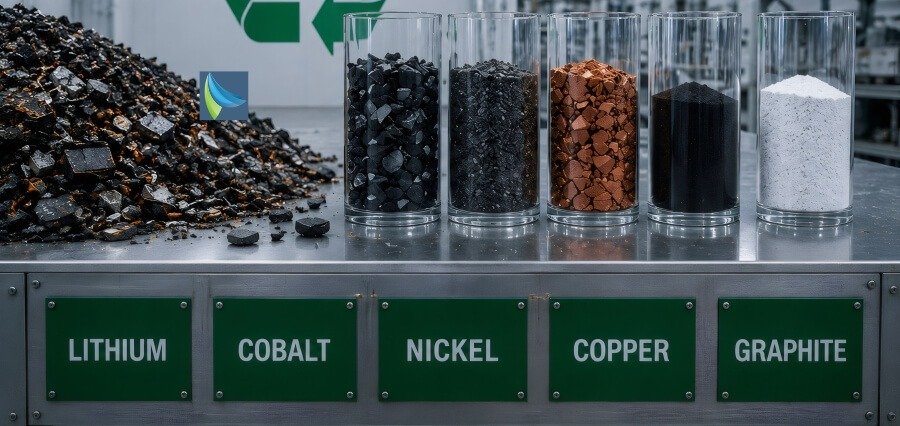
The old battery can be considered an urban mine. The old lithium-ion battery has more nickel, cobalt, and copper than ore from nature does. Firms who extract these metals do not have to go to the trouble of mining new ore; they save precious metals for domestic use. Battery recycling thus helps us gain independence of resources without having to develop a new mine.
“Redefining the future of battery life requires recovering value, reducing waste, and driving innovation through responsible reuse, all of which build a sustainable energy ecosystem.”.
How the Process Works
There are two predominant approaches in use today. In pyrometallurgy, batteries are melted in a furnace to obtain metal alloys. In contrast, hydrometallurgy involves dissolving battery materials in liquid solutions and separating them with precision. Novel direct recycling approaches seek to retain the structure of the cathode, thus saving on cost and energy. After discharging and dismantling the packs, the cells are shredded into black mass, which contains the metals of the greatest value. The next step is to process this black mass into raw materials that can be reused.
Closing the Loop in Nevada
An example is Redwood Materials. This battery recycling company was established by JB Straubel, who had been a co-founder and chief technical officer of Tesla, in 2017 in Carson City, Nevada. Redwood processes old batteries and scraps from consumer electronics and EVs, extracts nickel, cobalt, lithium, and copper from them, and produces materials for new batteries. Clearly, the company’s success exemplifies how Battery recycling may develop from waste management to a materials business.
The Economics
The business becomes profitable as the scale of production increases. Early electric cars are being retired, and manufacturing scrap provides constant supply of raw materials. The recovered material is priced in the market, and the demand for traced supply is increasing. However, the profitability is tied to fluctuations in metal prices, and lithium iron phosphate batteries have less valuable metals than the nickel batteries. This constrains the profit margin. In order to reduce the cost of operation, increase the recovery rate and enter into long-term supply contracts, governments can play an important role by setting recovery goals and battery recycling laws.
Obstacles on the Road
Challenges persist. Collection remains piecemeal, and lots of batteries get thrown into drawers, landfills, and backyard operations. The shipping of damaged batteries poses risks, as they have the potential to catch fire, so it requires high safety standards. Disassembly is difficult due to their diverse designs, but designing batteries that can be easily disassembled will save money for all. Training is needed for laborers, while there needs to be proper regulation on hazardous waste for regulators. This way, Battery Recycling can operate at a higher level.
Second Life Before Recycling
Reuse should get its share of consideration. Packages that no longer fit requirements for transport purposes still have enough charge to be used for stationary purposes, such as balancing solar energy flows or supplying electricity in case of building power failures. Prolonging their period of operation will postpone the recycling process and conserve more resources. A digital passport, which will contain information on the battery’s composition, its background and current state, could facilitate decision-making.
The Outlook
Resource Independence is not going to be achieved through one technology or one country. It is going to be achieved when policy, design, and investment go hand in hand. Businesses that see their used batteries as assets rather than liabilities will benefit from resource security and reputation. People too can contribute by disposing of their old products properly. Battery recycling is not going to substitute mining totally but it will reduce reliance on it and protect economies from any shock.