
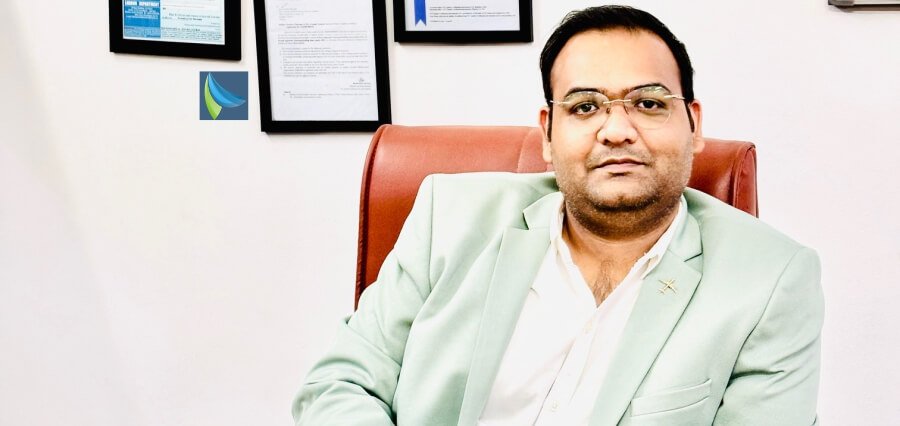
For an industry where the price of an oversight is literally death, building trust is not only a business necessity but the business itself. At AviaSafe Aviation Services Private Limited, this reality is more deeply ingrained than most companies realize. Starting with a simple vision, what set the firm apart during its early years was not growing its business but winning respect within one of the most unforgiving industries in the world.
The company grew out of an obvious gap. In India’s flourishing aviation industry, there was no doubt about one thing: MRO facilities were lacking. Essential safety equipment like oxygen systems, life rafts, escape slides, fire extinguishing equipment, and survival gear needed maintenance, but few Indian firms had the expertise to do so. Arun Chaurasia, who serves as the company’s CEO, saw this gap not merely as a market opportunity but as a responsibility. Under his direction, AviaSafe came into existence to fill it, methodically, seriously, and without shortcuts.
Starting from the Ground Up
Building an aviation support organization from scratch is not a straightforward undertaking. From day one, AviaSafe chose to operate under the full weight of regulatory scrutiny rather than around it. Aligning its quality management systems with frameworks set by India’s Directorate General of Civil Aviation (DGCA) and, where applicable, international standards such as FAA-DOT requirements, the company made compliance its foundation rather than an afterthought.
“In aviation, compliance is not merely a requirement but a responsibility that directly impacts safety and operational integrity,” the company’s leadership states, and that conviction has driven every structural decision since inception.
This was a deliberate strategic choice. Aviation operators do not hand over critical equipment maintenance to vendors they don’t completely trust. The company recognized early that the only credible path forward was to demonstrate through consistent action, not just assurances, that it could meet the exacting standards the industry demands.
The early years involved significant investment in skilled manpower, advanced tooling, standardized processes, and regulatory compliance infrastructure. Growth was not the primary objective at that stage. Building a reputation for reliability was. That measured approach, while slower, gave the company something no marketing campaign could buy: a track record.
The Challenge of Credibility
One of the most formidable challenges any new entrant faces in aviation is the weight of established competition. Airlines and aircraft operators are conservative by nature, as they should be and tend to work with vendors who carry long histories and proven performance. AviaSafe entered this environment as a newer organization competing against players with far longer market presence.
“Airlines and operators require absolute confidence in the quality, reliability, and compliance standards of any maintenance and support organization they work with,” the leadership acknowledges. Meeting that bar as a growing company, while simultaneously competing with established players, was the defining test of the company’s early years.
Navigating this challenge required more than good intentions. The company focused on operational transparency, technical expertise, and a disciplined commitment to quality at every touchpoint. Instead of attempting to win business through price-cutting or overpromising, the company let its service delivery speak. “Instead of pursuing rapid expansion, we prioritized building long-term relationships through consistent service delivery, timely support, and uncompromising safety standards,” and over time, that approach earned the industry’s confidence.
Successful audits, regulatory approvals, and the completion of critical maintenance projects with consistent quality and on-time delivery became the milestones that mattered most. Each one reinforced the company’s standing and opened doors to larger operators and more complex engagements.
A Culture Built Around Accountability
Behind AviaSafe’s operational approach is a leadership philosophy rooted in discipline, accountability, and the belief that tone is set at the top. The organization’s leadership team functions on the principle of leading by example, maintaining high standards while encouraging open communication and continuous learning across all levels.
“My leadership philosophy is based on discipline, accountability, teamwork, and leading by example, professional, quality-driven, and safety-focused work culture across the organization,” says the CEO
This philosophy filters down into how the company approaches its daily operations. Corrective and preventive action methodologies are not just documented processes at the company; they are actively practiced. When internal audits surface issues or when customer feedback identifies a gap, the organization treats that information as an opportunity to improve rather than a problem to contain. Lessons learned are systematically built back into processes.
The result is a workforce that is not merely compliant but genuinely aware teams that understand why safety standards exist and take personal ownership of upholding them. In an industry where complacency can have catastrophic consequences, this culture of vigilance is not just admirable; it is essential.
Innovation Without Losing Sight of the Fundamentals
AviaSafe’s approach to innovation is notably grounded. The company does not pursue technology for its own sake. Instead, it invests in modern maintenance equipment, upgraded workshop infrastructure, and specialized technical training because these directly improve the quality and reliability of the services it delivers.
“Innovation for us is not only about technology but also about creating smarter, safer, and more responsive operational systems,” the leadership explains, a definition that keeps the company’s focus anchored to real-world outcomes rather than abstract ambition.
Close coordination with operators remains a central part of this strategy. By staying connected to what airlines and aviation stakeholders need rather than what the company assumes they need, the company is able to tailor its solutions to real-world operational demands. The goal is always to deliver support that is not just technically sound but genuinely useful to the people running complex flight operations.
Looking at the Road Ahead
India is now firmly established as one of the world’s fastest-growing aviation markets. Fleet expansions, new airline entrants, increasing passenger volumes, and growing attention to sustainability are reshaping the landscape at a pace. For an organization like AviaSafe, this moment represents both an opportunity and an obligation.
Over the next five years, the company is focused on expanding its technical capabilities, strengthening its infrastructure, and broadening its service portfolio. The leadership is clear about the longer-term ambition: “Our long-term vision is not only to grow as a company but also to play a meaningful role in strengthening India’s aviation ecosystem through excellence, trust, and continuous innovation.”
Developing skilled technical talent remains a parallel priority. The company understands that its long-term value is inseparable from the competence and commitment of its people.
The sustainability agenda also sits firmly on the company’s radar. While the transition to greener aviation operations presents real challenges, including high investment costs, tighter environmental regulations, and balancing rapid growth with responsible operations, the company sees it as a space where early movers gain a lasting advantage. “Companies that invest early in sustainable practices will strengthen their long-term growth, innovation, and industry reputation,” the leadership notes, signalling that the company intends to be among them.
What Success Looks Like
Ask anyone at AviaSafe what achievement they are most proud of, and the answer is consistent: the trust placed in them by their clients. In aviation, repeat business is one of the clearest signals that a service provider is doing things right. Long-term relationships with operators and aviation partners are not just commercially valuable, they are proof that the company’s commitment to quality is being recognized where it matters most.
“Every successful audit, compliance approval, and positive client feedback reflects our commitment to maintaining the highest standards of safety, technical precision, and professionalism,” the leadership says.
The Indian aviation sector needs more organizations like this: technically rigorous, safety-first, willing to grow slowly to grow well. As the industry scales toward its next chapter, the quiet, methodical work being done by companies like this one will matter more than most realize.
The company’s services are not the loudest name in Indian aviation. But in a business where reliability is everything, it is steadily becoming one of the most trusted.