
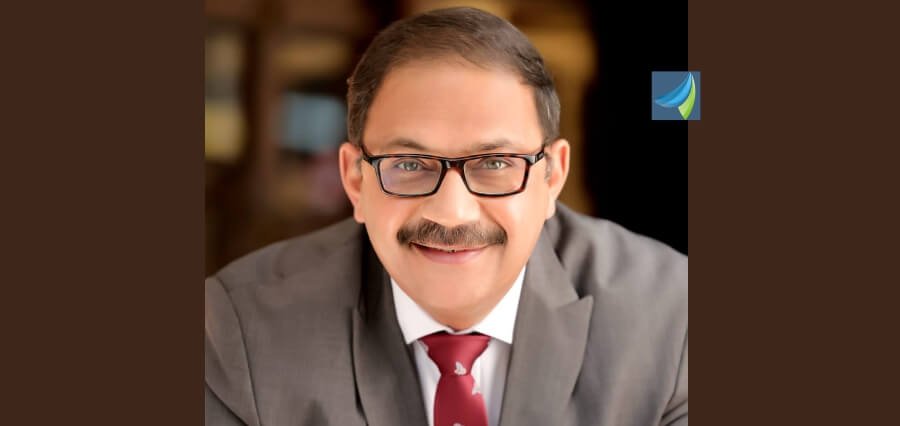
The evolution of leadership takes place not in a single, defining moment but through a succession of cumulative experiences that help clarify one’s world-view. The venues in which these events occur can be vastly different; they can include performing functions in high-operational-tempo environments or operating within intricate corporate infrastructures, but the foundational skill that will be needed in these differing venues will remain the same: thinking ahead, maintaining composure, and communicating clearly under extremely challenging conditions.
Colonel Gaurav Chaturvedi’s experience reflects the essence of this evolution. There was no single dramatic event that served to create a leadership experience for him. Rather, his experience is based on a process that has developed over time as he learned that the priority that he relates to other people must be in preparing himself for the situations he is likely to encounter, by having systems in place to accommodate those situations, and by having people at the “center” of every situation.
The Spark Behind the Vision
There was no single lightning-bolt moment that shaped Col. Chaturvedi into the leader he is today. It was a series of experiences, each one adding a layer to his thinking. Across 25 years in the Indian Army’s Parachute Regiment (Special Forces), he operated in environments where a delayed decision was not a miscalculation; it was a catastrophe. Counter-terror operations, hostile logistics corridors, and supply chains under fire taught him one thing above all else: you have to anticipate, not react.
One operation, in particular, left a permanent mark. He led the opening of a 100-kilometre supply route in Manipur, a mission that enabled over 60,000 trucks to move through an active conflict zone. It was not simply a logistical feat. It was a proof of concept for a belief he has carried into every role since: systems win over situations.
When he transitioned to the corporate world, he found organisations still operating reactively, especially in security and logistics. That observation became his vision: to build integrated, proactive systems that support business continuity before the crisis ever arrives.
Three Words That Define the Work
Ask Colonel Chaturvedi to describe his organisation in three words, and he answers without hesitation: Resilient. Integrated. People-Centric.
Each word carries deliberate weight. Resilient, because systems must hold under pressure, not just perform in favourable conditions. Integrated, because disconnected functions do not merely create inefficiency; they create risk. People-centric, because behind every process, every dashboard, and every operational metric, there are human beings whose trust and performance determine the real outcome.
At Hindalco Industries, where he currently leads security, transport, and township administration, he is trying to bring all three principles into a single framework. Technology, logistics, and operations now function as one interconnected system, and the result is not just improved performance metrics or reduced incidents. It is something harder to quantify, and more valuable: trust within the system.
The Decision That Changed Everything
Leaving the Indian Army after 25 years was the biggest turning point of Colonel Chaturvedi’s career and he says it plainly. In uniform, leadership is defined by rank and structure. In the corporate environment, it is defined by influence and results. Stepping from one world into the other meant starting again in fundamental ways, and he embraced that reality rather than resisting it.
His entry into the corporate world at Adani Infrastructure allowed him to build systems from the ground up, translating military discipline into business processes that could scale and sustain.
Later, roles at Lodha and Sunteck Realty expanded his perspective further, particularly in managing large townships and complex, multi-layered operations. Each move broadened his lens. Each role sharpened his conviction that the principles governing a well-run regiment and a well-run enterprise are, at their core, the same.
Staying Ahead Without Losing Ground
In a business landscape that reinvents itself faster than most organisations can adapt, Colonel Chaturvedi anchors himself to two disciplines: continuous learning and staying grounded.
He has pursued certifications in fraud examination, anti-terrorism practices, and risk management, not to accumulate credentials, but to remain a practitioner. At Hindalco, his operational model reflects that commitment. AI-driven systems, GPS tracking, and real-time dashboards now sit at the centre of daily operations. Technology, for him, is not an upgrade; it is infrastructure.
And yet, he is clear-eyed about what technology cannot replace. Integrity, accountability, and consistency do not evolve with software versions. They remain constant, regardless of how sophisticated the systems around them become. That combination of modern tools held together by timeless values defines how he keeps his organisation ahead without losing its footing.
What Admirable Leadership Actually Looks Like
Colonel Chaturvedi does not define admirable leadership through frameworks or competency models. He defines it through a single word: dependability.
He points to a dam overflow situation during his time at Lodha. Residents needed to be evacuated quickly, and the pressure was real. In that moment, he observed something that has informed his leadership philosophy ever since: people in a crisis are not looking for instructions. They are looking for confidence. His team evacuated all 40 residents safely, without a single casualty. No heroics. No chaos. Just composure and clarity, delivered when it mattered most.
In the day-to-day, he keeps leadership deliberately simple: be accessible, listen actively, and ensure people feel supported. Leadership, in his view, is not about control. It is about creating the conditions in which others can perform at their best.
A Philosophy Built for Results
Several principles have guided Colonel Chaturvedi’s work consistently across industries and organizations. Security, he insists, is not a cost centre as it directly impacts business outcomes. Technology should simplify operations, not layer complexity onto them. And strong systems must reduce dependency on individuals, not create new ones.
These are not abstract ideals. At Hindalco, drone surveillance delivered both better visibility and lower operational costs. Integrating transport operations with GPS and centralised control rooms improved both efficiency and safety simultaneously. “The idea is always to simplify and strengthen systems,” he says.
Turning Challenges Into Redesigned Systems
Colonel Chaturvedi does not see challenges as problems to be solved and forgotten. He sees them as opportunities to redesign the systems that allowed the problem to exist in the first place.
At Lodha, he moved fragmented operations into an integrated model, and efficiency improved significantly as a result. At The Doon School, a restructuring of processes produced meaningful cost savings. In the Army, where situations were by definition unpredictable, the approach remained identical: understand the problem, simplify it, and build a system around it that holds under pressure.
The method is consistent because the belief behind it is consistent. Every disruption contains, within it, the blueprint for a better system.
Building a Culture Where People Take Ownership
Empowerment, for Colonel Chaturvedi, begins with involvement and trust. People do not perform at their best simply because they are told to; they perform at their best when they understand the purpose behind what they are doing.
At Hindalco, his Road Safety Programme reached over 7,600 people. It was designed as a behaviour-change initiative, the difference being that compliance produces temporary adjustment, while understanding produces lasting ownership. Regular training sessions, driver briefings, and team engagement initiatives all serve the same function in his leadership model: communication as the foundation of accountability.
“When people take ownership, performance improves naturally,” he observes. It does not need to be enforced.
The Legacy Being Built
If Colonel Chaturvedi had to define the legacy he is building in a single sentence, he states, “To reposition security, logistics, and operations as strategic functions, not as support roles.”
Across industrial plants, townships, and institutions, the common factor that determines whether an organisation thrives or struggles under pressure is reliability. People depend on systems working seamlessly, every day, without drama. If he can contribute to building systems that are dependable, scalable, and genuinely people-focused systems that outlast his own tenure and continue to serve the organisations he helped shape, that, he says, would be a meaningful legacy.
The Next Frontier
Col. Chaturvedi suggests, “Going forward, I want to focus on building capability at scale.” he considers going forward as capability at scale. He sees a strong and growing need for structured training in security, logistics, and risk management, particularly as AI and digital systems continue to transform how organizations operate. The gap between what organizations need and what their people are equipped to deliver is real, and he intends to help close it.
Beyond individual organizations, he is keen to contribute to broader national conversations around safe cities, connected security ecosystems, and integrated operational models. These, he notes with the matter-of-fact confidence of someone who has spent a career staying ahead of the curve, are not future challenges. They are already here.