
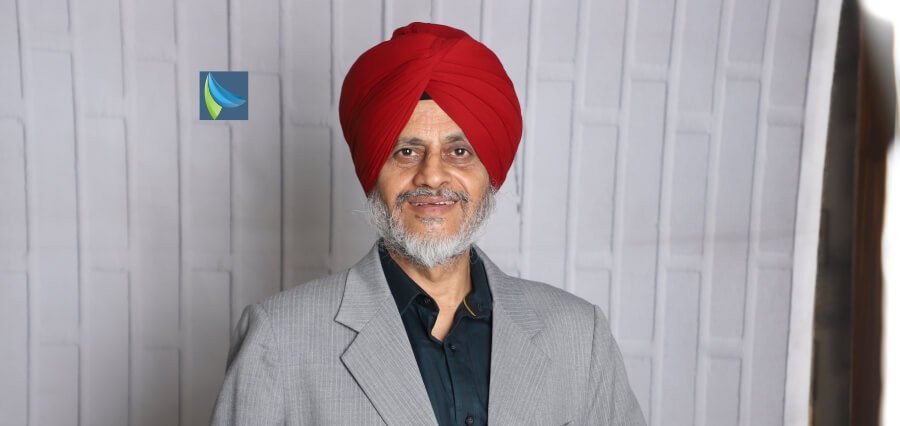
What does it take to develop a transformational leader who can create change within an organization rather than simply managing it? According to Dr. Harvinder Singh, it is something far deeper than mere titles, corner offices or performance metrics. Rather, it lies in what goes unseen – the architecture of trust, safety, and respect that can either hold an organization together or slowly destroy it. Founder of Pinnacle Leadership Consulting, bestselling author, and a Professor of Practice with well over 35 years of experience in international banking and executive roles, he does not discuss leadership theory from afar. He knows firsthand the highs and lows of leadership in all its forms – the worst that it can do, the hardest challenges that it presents across borders, and the best results it can produce through sheer human ingenuity. That combination of destruction and creation is exactly what keeps him going.
His journey has seen him traverse from the high-stress environments of international banking to the university lecture hall; from South Asia to the Philippines; from overcoming his own adversities to becoming a best-selling author ranked Amazon #1 in its category. Throughout this journey, he holds onto one truth with absolute surety – people are not a liability to be controlled. They are the only long-term strategy. And today, he is building the frameworks, the institutions, and the global partnerships to prove it at scale.
Bridging The Academic Industry Divide
Dr. Harvinder Singh professional identity is defined by duality. He is simultaneously a scholar and a practitioner, an educator and an executive strategist. His academic engagements span institutions including Durgadevi Saraf Institute of Management Studies ( DSIMS), NIMS University, KR Mangalam University, Chitkara University and a landmark three-year MoU with Amity University Online, each partnership reflecting his conviction that management education must evolve beyond textbook abstractions. For him, the classroom is not a place to recite legacy frameworks; it is a laboratory where future professionals learn to navigate complex human systems under real operational pressure.
This dual positioning has given him an unusually sharp lens. Academia frequently teaches how organizations ought to function in theory. The corporate world reveals what human behaviour demands when stakes are high, resources are constrained, and leadership is tested. His mentoring approach draws deliberately from both worlds, equipping students not merely with academic competency but with the psychological preparedness to enter, survive, and eventually transform the organizations they join.
“I do not merely prepare students to pass examinations or memorize legacy management matrices; I prepare them to navigate, survive, and actively transform complex corporate structures,” he declares
This philosophy carries the weight of lived experience. His doctorate in Leadership gave him the analytical tools to understand organizational behaviour at a systemic level. His 35 years in global banking gave him the contextual depth to know when those tools apply and when they require reinvention. The combination has produced a mentor who teaches not just strategy but self-awareness, resilience, and the intellectual courage to challenge inherited management orthodoxies. The result is a mentor who does not simply teach leadership as a subject. He transmits it as a lived discipline — one that demands self-awareness, intellectual courage, and the willingness to challenge management orthodoxies that have long outlived their relevance.
The Crucible of Experience
Behind every compelling leadership philosophy lies a defining set of personal experiences, and Dr. Harvinder Singh’s story is no exception. His career at Standard Chartered Bank provided two chapters that could not be more starkly contrasted, and together, they form the emotional and intellectual bedrock of everything he now teaches.
The first chapter was harrowing. Working under purely positional leaders who wielded authority as a weapon rather than a responsibility. He experienced firsthand the corrosive reality of toxic management. The environment prioritized arbitrary metrics over human dignity. It fractured professional well-being, stifled innovation, and replaced genuine commitment with compliance born of fear. Rather than breaking him, this period clarified his mission. He recognized, with painful clarity, what leadership must never be.
The second chapter was its antithesis. In 2014–15, he led a cross-border corporate blood donation initiative spanning India, Bangladesh, Nepal, and Sri Lanka, an undertaking of extraordinary scope, cultural complexity, and operational nuance. The initiative earned him the prestigious Chairman’s Here for Good Award at SCB. More than any accolade, it demonstrated to him what becomes possible when people are united by a noble, human-centric purpose: they transcend boundaries, hierarchies, and structural limitations to produce outcomes that positional authority alone could never command.
“When people are united by a noble, human-centric purpose, they will transcend geographical boundaries and structural limitations to achieve extraordinary outcomes,” he says
These twin experiences, the wound of toxic management and the triumph of purpose-driven leadership catalyzed what would become his life’s work. They seeded the frameworks in his books, the methodologies behind Pinnacle Leadership Consulting, and the urgency with which he pursues organizational transformation across industries. It is a rare leader who can convert personal adversity into institutional architecture. He has done precisely that.
Values That Travel Across Borders
Dr. Harvinder Singh’s career took him across geographies and institutional cultures, including a demanding tenure as Head of Retail Operations in the Philippines, a role that required him to align international performance mandates with the intricate textures of local organizational culture. In environments where both the market and the human dynamics were in constant flux, he learned a lesson that now anchors his entire consulting practice: adaptability, without a foundation of values, collapses into opportunism.
“Adaptability without values leads to corporate opportunism, while values without adaptability result in structural stagnation,” he states
His doctorate in Leadership, and its direct application to Emerald Publishing’s global volume on Higher Educational Institutional Leadership in VUCA Contexts- addressing Volatility, Uncertainty, Complexity, and Ambiguity, gave him the academic scaffolding to articulate what he had observed in practice. While technologies change, market forces shift, and operational models are disrupted, the fundamental human needs of individuals within organizations remain constant: the desire for respect, psychological safety, clarity of purpose, and equitable treatment.
This insight drives the way he advises leaders today. He does not ask them to choose between responsiveness and integrity. He shows them how the two, when aligned through human-centric frameworks, produce organizations that are both agile and anchored, capable of navigating volatility without losing their identity or their people. In a global business environment that increasingly rewards speed over substance, this is not a minor correction. It is a fundamental reorientation of how leadership success is defined.
The Proprietary Architecture: Frameworks that Quantify Humanity
Perhaps Dr. Harvinder Singh’s most distinctive contribution to contemporary management thought is his development of a suite of proprietary Human-Centric Leadership frameworks tools that do not simply advocate for empathy but measure it, quantify it, and connect it directly to financial and operational performance. His upcoming book, Winning Teams: A Leadership Blueprint for the Human-Centric Era, introduces these frameworks to a global audience.
At the core of his methodology is the T2P (Trust to Performance) Index, a master metric that integrates three diagnostic instruments: the Human-Centric Performance Index (HCPI), which quantifies the correlation between workforce well-being and fiscal output; the Psychological Safety Audit (PSA), which measures a team’s capacity for creative risk-taking without fear of reprisal; and the Trust Index (TI), an early-warning system that evaluates mutual reliability and transparency between leadership and teams.
Underpinning these instruments is the CALL Loop mechanism, standing for Consciousness, Alignment, Listening, and Learning, a continuous feedback and intervention system that provides leaders with the structural roadmap to actively improve their organization’s T2P score over time. These are not soft-skills seminars dressed in corporate language. Dr Singh designed them as scalable operational KPIs, embeddable into executive dashboards alongside standard financial metrics.
His Strategic Alignment Matrix maps organizational health across four zones: the Compliance Zone, where fear drives high performance at the cost of trust and burnout; the Trust-to-Performance Zone, where optimal conditions produce both high performance and high trust; the Stagnation Zone, where neither trust nor performance flourishes; and the Comfort Zone, where security exists without accountability. The frameworks give organizations a precise diagnostic mirror and, more importantly, a clear path forward.
His first book, The Winning Leader, reached Amazon No. 1 Bestseller status and laid the philosophical groundwork for this evolving body of work. Corporate training engagements with organizations such as Daimler India Commercial Vehicles demonstrate that these frameworks operate effectively beyond financial services and into heavy manufacturing and operational environments.
Defining Impactful Leadership for a New Era
For Dr. Harvinder Singh, impactful leadership is neither a personality trait nor a charismatic gift. It is a conscious discipline, measured not by the titles a leader accumulates but by the psychological safety, growth, and sustainable output of the teams they govern. He identifies three core competencies that future leaders must intentionally cultivate: Contextual Intelligence, the ability to shift fluidly between macro-level strategic planning and micro-level empathetic engagement; Systemic Empathy, the operational understanding that human well-being drives institutional health rather than merely supporting it; and Intellectual Humility, the willingness to unlearn obsolete command structures and embrace collaborative, open-source knowledge models.
In both academic and corporate environments, his approach to fostering trust and inclusion follows the same architecture: remove the institutional fear of making mistakes, and knowledge flows freely. He restructures classrooms into collaborative laboratories and corporate hierarchies into peer-to-peer knowledge architectures, creating environments where individuals contribute authentically rather than strategically. He is equally prescriptive about what educational institutions must do differently, calling for a decisive transition toward practitioner-led curricula, live crisis simulations, and the elevation of human-centric leadership from elective seminar to foundational core discipline.
The urgency behind this prescription is not academic. He argues that organizations are currently absorbing enormous, preventable costs- in attrition, burnout, disengagement, and lost innovation because educational systems continue to produce managers fluent in theory but unprepared for the human complexity of real organizational life. Closing that gap, in his view, is not optional. It is a strategic imperative.
Advice for the Next Generation
When Dr. Harvinder Singh addresses emerging leaders, his counsel is stripped of transactional career advice. He asks young professionals to resist the pull of title-chasing and invest instead in the inner architecture of genuine leadership: character, resilience, and an authentic mastery of human behaviour.
“Your ultimate professional legacy will be measured by the leaders you build, not the titles you hold,” he asserts
He maps the path to impactful leadership across three deliberate phases: first, the mastery of the inner game, character, values, and resilience; second, the operational game- empathy, psychological safety, and structural frameworks; and finally, the external impact- sustainable profitability and enduring legacy. It is a model that treats leadership development not as a ladder to be climbed but as a depth to be cultivated. For a generation conditioned to measure professional worth through visibility, followers, and designations, this reframing is both countercultural and necessary.
A Vision for the Global Stage
In the coming future, the aspirations of Dr. Harvinder Singh will clearly reflect a global dimension. With his Pinnacle Leadership Consulting firm, his current institutional collaborations, and the developing corpus in Winning Teams, he aims to usher in an era when the financial stability of an organization will be considered as important as the psychological wellness of its employees. He envisions a paradigm shift in the way organizations approach human capital, one that lasts forever and not just for the moment.
His vision is not that of a utopian dream. He has a well-founded vision, one that is supported by facts and is operational. His vision is one from someone who has worked for 35 years, who has endured the harsh realities of bad management, rejoiced in the breakthroughs achieved through collaborative efforts towards a common purpose, and gained enough conviction to transform things for the better.
Prof. Dr. Harvinder Singh is at the vanguard of an increasing dialogue on what needs to be meant by the idea of leadership in the 21st century. By any standard: academic, professional, and personal, he is much more than just a member of this dialogue. He shapes its very course.