
The healthcare system of India has come to an important crossroad. There are plenty of treatment choices available, but patients continue to opt for instant solutions, while many physicians are under great stress to sacrifice quality for speed. Under these circumstances, another doctrine has been gaining popularity: treat the root cause of the problem, educate the patient, and allow the results to do the talking. The doctors who follow this doctrine never try to hog the limelight.
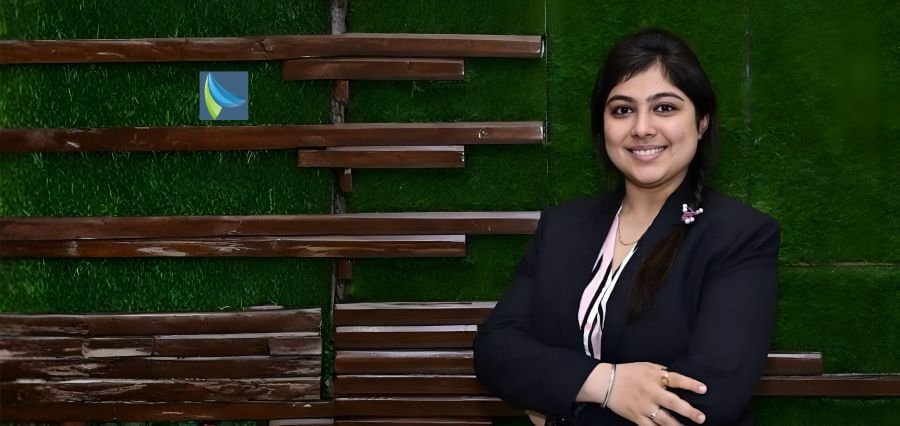
Dr. Vishakha Hipparge is one of them. She is a Physiotherapist and Chiropractor, managing The Healing Touch Physiotherapy and Chiropractic Clinic, where she has worked for nearly a decade, establishing that a thorough and transparent method of musculoskeletal treatment is capable of giving results that last. Her academic credentials include a Bachelor’s and a Master’s degree in Physiotherapy, along with a Postgraduate Diploma in Chiropractic from Sweden. Yet her true accomplishments go well beyond certificates. She has never needed more than fifteen sessions to treat a condition, and none of her patients have relapsed.
This year has brought her international acknowledgment. Insights Success India nominated Dr. Vishakha as India’s Prominent Chiropractor of the Year – 2026 and presented her the award during the National Prestige Award 2026.
Walk into The Healing Touch and the first thing that strikes you is what does not happen. There is no rush to prescribe, no assembly-line scheduling, and no reliance on temporary relief that sends patients back within weeks. Every consultation begins with listening. She studies the patient’s posture, movement patterns, daily routine, work habits, and history of injury before she forms a plan. Back pain, neck stiffness, joint problems, and recurring muscle strain are rarely isolated events, and she treats them accordingly. The pain a patient feels is often only the symptom, while the cause sits elsewhere in the body’s mechanics.
This approach reflects a belief she holds firmly: a patient who understands their condition recovers faster and stays well longer. She explains diagnoses in plain language, shows patients how their habits contribute to their discomfort, and equips them with exercises and ergonomic adjustments they can carry into everyday life. Treatment, in her view, is a partnership rather than a service delivered to a passive recipient.
Her academic journey gives her an unusually complete toolkit. Her Bachelor’s and Master’s degrees in Physiotherapy built a strong foundation in rehabilitation science, exercise therapy, and functional recovery. Her Post Graduate Diploma in Chiropractic from Sweden added a second dimension: precise, hands-on spinal and joint assessment grounded in a European standard of clinical practice. By combining the two disciplines, she addresses both the structure and the function of the musculoskeletal system. Adjustments restore alignment and mobility, while targeted rehabilitation strengthens the body so that the improvement holds. Neither discipline is used as a shortcut. Each is applied where it genuinely serves the patient.
In a field where long treatment cycles are common, her record stands out. She has never needed more than fifteen sessions for any single condition, and her patients have not experienced relapses. For patients, this means fewer visits, lower overall cost, and a lasting return to normal life. For the wider profession, it is a quiet argument that efficiency and quality are not opposites. When the cause is correctly identified and the patient is properly educated, treatment can be both brief and durable.
Her patients often describe the experience in similar terms: they feel heard, they understand what is happening in their own bodies, and they leave with the confidence to maintain their recovery. That trust, built one consultation at a time, has become the clinic’s strongest and most enduring reputation.
It is fitting that her recognition arrived without self-promotion. The honour acknowledges not only her clinical outcomes but also the ethic behind them: honesty about what treatment can achieve, patience in finding the true cause, and a refusal to trade quality for speed. As Indian healthcare continues to evolve, practitioners like she offers a useful model. Her work suggests that the future of musculoskeletal care may belong less to quick fixes and more to clinicians willing to do the thorough work. For her, the goal remains unchanged: help patients heal properly, once, and for good.
A Calling That Began in Childhood
Dr. Vishakha’s story starts early. At the age of five, she wore a doctor’s costume to a fancy-dress competition, a gift from her mother, and the role stuck. From that day, she aimed to become a doctor.
The precise direction came three years later. Her neighbour and closest friend broke an arm and, once the plaster came off, began visits to a physiotherapist. A line on the bulletin board in the therapist’s cabin caught young Vishakha’s eye: surgeons are carpenters, and physiotherapists are artists. She asked her friend what it meant. The answer, which she has carried ever since, was that doctors cut open the body or prescribe medicines, while physiotherapists heal without side effects and add life to a patient’s days rather than simply adding days to a patient’s life. At eight years old, Dr. Vishakha decided to become a physiotherapist.
She pursued the goal with discipline. After completing her Master’s in cardiovascular and respiratory sciences, she joined the Physio9 clinic and Ruby Hall Clinic. There, she met the mentor who changed her trajectory: Dr. Mahesh Chakor. He introduced her to chiropractic alignment and encouraged her to study it formally. The strongest programme, she learned, ran in Sweden. She applied, gained admission, mastered the discipline, and passed her examinations with distinction. Then she opened her own clinic.
Beyond Muscle: The Case for Treating the Bone
Dr. Vishakha did not stop at chiropractic training. Her clinical experience taught her that physiotherapy alone sometimes leaves a gap. A physiotherapist can manage muscle alignment with ease, she observed, but a misaligned bone left uncorrected can bring the condition back.
A personal conviction reinforced the professional insight. Dr. Vishakha grew up with a single parent, and that experience taught her to value fairness in the price of care. She refuses to overcharge, and she holds herself to a simple standard. As she puts it, “if a patient entrusts a doctor with their body, the problem should be resolved from the root level and shouldn’t come back.”
That standard drives her appetite for learning. Every year, or at least once every two years, she completes a new course. Her training now spans osteopathy of the craniomandibular joint, dry needling, cupping, taping techniques, the concepts of manual therapy and joint mobilisation, and the Bobath neuro technique for hemiplegia. Each addition widens the set of tools she brings to a patient’s recovery.
The Three-Part Method
Many of the patients who arrive at The Healing Touch carry the same complaint in different forms: postural malalignment that has hardened into pain and discomfort. Dr. Vishakha responds with a method built on three pillars, which she describes plainly. “Our body gets its structure from ligaments, bone and muscles. If we resolve all aspects, the problem resolves completely.”
The clinic follows a consistent sequence. Every patient begins with a structured evaluation that Dr. Vishakha designed herself. Her team examines the muscles, the bony alignment, and the condition of the ligaments, and they take a detailed history. They eliminate nothing at this stage, because a missed detail can undermine the whole plan.
Treatment options follow, and here the patient takes an active role. Dr. Vishakha explains that physiotherapy offers genuine choices. Some techniques cause discomfort but shorten the course of treatment, and patients with a high pain tolerance and little spare time, such as those balancing demanding jobs and family commitments, often choose them. Older patients and those with a lower tolerance for pain usually prefer gentler methods, which may take longer but still lead to full recovery. The plan, whichever route the patient picks, can combine physiotherapy, chiropractic alignment, and osteopathy where needed. The team then sets the timing and frequency of sessions and begins treatment.
Throughout, the clinic explains each step in simple, everyday language. Dr. Vishakha treats communication as part of the therapy itself, and she treats the patient’s autonomy as non-negotiable. “At the end of the day it’s their body, and it’s our job to respect it,” she says. Every person holds a different belief system, and her team honours it.
The results of this approach appear in the numbers she tracks. Dr. Vishakha has practised independently for almost a decade. In that time, she has not seen a single patient return with the same problem, and she has never needed more than fifteen sessions to resolve a case.
Teaching Patients to Hold Their Progress
Treatment, in Dr. Vishakha’s view, ends only when the patient can protect the result alone. She therefore places patient education at the centre of her practice. Postural deviation, she points out, appears well before symptoms do, yet most people ignore it because they feel no pain. Her team teaches patients to recognise early warning signs and to notice when their posture starts drifting back toward a harmful pattern.
Exercise carries the same importance. She insists that no amount of chiropractic work, even from the most celebrated practitioner, can replace it. “Alignment is just giving a structure. But exercises help in maintaining that structure and alignment and being pain-free,” she explains. The exercises she prescribes form the core of physiotherapy, and she treats them as the bridge between the clinic and the patient’s daily life.
Learning as a Weekly Habit
Dr. Vishakha describes herself as an avid reader, and she builds that habit into her routine. Every Sunday, she reads newly published research. Once a month, she gathers her team to discuss the studies that intrigued them and to decide which findings deserve a place in clinical practice. The team introduces new methods gradually, testing them before they become standard.
She balances this appetite for innovation with respect for fundamentals. Knowledge alone does not suffice, she argues, and neither does loyalty to old-school methods. The best care, in her experience, combines continuous upgrading with a firm grip on the roots and basics of the profession.
The Hardest Chapter
Dr. Vishakha’s career has not run without hardship. After the birth of her baby, doctors diagnosed her with rheumatoid arthritis. The rainy season proved especially punishing, and at times she found it impossible to treat patients. Her patients responded with understanding, and a team of doctors worked under her at the clinic, yet the inability to deliver care herself weighed heavily on her. For a practitioner this passionate, the forced distance from patients felt, in her words, mind-numbing, and her morale sank on difficult days.
She responded by turning her expertise on herself. She sought medical help, took her medication, and committed to regular exercise and self-therapy to protect her joint mobility. She still has good days and bad days, but she manages the condition far better than she once did.
The profession brings other pressures. Personal and family emergencies sometimes force a practitioner to step away, and patients do not always take the absence well. Dr. Vishakha has learned to answer with acceptance. Patients in pain often vent their frustration on the people treating them, and she accepts that role. She calls it a privilege and a burden at once. Her conclusion leaves no room for doubt: she has no regrets, and she loves even the difficult parts of the work.
A Recognition That Reaffirms a Principle
The National Prestige Award 2026 arrived at a moment that gave it particular meaning. Dr. Vishakha describes herself as humbly obliged, and she explains that she has always worked in a karmic spirit. She does not overcharge, and she earns less than her credentials might justify. Most days, that fact does not trouble her. Some days, it feels heavy.
The award, she says, offered a reminder that someone has noticed her discipline and dedication. It also gave her a larger hope. “I hope eventually the world sees that not all doctors are trying to mint money. Some are genuinely doctors because they are passionate,” she says.
The recognition has strengthened her resolve rather than softened it. She promises to keep upgrading her knowledge and skills, and she points once more to her record: no condition has ever needed more than fifteen sessions, and no patient has ever relapsed.
The India’s Prominent Chiropractor of the Year – 2026 award recognizes Dr. Vishakha Hipparge for her exceptional dedication to patient care, clinical excellence, and holistic musculoskeletal treatment. Through her expertise in physiotherapy and chiropractic care, she has demonstrated a commitment to addressing the root causes of physical discomfort, promoting lasting recovery, and empowering patients through education. Presented at the National Prestige Award 2026, this recognition celebrates her compassionate approach, continuous pursuit of knowledge, and valuable contribution to advancing quality healthcare in India.
A Message for the Next Generation
Dr. Vishakha speaks to young physiotherapists and chiropractors with the warmth of a mentor who remembers her own start. She urges them to see their profession as a privilege and never to take it for granted. She asks them to study every day, to keep upgrading their knowledge, and to remember that someone out there needs their help. Above all, she asks them to treat every patient exactly as they would want to be treated.
She also invites the wider public into the conversation. In her view, physiotherapy still has not claimed its rightful place in how people respond to pain.
The Way Ahead
In future, Dr. Vishakha plans to do more than what her clinic is doing. Her vision is to restore trust between people and doctors. People must see the medical profession as the noble profession that it is. The reality is that many doctors are working hard for the benefit of their patients and not the money, and she wants that to matter.
Another goal of hers is for the profession to improve. She requests that all practitioners take their master’s training and their fundamentals seriously and strive for the best quality care. Her third goal is very ambitious, though. She wishes for pain killers not to be the first resort, and whenever anyone is in pain, they would automatically think of seeing a physiotherapist.
In this case, some credit should go to practitioners like her professionals who will always explain before treating, show respect before persuading and judge themselves on the number of patients that have never had to return.