
As brands compete for attention in the current digital environment, communication professionals are urging organizations to rethink traditional engagement strategies and place greater emphasis on building communities that foster long-term relationships and sustain brand loyalty.
While marketing campaigns continue to play an important role in generating visibility and awareness, industry experts suggest that lasting business impact increasingly depends on creating environments where audiences feel connected, valued, and actively involved.
The Challenge of Capturing and Retaining Attention
The shift comes at a time when consumers are exposed to an unprecedented volume of content across digital platforms. From social media feeds and advertising campaigns to newsletters, podcasts, and video content, brands face mounting challenges in capturing and maintaining audience attention.
In today’s attention economy, organizations compete not only with industry rivals but also with a constant stream of information vying for consumer engagement. While campaigns can effectively generate awareness and spark initial interest, many brands struggle to sustain meaningful engagement once promotional activities conclude.
According to communication specialists, the ability to attract attention is no longer sufficient on its own. Organizations must now focus on cultivating deeper engagement that extends beyond individual campaigns and promotional initiatives.
Why Community-Building Is Becoming a Strategic Priority?
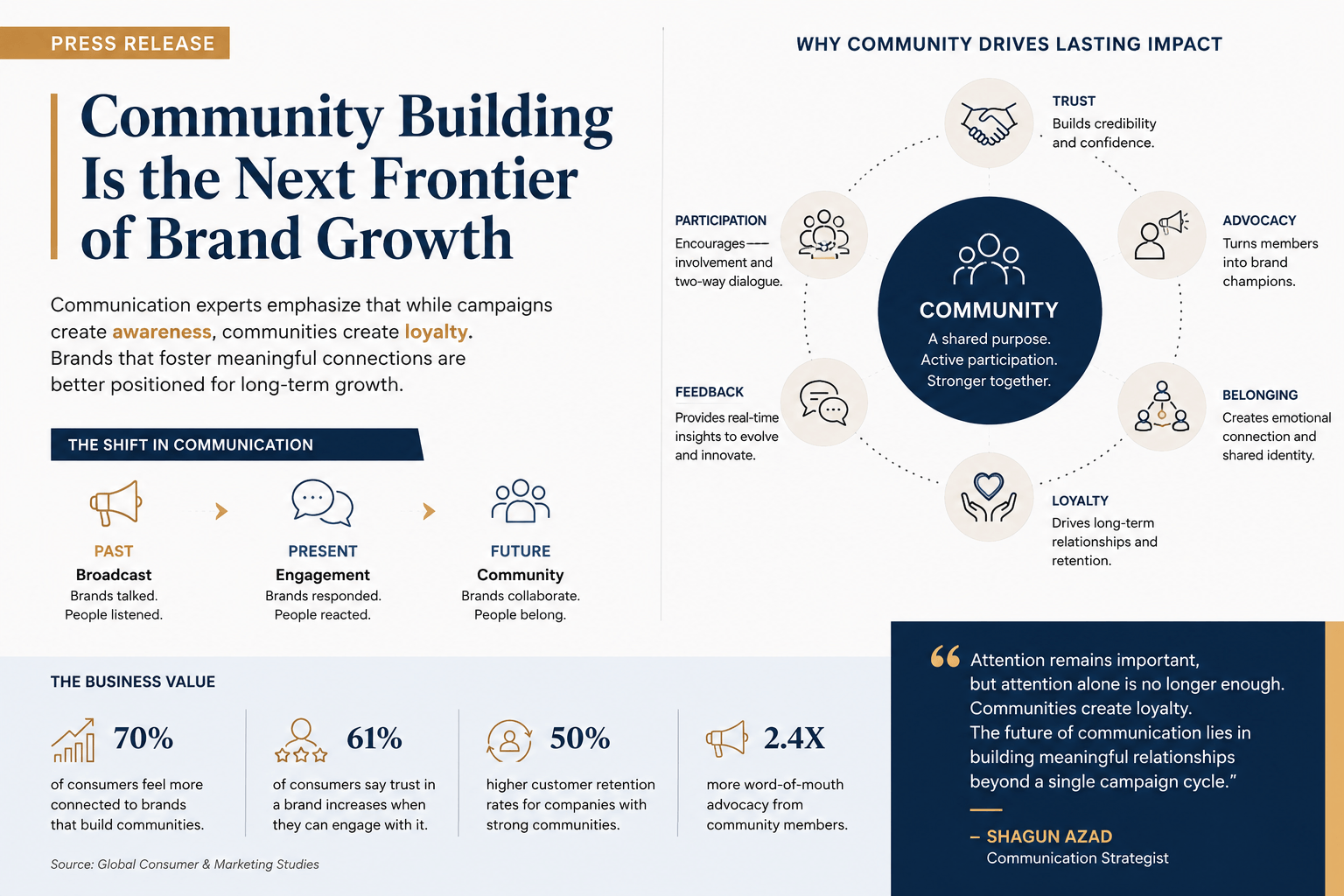
“Attention remains important, but attention alone is no longer enough. Organizations are beginning to recognize that while campaigns create awareness, communities create loyalty. The future of communication lies in building meaningful relationships that extend beyond a single campaign cycle,” said communication strategist Shagun Azad.
Industry observers note that consumer expectations have evolved significantly over the past decade. Modern audiences increasingly seek authentic interactions, shared experiences, and opportunities to contribute to conversations rather than simply consume content.
As a result, community-building is emerging as a strategic business function that supports long-term engagement, trust, and advocacy rather than serving as a supplementary marketing initiative.
Understanding the Difference Between an Audience and a Community
Experts point to a fundamental distinction between an audience and a community. While audiences primarily receive information and engage with content passively, communities are characterized by active participation, dialogue, collaboration, and a shared sense of purpose.
An audience may follow a brand, but a community interacts with it. Community members contribute ideas, share experiences, support one another, and become active participants in the brand ecosystem. This deeper level of engagement often leads to stronger emotional connections and long-term loyalty.
When organizations successfully cultivate communities, members frequently become advocates who amplify brand messages organically and contribute to sustained growth.
The Business Value of Meaningful Participation
Communication professionals suggest that community-driven strategies provide organizations with valuable feedback loops that help brands better understand changing consumer preferences and expectations.
Unlike traditional one-way communication models, communities encourage ongoing dialogue, enabling organizations to gather real-time insights and respond more effectively to audience needs. This continuous exchange of information can strengthen customer relationships while supporting innovation and business resilience.
Furthermore, strong communities often contribute to higher customer retention rates, increased trust, and enhanced brand credibility—factors that have become increasingly important in today’s competitive marketplace.
The Future of Communication Lies in Belonging
As digital channels continue to evolve, experts believe that brands capable of creating genuine connections and fostering a sense of belonging will be better positioned to maintain relevance and achieve sustainable growth.
Rather than viewing communication solely as a tool for delivering messages, organizations are increasingly embracing approaches that encourage participation, dialogue, and collective value creation. This evolution reflects a broader understanding that long-term success is driven not only by visibility but also by the strength of the relationship’s brands build with their stakeholders.
With consumer trust becoming one of the most valuable assets in modern business, industry leaders agree that community-building is set to play an increasingly central role in the future of communication, marketing, and brand strategy.
About Shagun Azad
Shagun Azad is a communication strategist and thought leader specializing in brand communication, community engagement, and audience development. Through her work, she advocates for communication strategies that prioritize meaningful relationships, authentic engagement, and long-term value creation for organizations and their stakeholders.