
In the modern fast-paced world of professional life, where the field of law is getting closer to technology and business strategy, the leaders who bridge the disciplines are defining the future.
The changing backdrop bears the journey of HB Keshava. He built his solid academic background in business laws and intellectual property and went on to establish institutions that would contribute to the current legal and cybersecurity issues with vision and accuracy.
He created Baskarran Associates LLP to provide strategic legal advice and went on to create Arica Tech Security LLP to bring together compliance and technology-driven risk management.
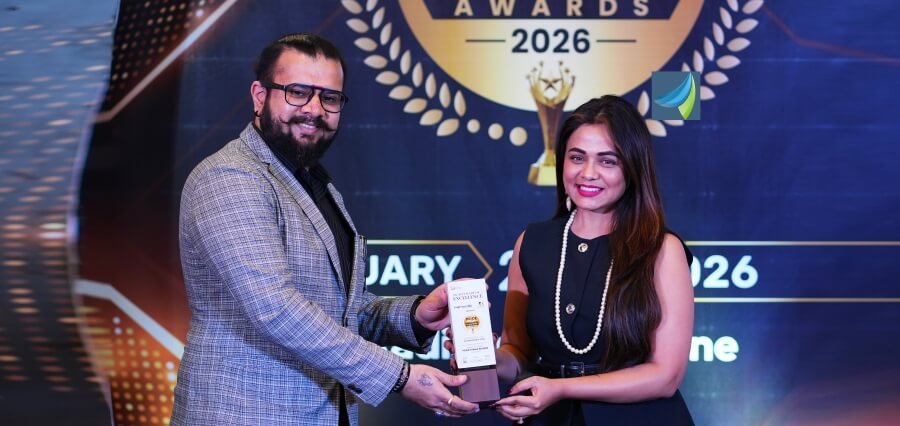
There was no easy way for him, with budgetary limitations and challenging regulation changes, but he went through every stage with toughness and tight discipline. This has made him very well-known because of his commitment to innovation, ethical leadership and team building. This set him in winning the Pride of Maharashtra award for being recognized as the Most Trusted Law Firm with a Visionary Leader, as a measure of his increased role in influencing the legal practice of the future.
From Legal Education to Legal Innovation
Keshava’s professional journey began at the intersection of two powerful forces. A deep reverence for the law and an acute curiosity about human behaviour and technology. After completing his legal education with a specialisation in business laws and intellectual property, he established Baskarran Associates LLP- a firm founded not merely to advise clients, but to architect legal strategy at the highest level.
IP portfolios, technology law, corporate compliance, and cybersecurity governance became the firm’s defining pillars. In time, he extended this vision further by founding Arica Tech Security LLP, a specialised entity that bridges the worlds of cybersecurity and legal compliance, a combination that was ahead of its time and remains acutely relevant today.
What sets him apart is not merely what he built, but how he builds it. Each experience deepened his belief that modern legal leadership cannot exist in a silo. It must integrate law, technology, ethics, and entrepreneurship into a coherent and dynamic whole.
Building Credibility Against the Odds
Building two specialised institutions from the ground up was never going to be a smooth ascent. Keshava navigated the difficult terrain of financial constraints, rapidly evolving regulatory frameworks, and the demanding expectations of discerning clients and partners.
Establishing credibility in niche domains like intellectual property strategy and cybersecurity compliance required not just expertise, but persistence- the kind that is forged through repeated encounters with uncertainty and the willingness to convert those encounters into structured opportunity.
“Leadership is not about avoiding difficulties, but about converting uncertainty into structured opportunities for growth and innovation, “ he reflects.
These are not borrowed words- they are lessons earned. His journey underscored the critical importance of disciplined execution and the power of building strong, capable teams who share both the mission and the mettle to see it through.
The Turning Point
A pivotal shift in Keshava’s leadership came when he began integrating technology-driven solutions into legal practice. Particularly through compliance automation and cybersecurity auditing. This was the moment his identity evolved from that of a legal advisor to a strategic problem-solver.
Exposure to global innovation ecosystems and deep collaboration with technology professionals helped him recognise a truth that now defines his entire philosophy.
“It helped me understand that the future of professional services lies in interdisciplinary thinking where law, technology, research, and business strategy converge to create scalable and impactful solutions,” he says
The Philosophy Behind Visionary Leadership
At the heart of Keshava’s leadership philosophy are three unyielding pillars: integrity, intellectual curiosity, and empowerment. He builds teams that think independently but work with a shared sense of purpose.
“I believe leaders must constantly learn, challenge conventional thinking, and create environments where talented individuals can grow,” he states
His personal mantra, “Build systems that outlast individuals,” captures how he views leadership, not as a platform for personal achievement, but as a responsibility to create institutions that will continue to serve, inspire, and mentor long after any individual’s tenure has passed. Sustainable institutions, in his view, are the true measure of visionary leadership.
Relevance Through Research and Reinvention
Both Baskarran Associates LLP and Arica Tech Security LLP operate at the cutting edge of their respective domains- not by accident, but by deliberate design. Keshava ensures relevance through continuous investment in research, professional certifications, and interdisciplinary collaboration.
The firm has positioned itself at the forefront of emerging domains, including artificial intelligence governance, cybersecurity compliance frameworks, and digital rights management. These areas rapidly becoming non-negotiable for organisations operating in the digital economy.
According to him, the most successful leaders of today are those who refuse to be confined to a single discipline. They understand the intersection of law, technology, finance, and public policy, demonstrate strategic thinking, emotional intelligence, and the ability to build collaborative networks that span industries and borders.
A Legacy Written in Knowledge and Opportunity
Keshava has a vision in the future that extends well beyond the courtroom or the boardroom. His vision is to establish world-renowned institutions in India. One that makes a positive contribution to protecting intellectual property, managing cybersecurity, and developing ethical technologies.
Keshava declares, “I aspire to leave behind institutions that continue mentoring professionals and shaping policy discourse long after my active career. Ultimately, my legacy should reflect the creation of knowledge, opportunity, and systems that strengthen society.”
His own legacy, as he defines it, does not count in terms of commitments to case wins or business directives. It is gauged in the knowledge being produced, the professionals being mentored and discourse in relation to policy being produced.
He is a leader who has established a benchmark of a man who believes in people, systems, and the transformative power of the law when exercised with both brains and conscience, but he is also being recognised as the leader behind the firm that he has established.