
In every industry, there is a story worth being told twice- first for its facts and second for its emotions. The story of Omega Elevators does not begin in a boardroom, but rather in a family member’s home. When Kumar Desai, an engineering student at the time who was working on a college project related to the topic of mechanical load design at IIT, paid a visit to his uncle’s place, he came across a phenomenon that would escape the attention of many others, the elevator was malfunctioning, jerky, and unsafe even though it was installed in one of the most expensive houses.
In addition to that, another insight was that none of the lift manufacturers of that era designed lifts for buildings having less than three floors, gave rise to the idea of building the company. Seeing the onset of India’s rapid urban development period during the 1980s, Desai identified an unmet need in the market: the absence of an entirely local engineering firm that would provide its customers with safe and affordable lifts while adhering to international standards. Thus, Omega Elevators came into existence in 1985, when a gold medalist from IIT and a couple of other people established it using the funds raised by Desai himself.
Forty years before “Make in India” became India’s slogan, it was already Omega’s ideology. This ideology has now transformed into a 450,000-square-foot state-of-the-art manufacturing plant situated in Ahmedabad—material evidence of a promise that was kept by one engineer, one dysfunctional elevator, and one uncle’s house.
A Timeline Written in Milestones
Ask Omega’s leadership which moment defines the company, and the answer isn’t singular- it’s cumulative. In the mid-1980s, Omega introduced the seven-segment display, a small innovation with an outsized impact. Until then, elevators simply blinked directional arrows; passengers had no way of knowing which floor they were on. Displaying real-time floor position, something the industry now takes for granted, was groundbreaking in 1986.
The company followed that with the introduction of Variable Voltage Variable Frequency (VVVF) drives in 1992, then advanced to gearless Permanent Magnet Synchronous Motors (PMSM)—both technical leaps that pushed the company ahead of its domestic competition. By 2014, they had become the first Indian company to introduce Smart Elevators to the market.
Yet, in the company’s own estimation, none of these compares to the shift happening right now. This organization has moved from being a traditional hardware manufacturer to a data-driven infrastructure leader in vertical mobility. Through its OMEGA SMARTCONNECT platform, the company has embraced a long-term Mobility-as-a-Service (MaaS) model, integrating IoT sensors and artificial intelligence in ways that have fundamentally altered not just its technology stack but its relationship with every client it serves.
A Culture Built on Precision and Loyalty
The Omega company’s real asset is not machinery first. It’s rather- people the strength of the team and the depth of client relationships. The company’s culture is built around engineering precision and what leadership calls a “founder’s mindset,” reinforced by employees who have stayed with the company for 25 to 30 years or more.
The company backs its claims of ride quality with a literal test. Known internally as the “Coin Test,” it involves balancing a coin vertically on the floor of an Omega cabin, then running that cabin at speeds of up to 5 meters per second. If the coin doesn’t fall, the ride passes. It’s an unusually visual and unusually confident way to prove smoothness.
Recognizing a nationwide shortage of skilled mechatronics technicians, Omega also built dedicated training programs to cultivate its own pipeline of installation engineers and technicians in-house. This ties directly into a policy the company treats as non-negotiable: zero-tolerance for third-party AMC (Annual Maintenance Contract) outsourcing. Every customer, Omega insists, interacts only with certified engineers trained to follow strict digital safety checklists, not with subcontracted labour operating outside the company’s direct oversight.
The Weight of Growing Too Fast
No industry riding a growth wave is without friction, and Omega is candid about where the pressure points lie. Chief among them is the tension between speed and quality- a challenge that intensifies as vertical mobility becomes central to India’s infrastructure ambitions.
Component design tailored to Indian conditions tops the list of concerns. Parts imported from other markets are rarely engineered for India’s heat, dust, and heavy foot traffic. What looks like a cost-saving shortcut, Omega argues, often becomes a long-term liability, both for the consumer who inherits a failing part and for the manufacturer who must answer for it.
Regulatory fragmentation is another persistent obstacle. Because elevator regulations vary by state, manufacturing cycles and deployment timelines slow considerably. Omega has taken this on directly, leading corporate advocacy for a unified “One Nation, One Lift Law” that would standardize dimensions and safety requirements nationwide- a move the company believes would benefit the entire industry, not just itself.
Power infrastructure instability presents a third challenge unique to the Indian market. Frequent power cuts and voltage fluctuations put sensitive electronics at risk. The firm’s answer is its proprietary Emergency Rescue Device (ERD), engineered to safely guide passengers to the nearest floor and open the doors automatically during a sudden grid failure.
Finally, there’s the matter of aging infrastructure. Many older elevators across the country still lack modern safety mechanisms. Omega now mandates hardware redundancies- dual brakes, rope breaks, and heavy-duty hydraulic buffers- across every modern installation, treating these not as premium add-ons but as baseline insurance against catastrophic failure.
What Sets Omega Apart
Omega describes itself as a technology-first company occupying a distinct middle ground: the safety and technological sophistication of global multinational giants, delivered with the agility and local execution of a homegrown player. The mission driving this positioning is what the company calls ZCD: Zero Customer Dissatisfaction. Notably, the company remains founder-led, a structure Omega credits for preserving its execution mindset even as it scales.
Nowhere is this differentiation clearer than in residential elevators. Rather than downsizing bulky commercial hardware to fit luxury homes- a shortcut the company considers lazy engineering- the company custom-builds Machine Room-Less (MRL) capsule elevators specifically for residential use, from the ground up. A signature architectural detail reinforces this: Omega’s proprietary Slot less Bottom Sills create a completely flush, groove-free entryway threshold, eliminating dirt traps and preserving a seamless floor transition for premium interiors. The company considers one mission: “Good service and ZCD — Zero Customer Dissatisfaction — is our mission.”
Beyond new installations, Omega has built out a robust modernization business. Its offerings range from budget-friendly component upgrades, electrical renovations, and gearless conversions to complete elevator replacements that integrate advanced technology while working within existing infrastructure. Whatever the budget, the company positions modernization as a practical route to improved safety, aesthetics, and property value for aging buildings.
Looking ahead, Omega is investing heavily in automation, AI, IoT, and green technology, aligning itself with the demands of connected smart cities. Leadership frames this as directly supporting India’s broader infrastructure vision- Atmanirbhar Bharat and Viksit Bharat, with local manufacturing and continuous innovation as the throughline.
Engineering for Sustainability and Safety
Omega’s approach to smart infrastructure centers on its SmartConnect remote monitoring platform, which includes Destination Control Systems (DCS). Using machine learning, DCS optimally allocates elevators across a building, cutting passenger wait times and reducing overall energy consumption.
The company has also expanded well beyond residential lifts, moving into heavy-duty public transit escalators and moving walkways built to withstand 24/7 peak transit loads- a response to the sheer scale of India’s urban expansion. On the sustainability front, Omega’s primary manufacturing operations in Ahmedabad have run on power from its own 100 kW rooftop solar plant since 2004.
Safety innovations extend into hygiene as well. Touchless call buttons and self-disinfecting UV cabin systems address modern health expectations, while in public transit settings, Omega’s Platform Screen Doors (PSDs) offer millisecond-accurate synchronization with transit signaling systems, adding a critical layer of passenger protection at metro platform edges. On the environmental side, the company’s regenerative braking systems harvest kinetic energy during braking cycles and feed it back into a building’s local grid, reducing energy waste.
Scale as the Real Validation
While awards and recognitions have their place, Omega points to something more concrete as proof of its impact: over 65,000 installations nationwide and the sustained trust of repeat customers. The company also highlights its engineering achievements at the higher end of performance, successfully executing projects capable of flawless travel at speeds between 5.0 and 7.5 meters per second, a benchmark few Indian manufacturers can claim. Ultimately, Omega measures its validation not in trophies but in its footprint across the country’s busiest metro hubs, airports, and railway networks’ infrastructure that cannot afford to fail.
Advice for the Next Generation
For companies entering the lift and elevator industry, Omega’s leadership offers three core principles. First, treat safety as a brand identity, not a checklist. The use of substandard or incorrectly tested components, or the bypassing of safety circuits during servicing, can carry severe consequences. Second, invest in human capital alongside hardware; scaling equipment without scaling trained maintenance and mechatronics talent is, in the company’s words, a recipe for disaster. Third, build deep relationships in India’s B2B landscape, becoming the trusted, expert voice for architects, MEP consultants, and real estate developers matters as much as the product itself. “Safety is non-negotiable. Never treat safety codes as a simple regulatory checklist; make them your core brand identity.” Kumar says
The Road to 2030
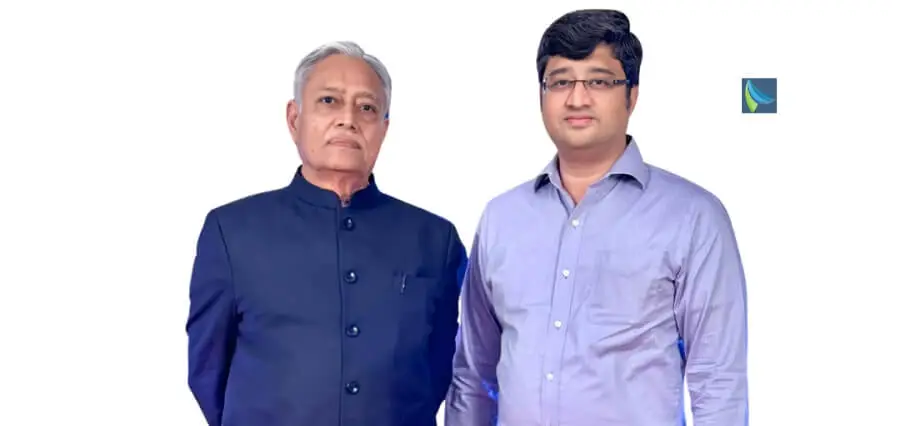
Guided by Kumar Desai and his son, Sameep Desai, Omega is approaching its 2030 roadmap with what the company describes as strategic discipline, balancing ambitious expansion against thorough risk assessment. The vision rests on four product pillars: Intelligent Elevators, Safe Escalators, Efficient Travelators, and advanced Platform Screen Doors.
The company’s infrastructure portfolio shall keep growing, along with its unique products designed for cargo lifters, hospitals and academic institutions. In terms of technology, Omega plans to focus on predictive maintenance telemetry for all its elevators based on IoT principles, thus ensuring no downtime at all. The company is striving to create standards for highly efficient MRL systems for tier-2 and tier-3 cities to benefit from India’s growth of mid-rise buildings. Eventually, Omega aims to enter the neighbouring international markets.
Kumar asserts: “We build what elevates the nation!”
Four decades after a broken elevator in an uncle’s house set everything in motion, Omega’s mission remains unchanged in spirit, even as its scale has transformed entirely: to build what elevates the nation.