
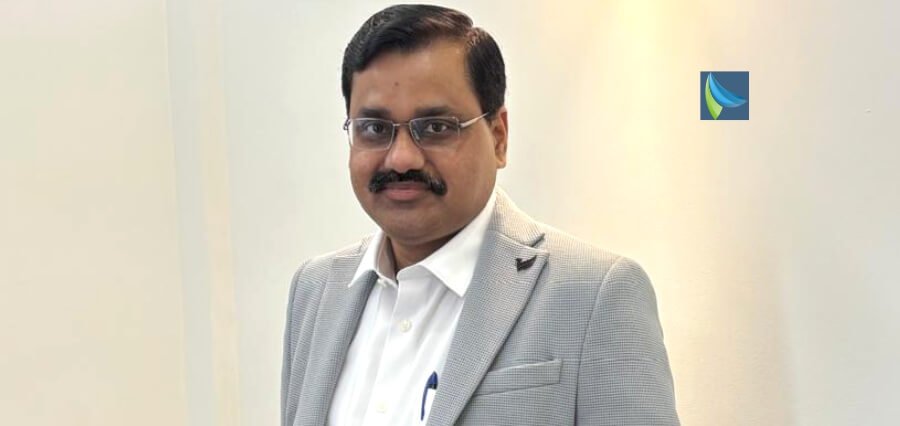
Strong integration takes time in the heavy industries. Rashmi Group has been following this principle for almost forty years now. Starting from its humble beginnings in eastern India, it has become a fully integrated industrial concern dealing in Iron & Steel, Cement, Power, Ferro Alloys, Aluminium, and Mining. As Dr. Kumar puts it, “Instead of an outward expansion to achieve size, the organization made an inward expansion.” The organization obtained all its raw materials, power, intermediate materials, and ultimately its logistics.
The philosophy has been set and maintained by the promoter family group. The promoters of the Group are Mr. Sajjan Kumar Patwari along with his sons Mr. Sunil Kumar Patwari, Mr. Sanjib Kumar Patwari, and Mr. Sanjay Kumar Patwari who have founded the Group with a long-term vision for the industry. Rashmi Metaliks, founded in the year 2004, based out of Kolkata is the flagship of the Group whose production facilities located at Kharagpur and Jhargram manufacture pellet, sinter, sponge iron, pig iron, billets, TMT bars, wire rods and ductile iron pipes with captive power.
At present, the Group runs an iron and steel production capacity of around 9.6 MTPA, power capacity of 1,171 MW and cement capacity of 1.9 MTPA along with ferro alloys and aluminum. The Group also owns five captive coal mines, four captive railway sidings and its own GPWIS rake fleet. With a base in the states of West Bengal, Jharkhand and Odisha, its operations have expanded to cover Tamil Nadu, Gujarat and Himachal Pradesh. The Group has achieved this scale over the years by investing in those areas that other companies would normally outsource.
Milestones That Changed What Came Next
Some key developments were: the formation of Rashmi Metaliks in 2004, along with setting up of an integrated steel production plant in Kharagpur. This was a step towards transforming from trade and intermediate processing to core manufacturing.
The manufacture of ductile iron pipes was the second turning point in its history. Ductile iron pipe is a high-end, specification-based product used for the purpose of water and sewage network. To establish credibility in such a product range called for systems that were completely different. This venture has enabled the Group to be amongst the biggest makers of ductile iron pipes in the world, with a capacity of 2.4 million MT and distribution in over 50 countries.
The third milestone was related to the policy level wherein the Government of West Bengal granted Ultra Mega Project status to the Group, recognising both its investment magnitude and its value to the local economy.
The fourth milestone is the one that is closest to Dr. Kumar’s function: the choice to consider logistics as infrastructure and not as a service obtained through purchase. With four captive railway sidings and GPWIS rake fleet, the Group had control of its evacuation process, which was refined by digital means. The GPWIS Rake Automation System, launched in August 2024, achieved unprecedented performance in the financial year 2024-25 by processing 4,615 rakes and creating Rs. 257.3 crore of logistics income. According to Dr. Kumar, “Each of these milestones contributed the same underlying advantage control.” That control covers input cost, quality, evacuation and delivery commitments.
Strategic Patience, Short Decision Cycles
Rashmi Group’s leadership is promoter-led, but it does not centralise in the way that phrase usually implies. Leaders set direction at the top with a long view, while execution authority sits close to the plant floor and the function.
A functional head with a well-argued case can secure a decision in days rather than quarters. That speed matters in commodities, where procurement and freight windows close quickly. It also means innovation does not need a committee to survive its first year. The rake automation programme illustrates the point: it began as a functional conviction that fragmented manual processes cost the Group both time and visibility, and management backed it before it had a track record.
Three principles run through the Group’s decision-making culture: data-driven execution, people empowerment and foresight-led planning. Teams ask what the numbers say before asking what past practice has been, take ownership of outcomes rather than tasks, and plan against where the industry is heading, including regulatory shifts, freight availability and carbon exposure, rather than only against last year’s performance. In Dr. Kumar’s experience, operational excellence depends far less on exhortation than on giving capable people clear authority and accurate information.
Turning Cyclical Pressures into Structural Strengths
The steel industry is cyclical by nature, so volatility in raw material prices, freight rates and demand has become a permanent feature rather than an occasional disruption. The Group answered structurally, through backward integration. Captive mines, captive power and in-house intermediate production insulate its cost base in a way that procurement alone never can.
Evacuation posed a second challenge. For a bulk manufacturer in Eastern India, moving material reliably matters as much as producing it, and rail capacity, siding availability and turnaround times can constrain output however well a plant runs. The Group chose to own the constraint: it built captive sidings, established a GPWIS rake fleet and layered automation on top of both.
Regulatory friction in customs clearance presented the third challenge. Delays in the existing framework imposed real time and cost penalties across the industry. Rather than absorb them, the company formally proposed a change to the customs process, the first application of its kind in India. The revised framework that followed reduced clearance times and logistics costs, and its benefits reached well beyond the Group’s own operations.
The organization has also navigated pandemic-era disruption, port congestion and shifting export dynamics. Its response has stayed consistent: identify whether a constraint is genuinely external or merely unexamined and take any lever available.
Problem-First Innovation
Rashmi Group adopts technology problem-first rather than tool-first. Its teams do not begin with a platform and search for a use case; they begin with a measurable operational pain point and then ask what technology could remove it.
The GPWIS Rake Automation System illustrates the method. The problem was fragmented, manual rake planning with poor forward visibility. The solution combined automation, predictive analytics and real-time tracking, and it delivers live visibility into rake allocation, predictive loading and unloading timelines, and automated compliance checks. The Group piloted the system, measured it against baseline turnaround and cost per tonne, and scaled it only afterwards. That discipline made the FY 2024–25 numbers defensible rather than aspirational.
The company is also progressively adopting technologies that are redefining industrial operations, including artificial intelligence and IoT for predictive maintenance of assets, analytics for smarter route and mode planning, exception-based systems that surface problems in real time instead of at month end, and carbon metrics integrated directly into operating decisions. The common thread, according to Dr. Kumar, is converting reactive processes into predictive ones. “A supply chain that tells you what will go wrong next Tuesday is worth considerably more than one that tells you accurately what went wrong last Tuesday,” he says.
Quality as Commercial Strategy
“Quality is not a departmental function here; it is the commercial strategy,” Dr. Kumar states. Specifications govern every product the Group makes: ductile iron pipes for water and sewage networks, TMT bars and wire rods for construction, and billets and pig iron for downstream industry. A buyer of DI pipe purchases an asset expected to serve for a century, and price alone offers no persuasive way to sell that.
Integration makes consistent quality achievable. Because the Group controls the chain from raw material through pellet, sinter and molten metal to the finished product, it manages variability at source rather than inspecting it out at the end. In-house testing laboratories and compliance with Indian and international standards complete the system.
Quality credentials open export markets, which explains why the Group supplies more than fifty countries and has established a direct presence in demanding markets. They also earn a place on large institutional and government infrastructure projects, where technical qualification precedes any commercial conversation. The Group therefore treats its investment in excellence not as a cost carried for reputational reasons but as the precondition for its next stage of growth.
Strengthening India’s Industrial Capabilities
Dr. Kumar frames the Group’s contribution in three layers. The first is import substitution and capacity. World-scale ductile iron pipe capacity within India means the country can serve its water and sanitation infrastructure programmes domestically, at competitive cost and with shorter lead times, while also earning export revenue. Manufacturing capability at that scale is itself a national asset.
The second layer is logistics competitiveness. India’s logistics cost as a share of output has long placed it at a structural disadvantage against global peers, and every improvement in rail modal share, rake turnaround and backhaul utilisation narrows the gap. When a private enterprise demonstrates that a fully digitised, rail-led evacuation model can deliver record throughput, it sets a benchmark that others can adopt.
The third layer, policy influence, is in his view the most underrated contribution an industrial enterprise can make. Solving a bottleneck inside one’s own boundary helps a single organisation, but getting the framework itself revised, as the customs reform initiative did, creates a multiplier across every participant in the sector. Innovation reaches well beyond the plant.
Recognition That Reflects Substance
The Ultra Mega Project status conferred by the Government of West Bengal carries particular weight because it acknowledges not only investment scale but also the Group’s role in regional industrial and employment growth. Its standing as one of the world’s largest ductile iron pipe manufacturers, serving over fifty countries, matters for a different reason: the Group earned it through qualification and repeat business rather than conferral.
Operationally, Dr. Kumar holds closest the FY 2024–25 performance of the GPWIS Rake Automation System, which handled 4,615 rakes and generated Rs. 257.3 crore, a record for the organisation. The result demonstrated something the industry has been slow to accept: logistics can move from being treated as a cost centre to being recognised as a strategic value creator.
At a personal and institutional level, he also regards leading India’s first application for reform of the customs framework as a defining achievement, precisely because its benefit was never exclusive to the Group.
Advice for the Next Generation of Industrial Builders
The Group offers emerging enterprises four observations. First, integrate where volatility hurts most. No enterprise can hedge every input, but it can own the ones that determine its cost position through a downturn, and the enterprises that survive cycles usually build integration during the good years.
Second, invest in logistics far earlier than feels justified. Most growing manufacturers treat evacuation as a problem to fix once production settles, and then discover that logistics, not capacity, caps their growth. The Group regards reliability of delivery as a commercial asset rather than an operational detail.
Third, treat compliance and standards as competitive advantage rather than administrative burden. Quality certification, environmental performance and regulatory discipline qualify an enterprise for the contracts and markets that carry real margin.
Fourth, build people and relationships for the long term. Rashmi Group’s supplier and partner contracts emphasise performance-linked structures and shared incentives rather than pure price extraction, because partnerships that survive volatility outweigh any single negotiated saving. The same principle applies internally, where empowered teams consistently outperform supervised ones, even under pressure.
The Road Ahead
The Group continues to aspire towards greater integration and growth, expanding its footprint throughout the country from its roots in Eastern India into Tamil Nadu, Gujarat, and Himachal Pradesh, along with its international reach which already extends beyond fifty countries.
In terms of digital technology, the vision includes extending the rake automation success story throughout the entire value chain to create a full end-to-end, exception-based, predictive system for procurement, inbound raw material logistics, manufacturing planning, evacuation, and delivery. Real time visibility will become the default condition of the organization and not just another project.
Sustainability involves ensuring that carbon and energy measures are embedded within operational decisions, especially those related to mode choices and logistics planning, which already give an edge to rail transportation.
The Rashmi Group intends to continue growing the industrial capacity needed to fulfill India’s water, infrastructure, and construction aspirations and reduce the logistics costs that limit Indian competitiveness. This is what he states clearly: “We want to continue showing that we are capable of setting benchmarks rather than following them.” Should Rashmi Group be recognized not only as a big player but as a benchmarking point for how a technology-driven Indian industrial enterprise should run by 2026 and after, this, in his opinion, would represent success.