
Prime Highlights
- Piyush Goyal leads around 70 Indian business leaders to Singapore for the fourth India Singapore Ministerial and Business Roundtables.
- Visit aims to strengthen the India-Singapore Comprehensive Strategic Partnership across trade, investment and technology.
Key Facts
- Singapore remains India’s largest FDI source, contributing USD 19.8 billion in FY 2025-26.
- India Singapore bilateral trade rose from USD 6.7 billion to USD 36.1 billion over the past two decades.
Background
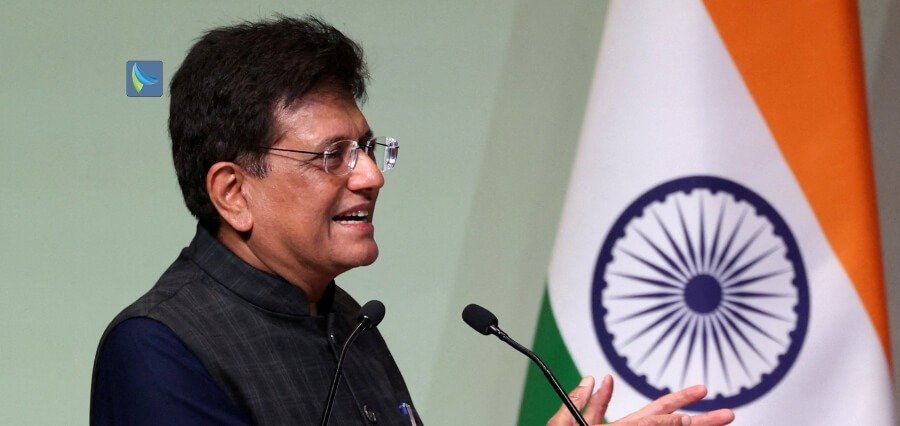
Union Minister for Commerce and Industry Piyush Goyal is leading a delegation of around 70 Indian business leaders to Singapore for a series of high-level bilateral engagements.
The visit centers on the fourth India-Singapore Ministerial Roundtable and the fourth India-Singapore Business Roundtable, bringing together representatives from technology, artificial intelligence, manufacturing, infrastructure, financial services, healthcare, agriculture, logistics and professional services.
Goyal joins Union Ministers Nirmala Sitharaman, Subrahmanyam Jaishankar and Ashwini Vaishnaw at the Ministerial Roundtable, where talks focus on strengthening the India-Singapore Comprehensive Strategic Partnership. He also meets Singapore Prime Minister Lawrence Wong and holds Government-to-Business engagements with representatives of major Singaporean institutions and companies.
Singapore’s Minister of State for Foreign Affairs and Trade and Industry Gan Siow Huang joins the delegation at an APEDA-FairPrice initiative in City Square Mall, where Indian agri-food products get pushed into Singaporean retail shelves.
The minister also speaks at the FICCI-organized India-Singapore Business Forum and delivers a keynote at the ICAI ASEAN Conference.
FY 2025-26 saw Singapore contribute USD 19.8 billion, making it India’s largest FDI source for the year. That figure builds on a two and a half decade run that has pushed cumulative FDI past USD 194.68 billion, nearly one in every four dollars India has received. Trade between the two countries has meanwhile grown almost sixfold, from USD 6.7 billion to USD 36.1 billion over two decades.